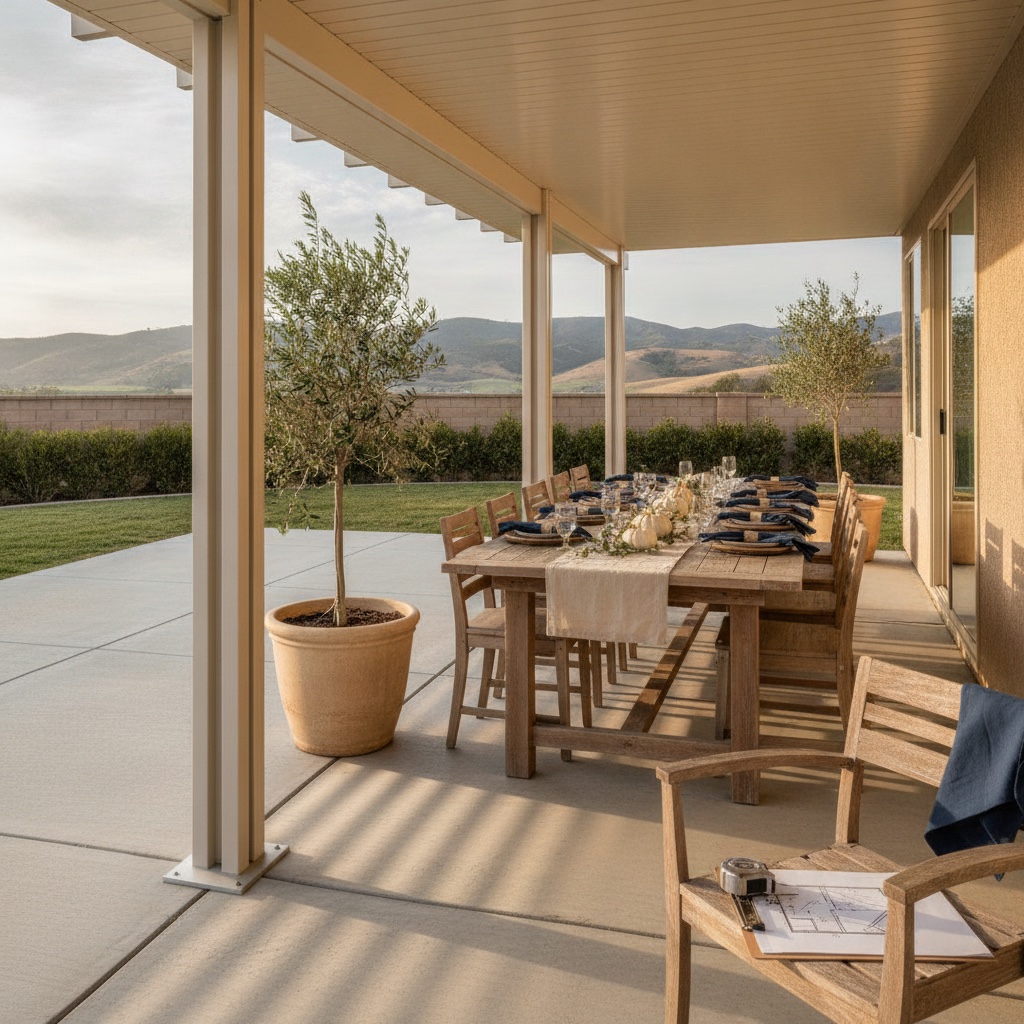

A Temecula couple sat down with a tape measure in late September and did the math on Thanksgiving. Twenty-two guests, one 14 by 20 foot slab off the family room, and a west wall that bakes until 4pm even in November. They wanted a cover over that slab before the turkey came out. The question was not whether it could happen. The question was which style could make it through design, permit, fabrication, and install in the 59 days between now and Thursday, November 26.
That is the real decision in front of a lot of SoCal homeowners right now. Style is not only about how a cover looks. Each roof type carries its own paperwork, its own lead time, and its own list of add-ons that can quietly push a finish date past the holiday. Picking the right style for the calendar you actually have is the difference between hosting under a finished roof and hosting next to a stack of beams.
Count Backward From November 26
Start with the date and work in reverse. A safe target is to have the cover standing by the week of November 9 through 16. That leaves a buffer for a rained-out install day, a late inspection slot, or a panel order that ships a few days behind. Working back from there, the permit needs to be in hand by early November. To hit that, plans should be submitted to the city by mid-October. That means measuring, choosing the style, and signing off on the design in the next two weeks.
The good news is that fall is the right season to start. Contractor calendars that were packed from March through August loosen up after Labor Day, and the same project that waited six weeks for a crew in May can move faster now. The permit counter is the part that does not care what month it is. Review times in Southern California range from a few days for a standard-plan cover in some cities to several weeks in others, so the city you live in matters as much as the style you pick.
Lattice: The Fastest Path to a Holiday Table
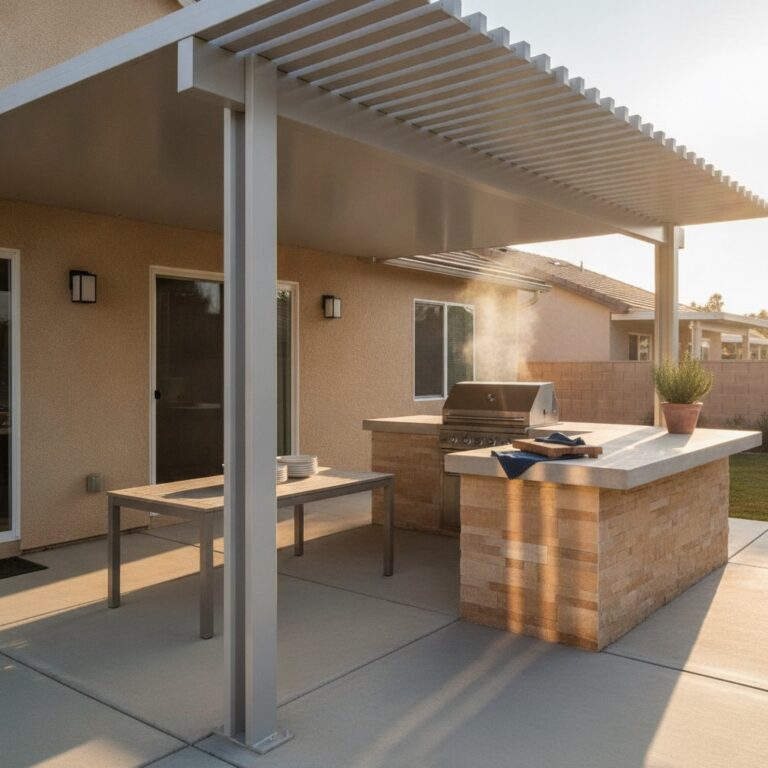
An open lattice cover is usually the quickest style to get approved and built. The rafters sit on a beam with 3 inches or so of open space between each run, so there is no roof deck to flash, no gutter to size, and no drainage plan for a reviewer to question. Most lattice covers are built from pre-engineered aluminum components that match plans cities have seen hundreds of times. A 14 by 20 lattice cover on four posts can go up in a single day once the footings cure.
The tradeoff is shade and weather. Lattice filters light instead of blocking it, which works well for a Temecula table at 1pm when the sun sits lower in the sky. It does nothing for rain. This fall’s seasonal outlook for Southern California calls for warmer storms and more atmospheric rivers than normal, and a wet Thanksgiving under an open lattice is still a wet Thanksgiving. If the forecast turns, plan on a pop-up canopy or a backup plan inside.
Solid Roof: Rain Cover With a Few More Steps
A solid aluminum roof blocks sun and rain completely, which makes it the practical choice for November hosting. The panels interlock into a sealed surface, and a built-in gutter runs water to a downspout at one post. That extra drainage detail adds a small step to design and review, but a standard attached solid cover on a stucco home is still very familiar work for most building departments. For a 280 square foot patio, figure on a slightly longer plan check than lattice and the same one or two install days.
The part that trips up holiday timelines is attachment. An attached cover needs a ledger fastened into the house framing, not just the stucco skin, and it needs to be flashed correctly at the wall. Reports on cover failures in wind point to that ledger connection far more often than to the aluminum itself. If the roofline or eave makes that attachment tricky, a freestanding version on its own posts avoids the question but adds larger footings. Either way, settle it at the measuring visit so it does not become a surprise at plan review.
Insulated and Sunroom Upgrades: Worth It, but Watch the Clock
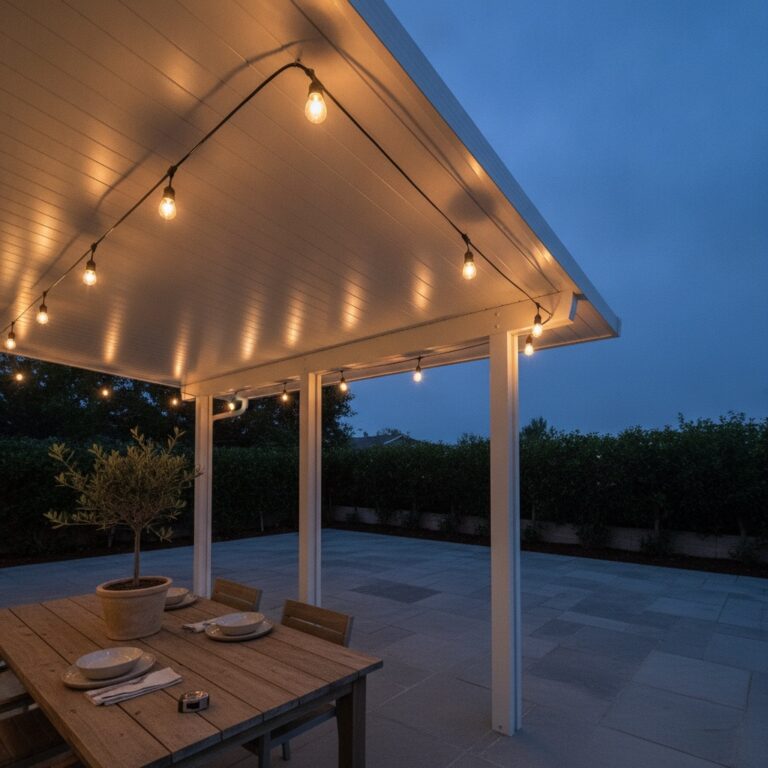
Insulated panels are the comfort upgrade. A foam core sandwiched between two aluminum skins slows heat transfer in both directions, so the space stays cooler in July and a few degrees warmer on a 58-degree November evening. Panels commonly come in 3 inch, 4 inch, and 6 inch thicknesses, and the finished white ceiling underneath is the easiest place in the whole yard to mount recessed lights or a ceiling fan. Those are real reasons to choose insulated over a flat solid roof.
The catch is lead time and add-ons. Insulated panels are often cut to order, and any lights or fans on the cover bring an electrical permit along with the structural one. That is a second review, a second inspection, and an electrician’s schedule to line up. It can still be done before Thanksgiving if the decision happens this week. A full sunroom is a different story. Glazing, doors, and enclosure details add weeks, and a sunroom started in October is realistically a January project. Plan it now, enjoy it at the next holiday.
- Lattice: simplest review, one to two install days, no rain protection
- Solid: short review, one to two install days, full rain and sun cover
- Insulated with lights: structural plus electrical permit, order panels early
- Sunroom: start now, finish after the holidays
What to Settle at the First Visit
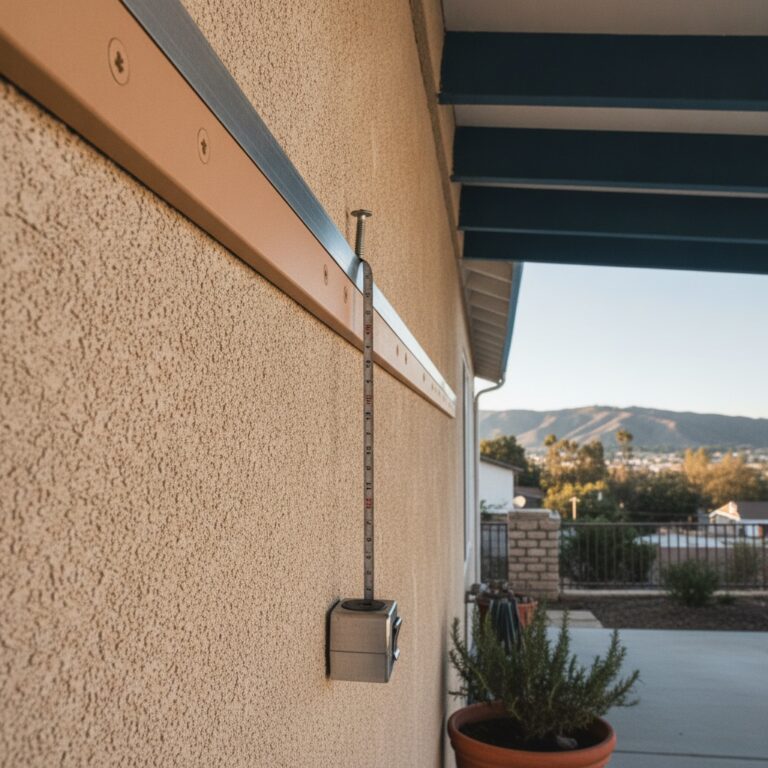
A tight calendar rewards a decisive first meeting. Before the measure, walk the slab at the hour your guests will actually sit down and note where the sun lands. Decide whether lighting belongs on the cover now or can wait for a second phase after the holidays. Ask whether the quote includes engineered plans ready for permit submittal, who pulls the permit, and who schedules the inspection. Confirm the beam span, since a 20 foot run without a center post may call for a deeper beam than the standard size and change the look from the table.
Then pick a finish that works with the house. Almond and white are the SoCal standards over stucco and tile, and a quality powder coat to the AAMA 2604 spec holds color through years of Inland Empire sun. Ask about the warranty in writing. Many aluminum systems carry a lifetime structural warranty that transfers with the home, which matters if you sell in five years. None of those choices take long, but every one of them left open is a day lost on a 59-day clock.
If a covered Thanksgiving table is the goal, the next two weeks decide it. Our team can walk your slab, show lattice, solid, and insulated samples side by side, and give you an honest read on which style fits your city’s permit timeline before November 26. Book a free in-home quote and get a real date on the calendar instead of a hopeful one.
Morning-context sources used: Duralum DuraNews Vol. 5 Issue 19, “Is Fall a Good Time to Install a Patio Cover?” (Sept 17, 2026), https://duralum.com/volume-5-issue-19/ ; Duralum DuraNews Vol. 5 Issue 20, “How Much Wind Can an Aluminum Patio Cover Withstand?” (Sept 24, 2026), https://duralum.com/volume-5-issue-20/ ; Duralum DuraNews Vol. 5 Issue 18, “Planning a Patio Cover? 6 Things Homeowners Should Consider” (Aug 25, 2026), https://duralum.com/volume-5-issue-18/ ; Moda Outdoor Living, “Louvered Pergola Cost in 2026: Lattice vs. Fully Covered” (Aug 2, 2026), https://modaoutdoorliving.com/blog/louvered-pergola-cost-2026 ; Southern Operations Predictive Services seasonal outlook, https://gacc.nifc.gov/oscc/predictive/outlooks/myfiles/assessment.pdf