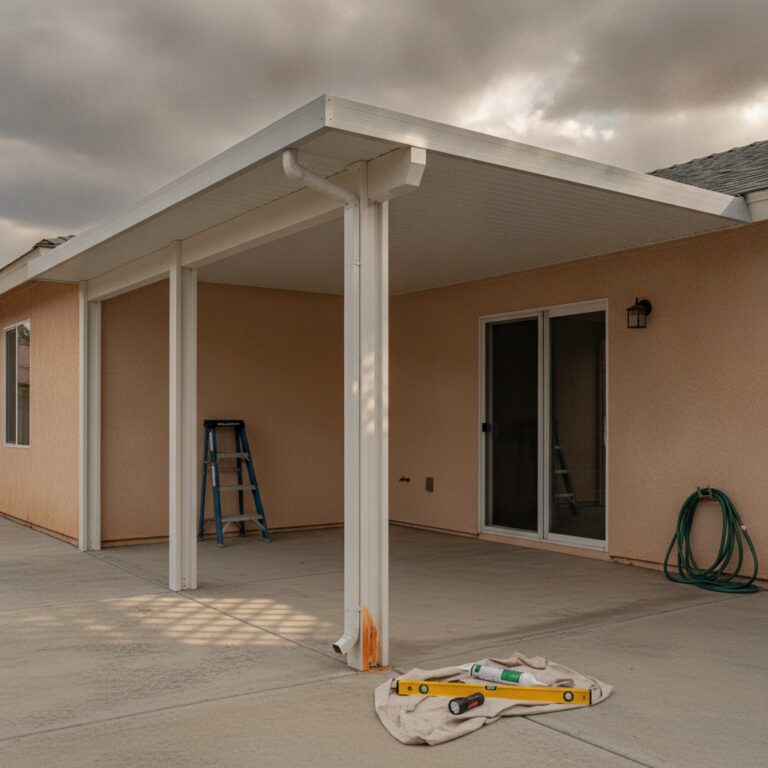


A 20-by-12 attached aluminum cover went up over a Fullerton slab in 2019. In the six years since, the owner has washed it twice and pulled leaves out of the fascia gutter three times. That is the whole record. It is also the honest reason people move off wood. But twice in six years is not zero, and this fall the difference matters more than usual. NOAA’s winter outlook now puts better than 90 percent odds on a very strong El Nino, with above-normal precipitation favored across the southern half of California from December through March.
Aluminum is low maintenance. It is not no maintenance. Any salesperson who calls a patio cover install-and-forget is selling, not explaining. The real task list is short, seasonal, and mostly involves a garden hose, a soft brush, and forty-five minutes on a ladder. What follows is that list, plus the two places where wood and vinyl honestly beat aluminum. Pretending those places do not exist just makes the rest of the pitch harder to believe.
The Real Maintenance List for an Aluminum Cover
Most SoCal aluminum covers ask for two washes a year. One in April after the pollen and the last of the rain, one in October before the storms start. Mild dish soap, water, a soft-bristle brush on an extension pole. No pressure washer above about 1,200 PSI, and never straight at a seam, because forcing water uphill under a pan or a snap-on cap is how you get a drip line that was not there before.
The rest of the list is short:
- Clear the integrated fascia gutter and the downspouts. A 20-foot fascia beam with one 2-by-3 downspout clogs faster than homeowners expect, especially under a jacaranda or a pepper tree.
- Walk the ledger flashing every two or three years. That is the joint where the cover meets your house, and it is the only place on the whole assembly where a failure gets expensive.
- Check the post base anchors after Santa Ana season. Wedge anchors into a 4-inch slab can loosen after a hard wind event.
- Touch up deep scratches with the manufacturer’s color-matched pen. Powder coat is a barrier. Once bare aluminum is exposed within a few miles of the coast, salt air starts working on it.
- Look for white powder or bubbling where steel fasteners meet aluminum. That is galvanic corrosion, and it means someone used the wrong hardware.
That is the full annual obligation. Nothing on it involves sanding, staining, sealing, or replacing a board. A professional cleaning on a 300-square-foot cover in Orange County runs roughly $150 to $300, and most homeowners skip it and do the job themselves with equipment already in the garage. Compare that against a wood cover, where a proper re-seal every two to three years is a full weekend plus $120 in stain, and the running cost gap over a decade gets wide.
Where Wood and Vinyl Genuinely Win
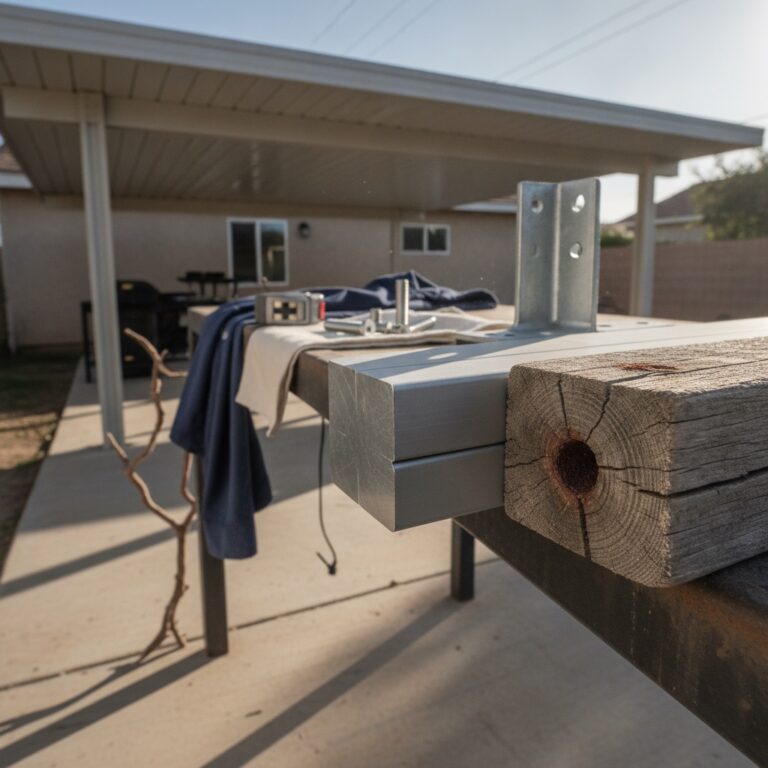
Wood wins on repairability. A rotted 4-by-4 post on a wood cover is a two-hundred-dollar piece of lumber and a Saturday. The equivalent on an aluminum cover means sourcing a matched extrusion in the right gauge and the right factory finish, and if the line has been discontinued, the color will be close rather than exact. Wood also takes any stain you want, forever, at any point in its life. Aluminum’s color is decided the day the powder coat is cured, and repainting it in the field never looks the same.
Vinyl wins on cosmetic damage. Vinyl patio cover components are usually solid or co-extruded, so the color runs deeper than the surface. A ladder edge that scrapes a vinyl beam leaves a scuff. The same scrape on a 0.024-inch aluminum pan leaves a bright silver line and a small permanent dent. Vinyl also tends to come in 10 to 20 percent cheaper at the quote stage on comparable spans.
The tradeoff is what happens after year eight. Vinyl in SoCal heat is a known problem. Late August delivered exactly the test case, with extreme heat watches across the region and forecast highs near 110 in the San Bernardino and Riverside valleys, 117 in the San Gorgonio Pass. Vinyl gets soft, it moves, and older or thinner panels chalk, yellow, and develop hairline cracks. Published lifespan for vinyl patio covers sits around 10 to 15 years. Aluminum sits at 20 to 30. The repairability advantage that wood holds is real, but it is an advantage you use because wood needs repairing.
Your Finish Spec Decides Your Chore List
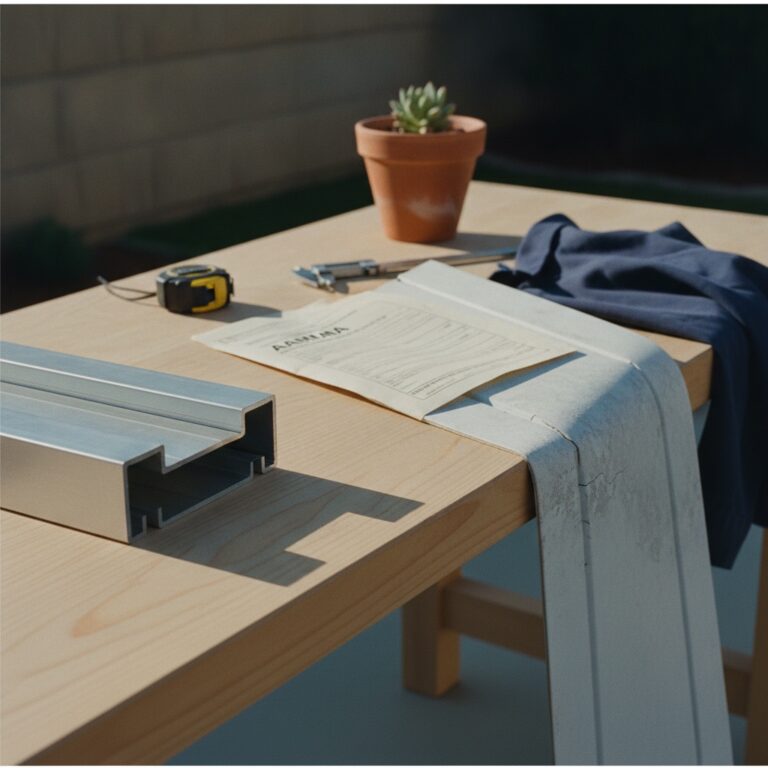
This is where most quotes go vague, and where a homeowner can get specific very fast. Architectural powder coat is graded against AAMA standards, and the grade tells you exactly how much fading you are agreeing to before you ever sign. Two covers that look identical on installation day can be four grades apart in finish, and you will not see the difference until year five.
AAMA 2603 is the entry tier. Roughly one year of South Florida exposure testing. It is what shows up on budget residential work when nobody asks. AAMA 2604 holds a chalk rating of 8 and fade under 5 Delta E for five years of that same exposure. AAMA 2605 holds the same numbers for ten years. South Florida testing is harsher than a Chino backyard, so real hold is longer. The ranking is what matters. A 2605 bronze on a west-facing Anaheim patio still reads as bronze in year twelve. A 2603 on the same patio looks dusty by year four, and washing does not bring it back.
So the maintenance question and the finish question are the same question. A better coat means fewer touch-ups, longer intervals between washes, and a cover that does not quietly age out of matching your trim. Ask any bidder which AAMA number applies to the specific color you picked, and get the answer in writing on the proposal.
The Pre-Rain Walkthrough, Before December
Given the winter outlook, the October pass is worth doing properly this year. Start on the ground and look up at the underside for water staining along the pan seams, which tells you where water already sat. Then go up the ladder.
Flush the fascia gutter with a hose and watch the downspout discharge. If flow is weak, the elbow is packed. Confirm the downspout actually drains away from the post base and not into the slab edge, because a season of El Nino rain pooling at a post base is how anchor corrosion starts. Check that the ledger flashing still tucks under the siding or the roof course above it, not over it. Push gently on each post. There should be no movement at all.
If anything on that walk looks wrong, deal with it in October, not in January with a tarp. Materials are not getting cheaper either. Section 232 tariffs and related duties pushed US aluminum costs sharply higher through 2026, with market premiums at record levels, so a repair that turns into a replacement costs meaningfully more than it did two seasons ago.
If your current cover is wood and this list is starting to sound like a fantasy compared to your actual fall chores, that gap is the whole argument. JNL Aluminum builds and installs across Orange County, the Inland Empire, Long Beach, and north San Diego County, and every quote itemizes the gauge, the span, the anchor detail, and the AAMA finish grade so you can compare it against anything else on your kitchen table. A free in-home estimate takes about an hour, and you will leave it knowing exactly what your next ten Octobers look like.
Morning-context sources used: NOAA winter outlook coverage on El Nino odds and California precipitation (sfchronicle.com/weather/article/el-nino-winter-rain-california-22398460.php, unofficialnetworks.com/2026/07/19/winter-weather-prediction-2026-2027-noaa-outlook/); Southern California extreme heat coverage, late August 2026 (foxla.com/news/dangerous-heat-wave-southern-california-late-august-2026, ktla.com/weather/dangerous-southern-california-heat-wave-could-bring-112-degree-temperatures/); AAMA 2604 and 2605 performance criteria (linetec.com/paint/aama-specifications/, fairview-na.com/aama-2604-vs-2605-choosing-the-right-spec-for-your-project/); aluminum tariff and price analysis 2026 (americandouglasmetals.com/aluminum-prices-hit-new-highs-u-s-construction-cost-analysis-2026/); vinyl and aluminum patio cover lifespan comparison (patiocover.us/articles/vinyl-vs-aluminum-patio-covers/).