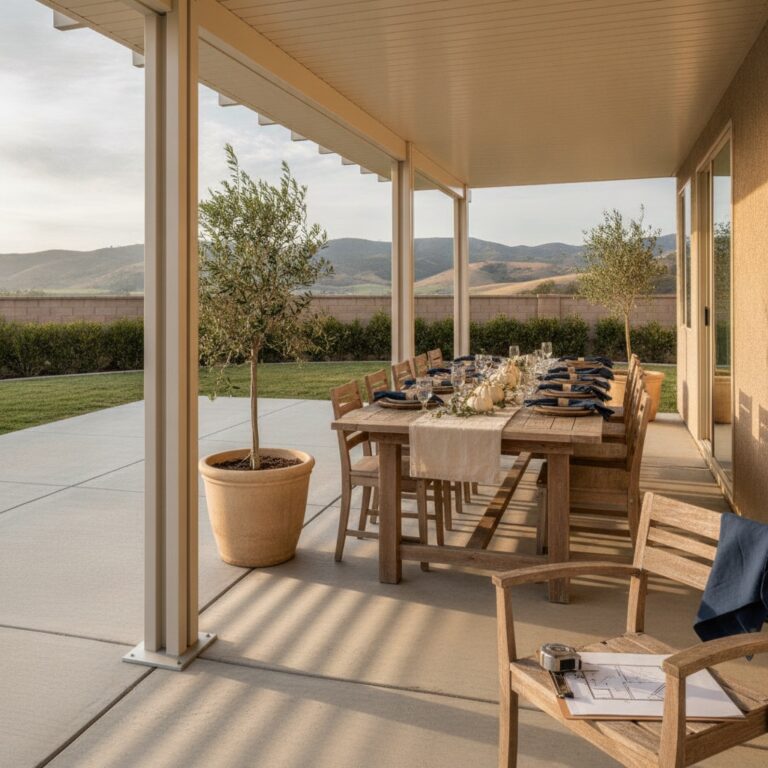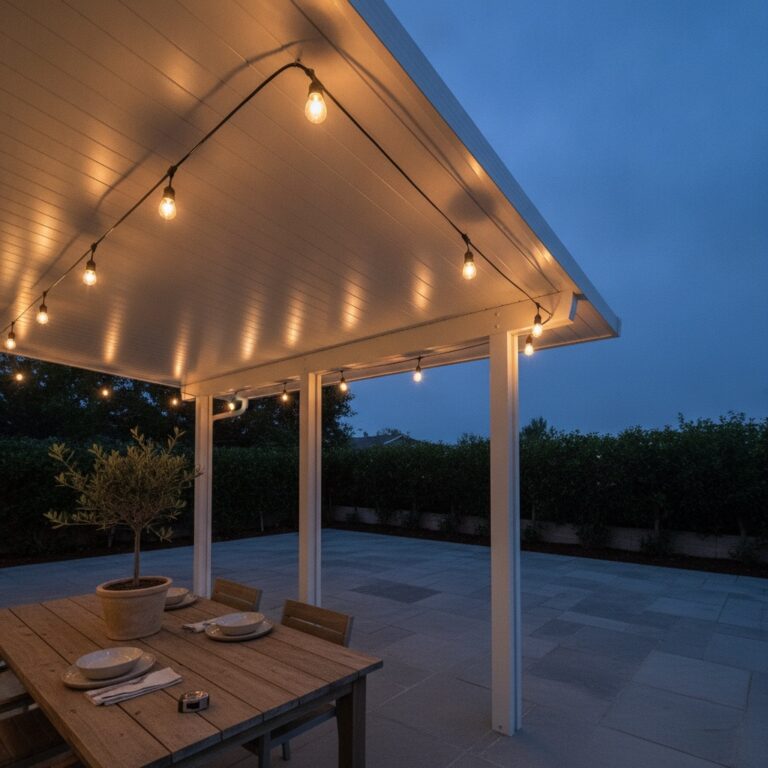
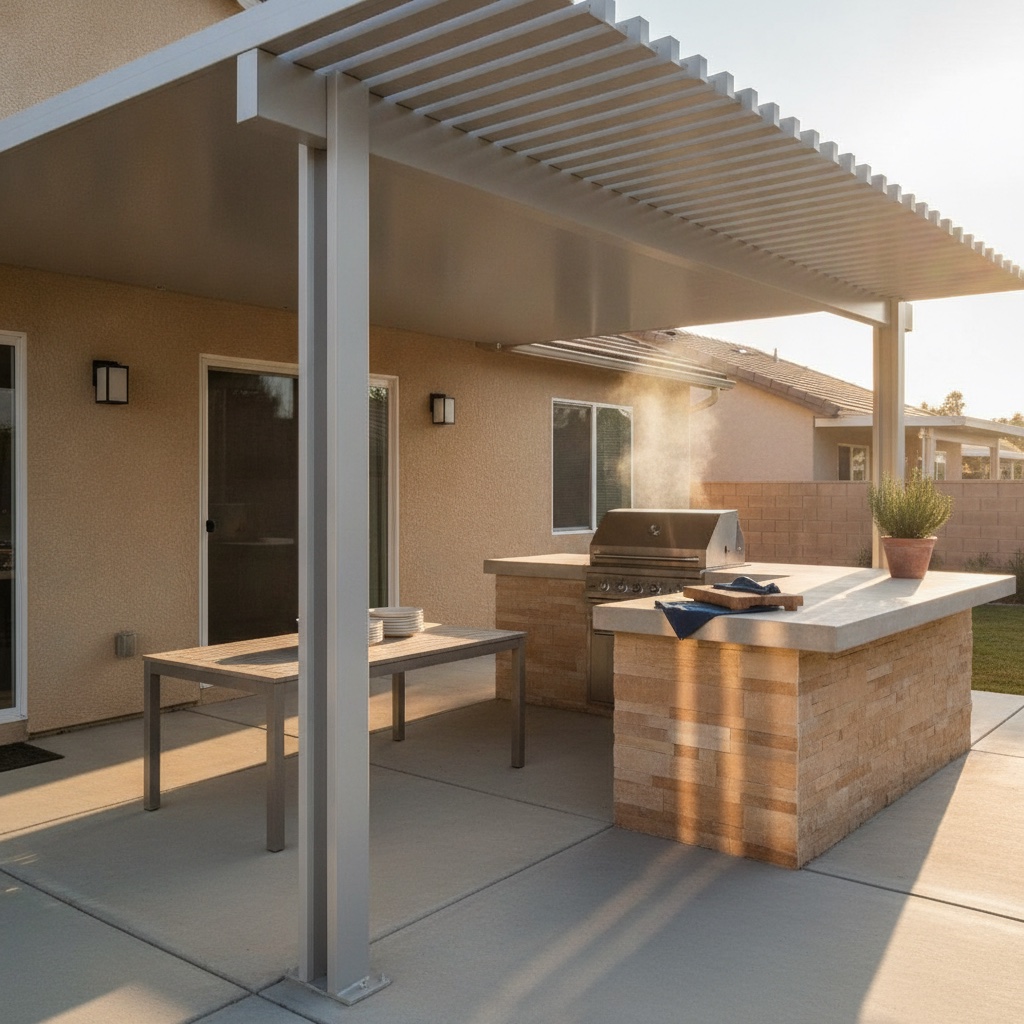

Picture a Rancho Cucamonga backyard with a 12-foot L-shaped grill island that went in last spring. This past weekend the owner cooked in 104-degree heat with a Santa Ana gust pushing smoke straight back at the house. The island works. The problem is the roof over it, or the lack of one. The Extreme Heat Warning that started October 2 runs through October 8 across Orange County, the Inland Empire, and inland San Diego, and it exposed every outdoor kitchen that went in without a plan for shade, smoke, and wind. The right cover style fixes all three, but only if you match the roof to the cooking zone.
Why the Grill Zone Changes the Roof Decision
Most patio cover decisions start with the dining table. Where does the shade land at 4 PM? How much sky do you want to see? An outdoor kitchen adds two problems a dining slab never has: rising heat and smoke. A gas grill running at 500 degrees throws a column of hot air straight up. Put a flat solid roof eight feet above it and that heat pools under the panels, the smoke rolls along the ceiling, and it drifts toward the slider and into the house.
Aluminum itself handles the heat fine. It does not burn, warp at grill temperatures, or rot from grease the way a wood pergola does. The weak point is the finish. A powder coat that sits in a steady smoke plume for five years will yellow and stain faster than the rest of the cover. That is why the roof style over the grill matters more than the roof over the table, and why many SoCal outdoor kitchens end up with two roof types on one structure.
Solid Roof Over the Kitchen: Full Shade, Real Tradeoffs
A solid aluminum roof gives the cook the most protection. During a week like this one, with Corona and Riverside forecast in the low 100s, full shade from a solid roof can make the counter feel 10 to 15 degrees cooler than open sun. It also protects a built-in fridge, a pellet smoker controller, and stone counters from UV and the occasional winter storm. For a homeowner who cooks year-round, that protection pays for itself in equipment life alone.
The cost is ventilation. A solid roof over a grill needs a plan for the smoke. The common fixes are a listed outdoor vent hood ducted through the roof panel, or a gap in the roof directly over the grill. Always follow the grill manufacturer’s overhead clearance, which often runs 36 to 48 inches to any surface without a hood. A 10-foot attached cover with a 3-inch insulated panel gives you more breathing room than a low 8-foot header. If your grill sits under the lowest point of a sloped roof, move the grill or raise the cover. Do not count on the wind to clear it.
- Best for: daily cooks, built-in appliances, west-facing kitchens in Temecula, Corona, or Fontana
- Watch for: smoke pooling, finish staining, low clearance at the drip edge
- Typical spec: 3-inch insulated panels, 9 to 10 foot height at the house, a dedicated hood or vent opening
Lattice Over the Grill: Smoke Escapes, Sun Gets In
A lattice roof solves the smoke problem by design. The open rafters let heat and smoke rise straight out, so there is no ceiling to trap the plume. In coastal cities like Huntington Beach, Dana Point, or Encinitas, where the afternoon sea breeze keeps highs in the 70s most of the year, a lattice cover over the kitchen often works on its own. The cook gets striped shade and the smoke disappears.
Inland, the tradeoff gets sharper. Standard 2×3 lattice rafters at 3-inch spacing block somewhere around half the direct sun at midday, less when the sun drops low in the west. During an October heat wave, that means the cook stands in a grid of hot stripes at 5 PM while the guests sit in full shade under the solid section. Lattice also does nothing for rain. A built-in fridge or electronic ignition under open lattice needs its own weather cover from November through March.
One middle path is tighter lattice. Rafters at 2-inch spacing, or a 3×8 header with deeper slats, push shade coverage closer to 70 percent at midday while still venting smoke. It costs a little more in material, and it looks heavier from the yard, but it suits kitchens in Anaheim, Orange, or Escondido where the cook wants more cover without closing the roof.
The Split Roof: Solid Over the Table, Lattice Over the Fire
The style that fits most SoCal outdoor kitchens is a combination cover. One structure, one set of posts, two roof types. The solid section runs over the dining or lounge area, usually tied into the house with a ledger. The lattice section runs over the grill island, letting smoke escape and keeping the hottest appliance away from the panels. A common footprint is a 12 by 24 foot cover split into a 12 by 14 solid section and a 12 by 10 lattice section over the island.
Homeowners like the combo because each zone gets the roof it needs. The table stays fully shaded during the 4 to 7 PM window when guests arrive. The cook gets airflow, and the smoke goes up instead of sideways. It also reads well from the yard. A crisp line where the panels end and the rafters begin gives the cover a custom look, especially in a bronze or dark finish, which industry trend reports point to as the leading color choice for 2026 outdoor structures.
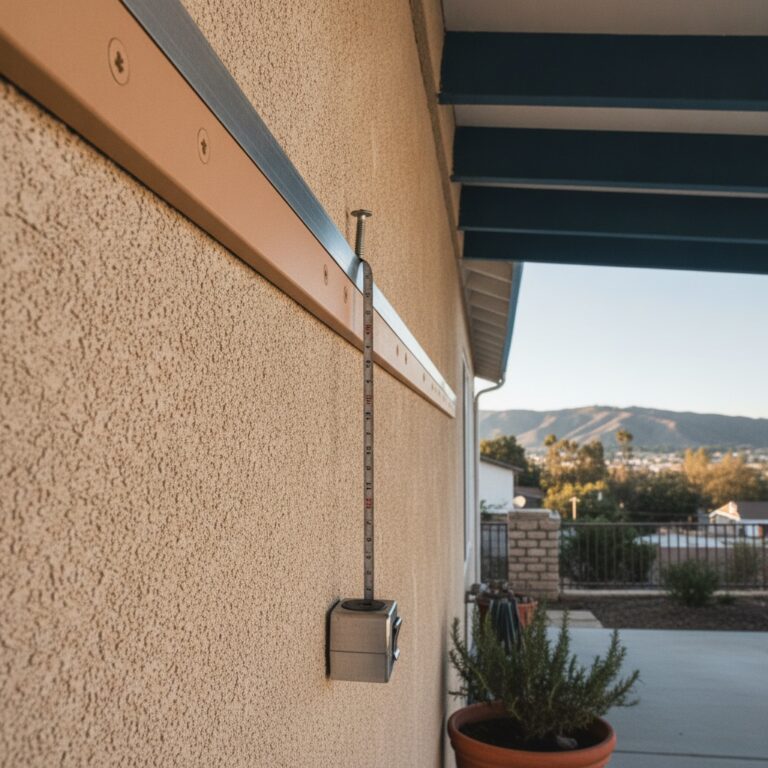
The planning detail that matters most is where that split line falls. Measure the island first. The lattice section should extend at least 2 feet past each end of the grill and over the cook’s standing position. A split line that lands over the grill hood, half solid and half open, gives you the worst of both: smoke trapped on one side, sun on the other.
Wind, Posts, and the Santa Ana Factor
The Santa Ana event over the October 3 weekend pushed 40-plus mph gusts through Fontana, Rialto, and the Cajon Pass foothills, and fire officials told residents to secure their BBQs and patio furniture. That same wind tests a patio cover. A solid roof catches more uplift than lattice, so a solid section over a kitchen in a wind corridor needs proper footings, correctly sized posts, and attachment hardware rated for the load in your city’s permit set. A freestanding kitchen cover in Upland or Yucaipa usually needs deeper footings than an attached cover in Irvine.
Post placement also shapes the kitchen. A 3×8 aluminum beam can clear-span roughly 16 to 20 feet depending on the roof load and system, which lets you keep a post out of the cooking aisle. Put posts at the ends of the island, never in the 42-inch walkway between the grill and the bar seating. The newer lower-maintenance finishes help too. Ask for a powder coat that meets AAMA 2604, or AAMA 2605 for the best fade and chalk resistance, especially on the section that sees smoke and afternoon sun every day.
If this week’s heat had you cooking dinner in full sun or fighting smoke under the wrong roof, it is a good time to sketch the fix before the holiday hosting season. We can measure your island, map the shade at the hours you actually cook, and show you solid, lattice, and split options side by side at your house. Request a free in-home quote and get a cover that works for the cook and the guests.
Morning-context sources used: The Watchers, California heat wave triggers Extreme Heat Warnings through October 8 (Oct 3, 2026); Pain In The Pass, Moderate Santa Ana Wind Event and a Fire Risk this Weekend (Oct 3, 2026); NIFC Monthly Seasonal Outlook (issued Oct 1, 2026); Texas Patio Covers, Trending Outdoor Living Styles for 2026; Aluglobus, Aluminum Patio Cover Kits in 2026 Buyer’s Guide.