
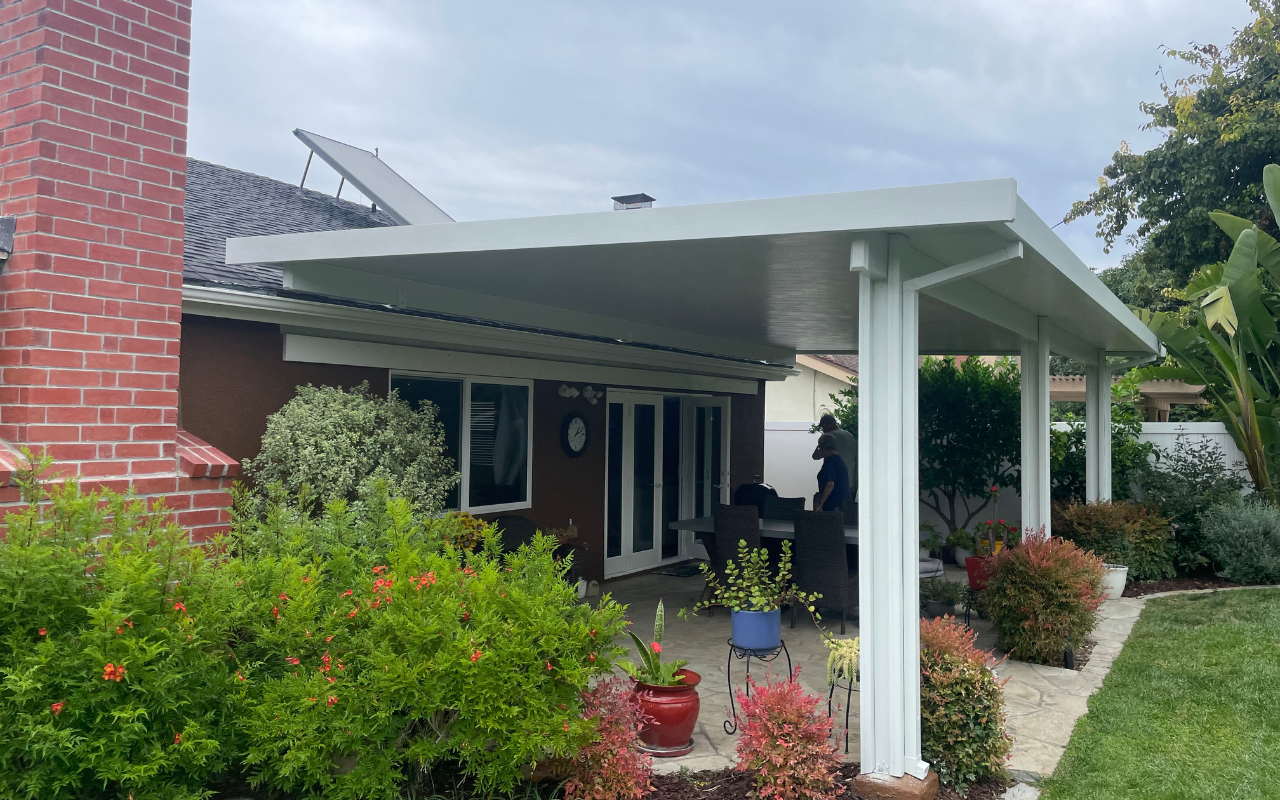

If you’ve been waiting for the right moment to make energy-efficient upgrades to your home, the clock is ticking. The Federal Energy Tax Credits 2025 are set to expire on December 31, 2025, and that means homeowners only have a short window left to claim up to $3,200 in valuable tax savings.
For homeowners in Orange County, California, this could be the perfect time to invest in insulated aluminum patio covers, energy-efficient outdoor lighting, or cooling features that enhance comfort while qualifying for these generous incentives.
At JLN Aluminum Patio Covers, we’re helping homeowners take advantage of these credits before they disappear — and ensuring every installation meets the federal requirements for eligibility.
Why This Matters: Federal Energy Credits Are Ending Soon
The Energy Efficient Home Improvement Credit (IRC §25C) allows homeowners to claim 30% of qualifying improvement costs, up to a total of $3,200 per year. But here’s the catch — no property placed in service after December 31, 2025, will qualify.
That means if you start your project too late — or it’s not completed and operational before year-end — you’ll miss out completely.
The IRS’s updated Fact Sheet 2025-01, released in early 2025, introduced several important changes. Homeowners must now ensure their improvements come from Qualified Manufacturers (QM) and report each item’s PIN (Qualified Manufacturer Identification Number) on their tax return. Without it, the credit can be denied.
In short, waiting too long could cost you thousands in lost tax credits.
What’s New for 2025: Updated IRS Rules You Need to Know
Before diving into how to qualify, here’s a summary of the most recent IRS updates for 2025 homeowners should know:
- Qualified Manufacturer Requirement: Starting this year, credits are only available for products made by certified Qualified Manufacturers (QMs).
- PIN Reporting: You must include the manufacturer’s PIN on your Form 5695 to receive the credit.
- Expiration Date: The program ends December 31, 2025 — no extensions expected.
- Nonrefundable Credit: This credit can reduce your tax bill to zero, but unused portions can’t be carried forward.
- Rebate Rules: If you receive rebates from utilities or local programs, the total eligible cost for the credit will be reduced accordingly.
👉 For full details, visit the official IRS Energy Efficient Home Improvement Credit page.
How Much Can You Save? Up to $3,200 Annually
Under the 2025 guidelines, homeowners can claim up to $3,200 in total credits per year — split into two main categories:
| Credit Type | Coverage | Annual Limit |
|---|---|---|
| General Energy Efficiency Upgrades | Includes insulation, windows, doors, and skylights | Up to $1,200 |
| Residential Energy Property (e.g., HVAC, heat pumps) | Includes heat pumps, water heaters, and biomass stoves | Up to $2,000 |
For outdoor projects, combining multiple qualifying improvements — such as insulated patio covers and energy-efficient outdoor lighting — can help you reach the $3,200 limit faster.
When properly planned, this credit not only lowers upfront costs but also reduces long-term energy bills, delivering savings that pay off year after year.
Qualifying Outdoor & Patio Improvements for 2025
Most homeowners don’t realize that patio structures and outdoor systems can qualify for energy credits under the IRS guidelines. Here are a few examples of projects that can meet the criteria:
1. Insulated Patio Covers
Insulated aluminum patio covers are more than just stylish shade structures — they significantly reduce heat gain and cooling costs. By reflecting sunlight and improving thermal performance, they can qualify as energy-efficient building improvements.
At JLN Aluminum Patio Covers, we specialize in DuraCool insulated covers, which are designed to maintain comfortable outdoor spaces year-round while meeting energy-efficiency standards.
2. Energy-Efficient Outdoor Lighting
LED fixtures, motion-sensor systems, and smart lighting technologies all reduce power consumption. If these systems are ENERGY STAR® rated, they can help you qualify for federal energy credits while cutting electricity costs.
3. Ceiling Fans & Ventilated Systems
Adding integrated ceiling fans to your covered patio helps reduce your cooling load indoors and outdoors. When paired with an insulated cover, they improve energy efficiency across your home.
How to Claim Your 2025 Energy Tax Credit
Claiming your credit is easier than you might think — here’s the step-by-step process:
Step 1: Confirm Eligibility
- Your home must be your primary residence.
- The improvement must be installed and operational before December 31, 2025.
- For 2025, eligible property must come from a Qualified Manufacturer with a valid PIN.
Step 2: Collect All Documentation
Keep all invoices, product certifications, and your contractor’s receipts. You’ll also need the manufacturer’s PIN for each qualifying item. If your project includes rebates, document those as well since they may affect your credit amount.
Step 3: Complete IRS Form 5695
- Use Part II of Form 5695 for the Energy Efficient Home Improvement Credit.
- Calculate 30% of your eligible costs (up to $3,200 total).
- Include all PINs and supporting documentation.
You can find the most recent version of Form 5695 on the IRS website.
Step 4: File and Retain Records
Submit the form with your tax return and keep all related documents for several years in case the IRS requests verification.
Why Timing Is Everything: Installation Deadlines
To qualify, your improvements must be installed and operational by December 31, 2025 — not just ordered. With installation timelines averaging 8–10 weeks, homeowners who wait until late fall could miss the window.
Here’s a general timeline you can expect:
| Project Phase | Timeframe | Key Notes |
|---|---|---|
| Site assessment & design | 1–2 weeks | Schedule now to secure availability |
| Material ordering | 4–6 weeks | Some energy-rated materials take longer |
| Permitting & approvals | 1–2 weeks | Start this early to avoid delays |
| Installation | 1–2 weeks | Ensure project completion before the cutoff |
| Final inspection | Immediately after | Confirm functionality and compliance |
Tip: Contractors often book out months in advance. To lock in your energy credit eligibility, schedule your project as soon as possible.
Real-World Example: What You Could Save
Let’s break down a realistic example.
If you invest $15,000 in an insulated aluminum patio cover with energy-efficient LED lighting and ceiling fans, you could qualify for the full $3,200 tax credit.
- Total project cost: $15,000
- Tax credit: $3,200
- Effective cost after credit: $11,800
That’s an instant savings of more than 20% — and that doesn’t even factor in your ongoing energy savings from reduced cooling costs.
Local Focus: Why Orange County Homeowners Should Act Now
In Orange County, homeowners enjoy outdoor living nearly year-round — but with increasing heat and energy costs, energy-efficient patio covers have become more than just luxury upgrades. They’re smart investments that boost comfort, cut utility bills, and now, qualify for valuable federal incentives.
At JLN Aluminum Patio Covers, we’ve spent over 30 years helping Orange County residents enhance their backyards with high-quality, durable, and energy-efficient patio solutions. Our insulated aluminum patio covers are designed to last, blending beauty with function — and now, they can save you money through 2025 tax credits.
Learn more about our installation services on our Patio Cover Services page.
What Happens After 2025?
If you miss the deadline, you miss the opportunity — it’s that simple.
After December 31, 2025, no new property placed in service will qualify for these credits. The IRS has not indicated any plans to extend them, meaning the Energy Efficient Home Improvement Credit and the Residential Clean Energy Credit could both end permanently.
Delaying your project could cost you thousands in lost credits — and with rising material costs, waiting may mean paying more later.
Common Questions Homeowners Ask
Can I claim the credit for rentals or vacation homes?
No. The property must be your primary residence to qualify under §25C.
Can I combine this with state or local incentives?
Yes, but any rebates or subsidies may reduce your eligible cost basis. Check your local utility company’s rebate programs to maximize total savings.
Do I need to itemize deductions?
No — energy tax credits are available even if you take the standard deduction.
What if my project spans two years?
Only the portion placed in service by December 31, 2025, qualifies for the credit.
Final Call: Don’t Miss Out on $3,200 in Tax Savings
Time is running out — and once the 2025 Federal Energy Tax Credits expire, they’re gone for good.
If you’re thinking about upgrading your outdoor space, now’s the time to take action. At JLN Aluminum Patio Covers, we’ll help you choose energy-efficient solutions that qualify under federal guidelines, handle all installation details, and provide documentation for your credit claim.
💬 Schedule Your Free Energy Credit Assessment Today
We’ll review your project, calculate your potential savings, and ensure your installation qualifies before the December 31 deadline.
👉 Explore Our Patio Cover Services
Or call us directly to reserve your installation slot — availability fills up fast as the deadline approaches!
Don’t miss this limited-time opportunity.
👉 Book Your Free Consultation Now or call (714) 713-2240 to get started before it’s too late.


