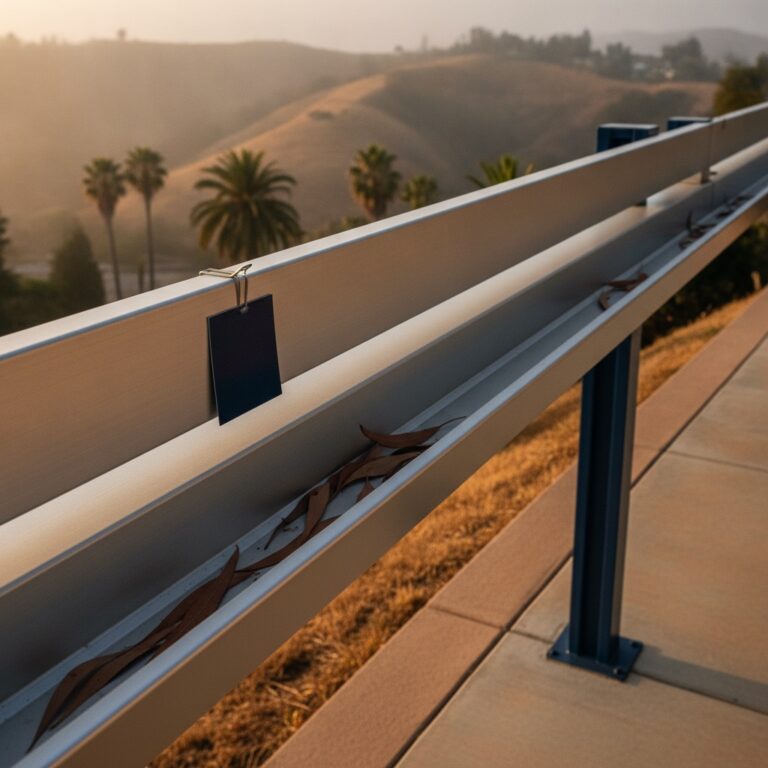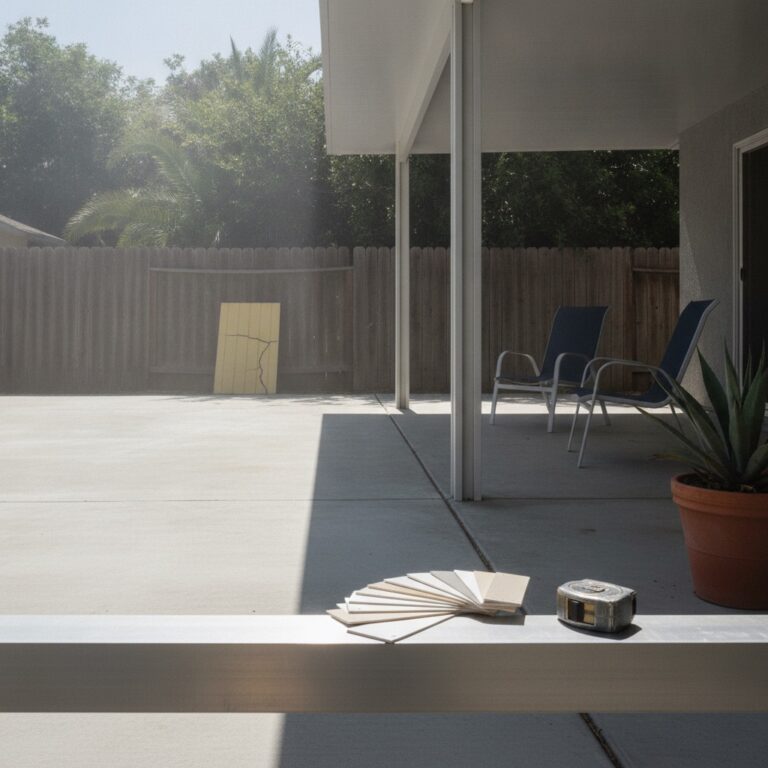

Drive through Rancho Cucamonga in mid-August and every backyard conversation is about heat. The Riverside metro hit triple digits again the first week of the month, and forecasters say the ridge parked over the Southwest is not moving anytime soon. But ask an installer what actually breaks patio covers in the Inland Empire and the answer is not the sun. It is the wind that shows up after Labor Day, funneling out of the Cajon Pass with enough force to peel a cheap cover apart at the screws.
Santa Ana season runs September through March. In a typical year Southern California sees 10 to 25 distinct wind events, and the passes north of Fontana and San Bernardino take some of the hardest hits. August, in other words, is the last quiet month on the calendar. It is the right time to look hard at how your cover, or the cover you are about to buy, is attached to the earth.
What the Cajon Pass Does to a Backyard
Santa Ana winds start as cool, dry air pooling over the Great Basin. As that air drains toward the coast it squeezes through the mountain gaps, and the Cajon Pass acts like a nozzle. A pressure gradient that produces 40 mph winds in the high desert can accelerate to 60 mph or more by the time it reaches Rancho Cucamonga, Fontana, and the north side of Ontario.
Wind advisories for the Inland Empire valleys routinely call for northeast gusts of 50 to 60 mph. Homes in the corridor below the pass carry measurably higher wind loads than sheltered neighborhoods a few miles south. That difference matters. A patio cover that performs fine in Corona can fail in Etiwanda, even though the two yards look identical on paper.
This fall’s seasonal outlook calls for a below-normal count of Santa Ana events in October and November. Do not let that lull you. This past February a single event drove 60 mph gusts across the region in the middle of a record heat spell, proof that wind season does not read the calendar. Seasonal forecasts describe averages. Your roof panels experience the peaks.
You can see the corridor effect on any advisory morning. Flags in Alta Loma stand straight out while flags in Chino barely move. Insurance adjusters see it too, in the pattern of claims that follow each event: lifted panels, racked posts, and ledgers pulled loose, clustered in the neighborhoods closest to the pass. The wind map of the Inland Empire is not even, and your anchoring spec should not be either.
Fasteners That Hold at 60 MPH
Start with the ledger, the header that ties an attached cover to your house. We fasten ledgers with 3/8 inch lag screws driven into wall framing, not stucco, on 16 inch centers. A common failure on older covers is a ledger screwed into sheathing alone. Under gust loading those fasteners work loose one wind event at a time until the whole assembly rattles like a screen door.
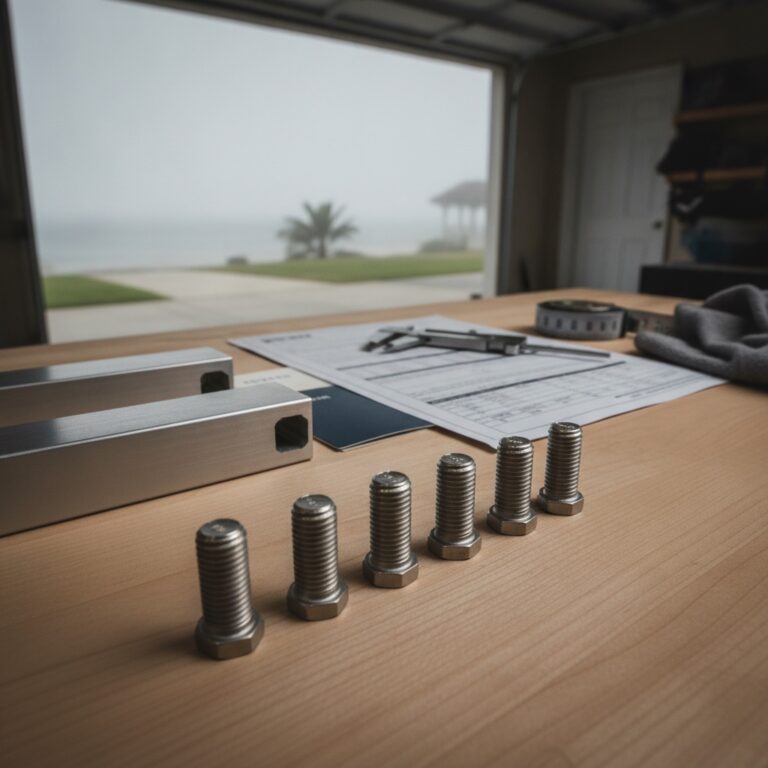
Fastener metal matters as much as fastener size. Zinc-plated hardware saves a few dollars up front, starts corroding within two or three seasons, and a corroded fastener loses clamping force exactly when you need it most. Stainless steel or coated structural screws rated for exterior aluminum assemblies add maybe $80 to a 10 by 20 foot cover. That is cheap insurance in wind country.
Roof panels deserve the same scrutiny. Wind failures rarely rip a whole cover off a house in one gust. They peel panels, starting at an unsecured edge. Ask any installer bidding your project how many fasteners go into each panel-to-rafter connection and what the spacing is at the eave, where uplift is strongest. If the answer is vague, keep shopping.
Post Anchors and Footings Built for Wind Country
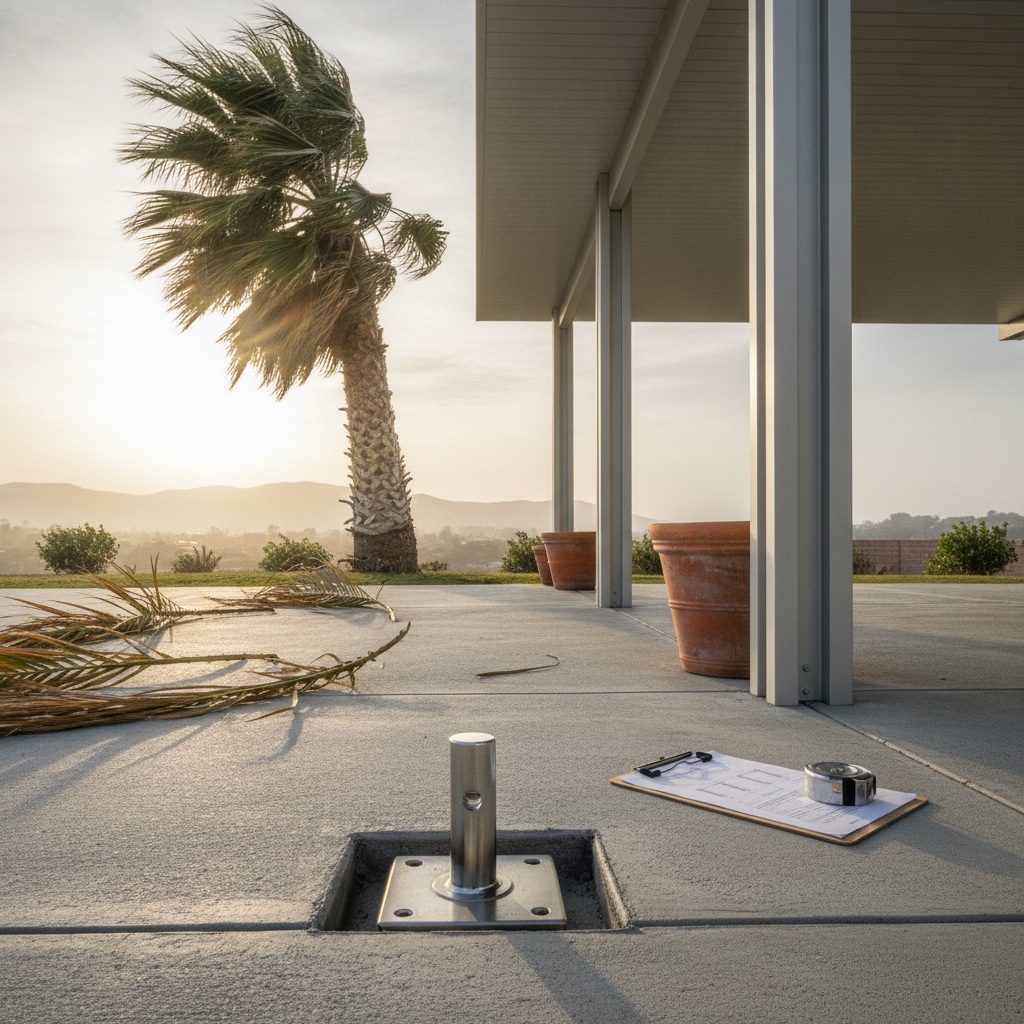
Wind pushes sideways, but the force that kills patio covers is uplift. A solid roof acts like an airplane wing in a 60 mph gust, and the load path runs down the posts and into the footings. In the wind corridor we pour concrete footings up to 24 inches deep and set posts with embedded or bolt-down bases rated for uplift, not the friction-fit hardware that big-box kits ship with.
Engineering matters here too. Inland Empire building departments plan-check patio covers against design wind speeds around 100 mph, and parts of the Cajon corridor sit inside a mapped special wind region with tougher requirements still. A permitted cover comes with stamped calculations showing the beams, posts, and anchors work together as a system. An unpermitted one comes with hope.
Post count plays into wind as much as span. Wednesday’s post covered how beam span dictates post spacing; wind is the other half of that equation. A 20 foot beam on two posts puts more load through each anchor than the same beam on three. In Fontana or north Upland we sometimes recommend the extra post purely for gust loading, even when the span tables technically allow fewer.
Use August While You Have It
A permitted attached cover in the Inland Empire typically runs three to five weeks from signed contract to final inspection, plan check included. Sign in mid-August and you are sitting under an anchored, inspected cover before the first advisory of the season. Wait until an October wind event scares you into it and you will stand in line behind every other homeowner it scared.
Already own a cover? Give it an August checkup. Grab each post and push. Nothing should move. Look along the ledger flashing for gaps, check panel edges for lifted corners, and eyeball every visible fastener for rust streaks. Ten minutes now beats a February repair bill. An aluminum cover with an AAMA 2604 powder coat will hold its finish against sun and rain for a decade or more, but no finish protects hardware that was wrong on day one.
JNL Aluminum builds for the specific block you live on. If your yard sits in the wind corridor between the 15 and the 210 freeways, we spec the fasteners, post anchors, and post counts for the gusts that funnel out of the pass, and the structure carries a lifetime warranty. Request a free in-home assessment and we will walk the yard, read the wind exposure, and price a cover built for your microclimate instead of the average one.
Morning-context sources used: spokesman.com, Aug 9, 2026 (SoCal heat wave, fire weather, 45 mph corridor gusts), https://www.spokesman.com/stories/2026/aug/09/socal-heat-wave-triple-digit-temperatures-fire-wea/; laist.com, Aug 2026 (first-weekend heat wave), https://laist.com/news/climate-environment/august-first-weekend-heat-wave; weatherwest.com, Aug 2026 (Western ridge, double-peaked heatwave outlook), https://weatherwest.com/archives/43959; GACC Southern California seasonal outlook, fall 2026 (below-normal Santa Ana event count, storm timing), https://gacc.nifc.gov/oscc/predictive/outlooks/myfiles/assessment.pdf; ameriside.com (Santa Ana season exterior prep, 10-25 events per year), https://ameriside.com/santa-ana-wind-season-exterior-care/.