
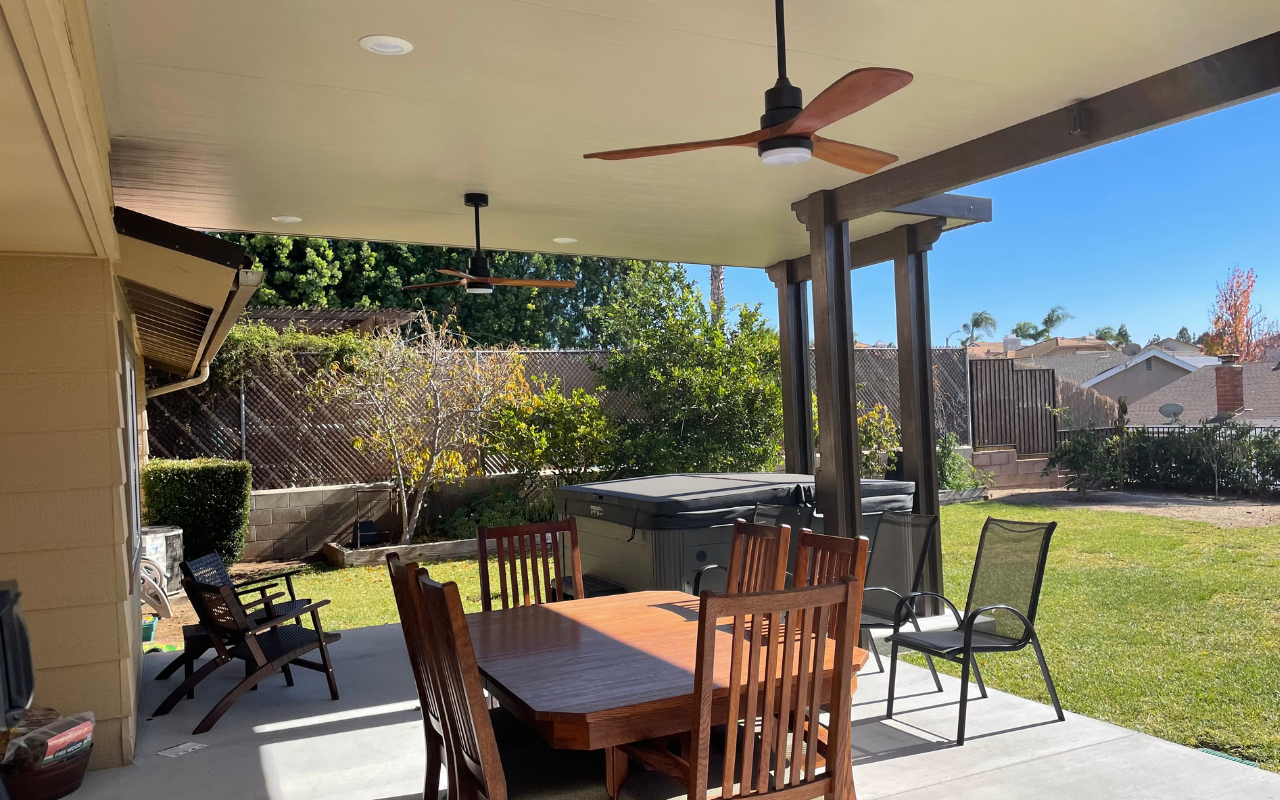

For many Orange County homeowners, outdoor living isn’t just a luxury—it’s a lifestyle. Whether you’re hosting backyard barbecues, relaxing with your family, or simply enjoying California’s sunshine, a patio cover is one of the best ways to make your outdoor space more comfortable and stylish.
But when it comes to choosing the right material, the debate between aluminum vs wood patio covers continues. Both offer distinct advantages—but which one truly delivers the best long-term value?
In this comprehensive guide, we’ll break down everything you need to know—from initial installation costs to 20-year maintenance projections, energy efficiency, and resale ROI—so you can make a confident, informed choice that fits both your budget and your lifestyle.
Initial Cost Comparison: Aluminum vs Wood
Before diving into durability or aesthetics, most homeowners start with one question: What’s the cost difference?
| Material | Installed Cost per sq. ft. | Average Total (250 sq. ft.) |
|---|---|---|
| Aluminum | $20 – $50 | $5,000 – $12,500 |
| Wood | $60 – $120 | $15,000 – $30,000 |
While wood patio covers carry a traditional appeal, they’re far more expensive upfront. Skilled labor, finishing work, and sealing all add to the cost.
Aluminum, however, offers a budget-friendly alternative that doesn’t compromise on beauty. Modern options like Alumawood mimic the texture of real wood—right down to the grain pattern—while staying weatherproof and durable.
If you’re curious about what your custom aluminum patio cover would cost, visit JLN Aluminum Patio Covers for a free consultation and estimate tailored to your home.
20-Year Cost Analysis: True Cost of Ownership
The true test of value lies not in what you pay upfront, but what you’ll spend maintaining your patio over decades.
| Material | Initial Cost | Maintenance | Repairs/Repaint | Total 20-Year Cost |
|---|---|---|---|---|
| Aluminum | $5,000 – $12,500 | Minimal cleaning | None | $5,000 – $13,000 |
| Wood | $15,000 – $30,000 | Painting every 3–5 years ($1,500 each) | Rot & termite repair | $25,000 – $40,000+ |
Over two decades, aluminum patio covers cost up to 70% less to own than wood. The reason is simple—wood requires constant attention: painting, staining, sealing, and occasional structural repairs.
Aluminum stays crisp and clean with little more than seasonal rinsing. The savings stack up year after year, giving you a patio cover that looks great without ongoing expenses.
Maintenance Requirements: Simplicity vs. Upkeep
When comparing aluminum vs wood patio covers, maintenance often becomes the deciding factor for busy homeowners.
- Aluminum: Requires occasional washing to remove dirt or debris. No painting, sealing, or refinishing ever needed.
- Wood: Demands frequent repainting or staining to prevent cracking and color fade. Termite treatment and rot repair are common.
According to the EPA’s Termite Control Guide, California homes are especially prone to termite damage due to the state’s warm climate. Aluminum’s termite immunity saves you thousands in pest control over time.
Pro Tip: If you prefer a natural wood appearance, consider wood-grain aluminum. It gives you the rustic charm of wood without the endless maintenance routine.
Lifespan and Durability: Which Lasts Longer?
The durability gap between these two materials is massive.
- Aluminum Patio Covers: Typically last 30–40 years with minimal care. They resist rust, warping, and cracking even in extreme sun.
- Wood Patio Covers: Average 10–15 years, depending on exposure and maintenance. Sun, moisture, and pests shorten lifespan considerably.
Because aluminum doesn’t absorb water or heat the same way wood does, it holds up better against Orange County’s year-round sunshine and occasional coastal humidity.
Over the lifetime of your home, you may replace a wooden patio cover two or even three times, while aluminum will still look new.
Climate & California-Specific Factors
Orange County homeowners face unique climate challenges: heat, drought, and the ever-present risk of wildfires. Here’s how the two materials perform under those conditions:
- Fire Resistance: Aluminum is non-combustible. Cal Fire lists metal structures as safer for wildfire-prone regions, providing peace of mind for inland and hillside homes.
- Termite Immunity: Aluminum can’t be damaged by termites, a common problem in wood structures across Southern California.
- Weather Resistance: Aluminum doesn’t warp or crack from drought or UV exposure. Wood, however, expands and contracts with moisture—causing paint peeling and structural weakness over time.
When you factor in California’s environmental conditions, aluminum patio covers are the clear long-term winner.
Aesthetic Appeal: Can Aluminum Look Like Wood?
Absolutely. One of the most common misconceptions about aluminum is that it looks “too industrial.” Today’s Alumawood and wood-grain aluminum options are designed to replicate the warmth, texture, and color depth of natural wood.
You can choose from a variety of finishes—cedar, driftwood, walnut, or white—blending perfectly with your home’s design. Aluminum gives you the timeless look of wood without the hassle of upkeep.
Suggested image alt texts:
- “wood-grain aluminum vs wood patio covers Orange County”
- “Alumawood patio cover installation in California”
- “patio cover material comparison chart”
Energy Efficiency: Keep Cool and Save Money
Energy efficiency is another area where aluminum shines.
Thanks to its reflective coatings and “cool roof” technology, aluminum deflects sunlight instead of absorbing it. This keeps your patio—and even adjacent interior spaces—cooler.
Wood, by contrast, absorbs heat, making shaded areas warmer and potentially increasing indoor temperatures. For Orange County residents battling high summer energy bills, aluminum’s reflective surface can reduce their cooling costs significantly.
According to Energy.gov, reflective materials on exterior surfaces can lower cooling energy use by 10–15%.
Return on Investment (ROI): A Smarter Long-Term Decision
Outdoor upgrades often yield some of the highest returns for California homeowners.
A high-quality aluminum patio cover can increase home value while improving daily comfort. According to HomeLight, durable, low-maintenance outdoor improvements can raise resale prices by up to 10% in competitive California markets.
Wood covers, while attractive, require ongoing costs that future buyers may view as a downside. Aluminum, on the other hand, delivers a “set it and forget it” appeal that’s ideal for resale.
In short: Aluminum patio covers don’t just pay for themselves—they make your home more desirable.
Expert Insights: When Wood Still Makes Sense
There are rare occasions when a wood patio cover may still be the right choice:
- Historic restorations where authenticity is required.
- Custom architectural projects that demand intricate woodwork.
- Short-term solutions for temporary structures or rentals.
However, even in those cases, many homeowners now turn to Alumawood, which combines the craftsmanship of wood with the resilience of aluminum.
Why Orange County Homeowners Choose JLN Aluminum Patio Covers
At JLN Aluminum Patio Covers, we’ve spent decades helping Orange County homeowners design beautiful, lasting outdoor spaces.
Our patio covers are built from high-quality aluminum that resists rust, warping, and fading—engineered to thrive in California’s climate.
Whether you prefer a solid, lattice, or insulated design, our experts will guide you through every step—from material selection to installation—to ensure a seamless fit for your home.
Ready to see the difference?
Schedule your Free Material Comparison Consultation today. We’ll show you real aluminum and wood samples so you can compare their look, texture, and quality side by side.
The Final Verdict: Aluminum Wins on Every Front
When you add everything up—cost, durability, maintenance, energy savings, and ROI—the clear choice for most homeowners is aluminum patio covers.
| Category | Winner | Why |
|---|---|---|
| Upfront Cost | Aluminum | Half the price of wood |
| Maintenance | Aluminum | No painting or staining needed |
| Durability | Aluminum | 30+ years of weather resistance |
| Energy Efficiency | Aluminum | Reflects sunlight, keeps spaces cool |
| ROI | Aluminum | High resale value and low upkeep |
| Aesthetic Variety | Tie | Wood is classic; aluminum mimics it perfectly |
Wood remains a beautiful traditional option, but aluminum offers modern homeowners a smarter, more sustainable investment.
Conclusion: Upgrade Your Outdoor Space with Confidence
Choosing between aluminum vs wood patio covers doesn’t have to be complicated. Once you understand the long-term costs, maintenance demands, and durability differences, aluminum emerges as the clear, cost-effective choice—especially in Southern California’s climate.
From its fire resistance and termite immunity to its energy efficiency and long lifespan, aluminum delivers decades of beauty and protection with minimal effort.
If you’re ready to create a stylish, low-maintenance outdoor retreat that enhances your home’s value, reach out to JLN Aluminum Patio Covers today.
Get Your Free Material Comparison Consultation—We’ll Show You Real Samples and Calculate Your 20-Year Savings!
Your perfect patio cover—and years of stress-free outdoor living—are just one consultation away. 🌤️
Choosing the right patio cover is more than a design choice — it’s a financial and lifestyle decision. By opting for aluminum, you’re not just saving money; you’re choosing peace of mind, durability, and year-round beauty.
So whether you’re in Irvine, Mission Viejo, or Anaheim Hills, you can rest easy knowing your outdoor space will look great and perform beautifully — for decades to come.


