
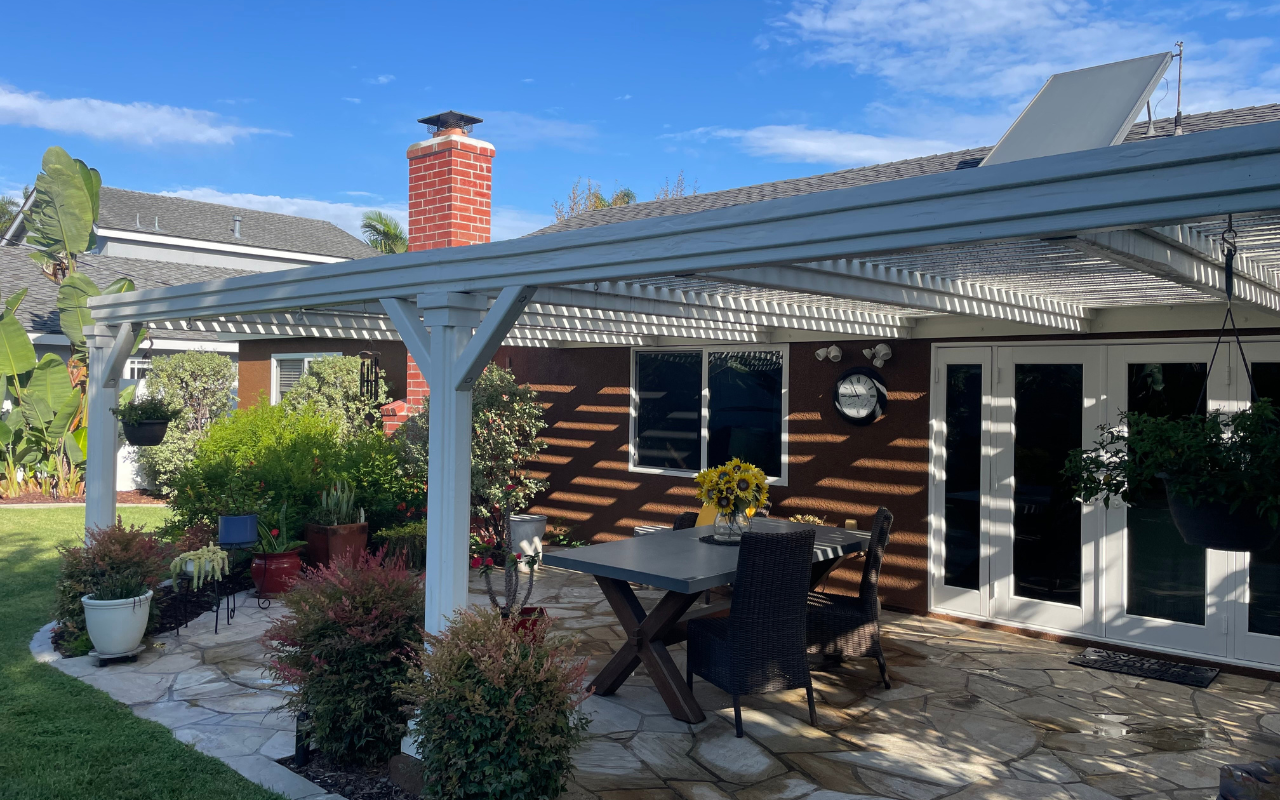

Rethinking the Timing: Why Fall & Early Winter Trump Summer for OC Homeowners
When most people think of outdoor projects, summer immediately springs to mind—longer days, warm weather, backyard living in full swing. So naturally, many homeowners assume it’s the ideal time to build or upgrade their patio.
But if you’re in Orange County, the smarter move is often to wait until October through December. During those months, you gain advantages that most summer projects can’t deliver: lower costs, faster schedules, better contractor focus, tax planning opportunities, and even holiday readiness.
If you’re considering when to install a patio cover in Orange County, here’s why the fall-to-winter window is your best bet.
1. Busting the Summer Myth: Why “Peak Season” Isn’t Always Best
It’s easy to believe that summer is the optimal time for outdoor construction—after all, that’s when the backyard is in use, right? But in Orange County, summer also brings:
- Contractor overload: Many contractors are booked months in advance.
- Supply pressure: Demand for aluminum, lumber, hardware, and other materials drives up prices.
- Municipal delays: City permit offices and inspectors are overwhelmed, creating frustrating bottlenecks.
In contrast, by the time fall arrives, the peak rush has passed. Contractors’ schedules lighten, suppliers may offer inventory discounts, and permitting offices tend to move more efficiently. For OC homeowners who are flexible, October–December is the “sweet zone” when you can beat the rush while still working outdoors reliably.
2. Cost Savings You Can’t Ignore: 10–20% Off-Season Advantage
One of the most compelling reasons to schedule in the fall is cost savings. Because demand eases after summer, many contractors and suppliers are open to offering off-season discounts to stay busy—and those savings can be substantial.
| Cost Element | Summer / Peak Season | Fall / Early Winter (Off-Season) | Estimated Savings |
| Contractor labor & markup | Standard rates + possible premiums | Discounted to capture more jobs | ~10–20% less |
| Material costs | Higher from elevated demand | Year-end inventory sales or negotiated deals | Varies by material |
| Permitting & scheduling | Longer queues, slow turnarounds | Faster processing, less backlog | Time & hassle saved |
| Crew allocation & quality | Multiple overlapping jobs | More focus, better oversight | Fewer errors, higher care |
Because contractors are less booked, they may accept more flexible prices or design modifications. If you’re planning a premium cover (e.g., with insulated panels or custom features), that flexibility can translate into real savings.
One homeowner in OC shared that their October installation came in ~12% under what summer quotes had offered—mostly due to reduced labor surcharges and more favorable material pricing.
3. Contractor Availability: Shorter Waits & Better Quality Control
In spring and summer, it’s common to wait 8–12 weeks—or sometimes more—to get your project started. But in the fall and early winter window, many contractors see 40–60% lighter workloads. That unlocks three big advantages:
- Faster start dates: Many fall projects begin in 4–6 weeks, rather than months, ahead of schedule.
- More focus per job: Crews can dedicate more time, oversight, and care to your build.
- Greater flexibility: You can request mid-project tweaks, custom add-ons, or adjustments without triggering massive rescheduling.
In short: your patio cover becomes more than “just another job” in the queue—you’re often a priority.
Local companies such as Island Patio Covers advertise these off-season benefits directly, highlighting shorter lead times and better customer service when you book later in the year.
4. Sweet SoCal Weather: Consistency That Aids Construction
While fall and winter bring storms, cold, and unpredictable weather to much of the country, Orange County typically enjoys dry conditions and daytime temperatures between 60°F–70°F in October–December.
That mild, stable climate offers huge perks:
- Better curing for concrete, sealants, and adhesives
- No overheating or warping of materials
- Comfortable working conditions for crews (less fatigue, fewer errors)
- Minimal weather delays
Unlike a scorching summer heatwave or an unexpected spring shower, OC’s fall weather is consistent and dependable—exactly what you want during a precise job like patio cover installation.
One of the most important updates in 2025 is the tax incentive landscape. Under the Energy Efficient Home Improvement Credit, homeowners can claim qualifying energy-efficient upgrades made through December 31, 2025. IRS+1
The credit covers:
- Up to $1,200 per year for improvements such as insulation, doors, windows, and air sealing
- Up to $2,000 per year for energy-efficient appliances like heat pumps, boilers, or HVAC equipment
- The total potential annual credit: $3,200 (combined) NerdWallet+1
Importantly, the tax provisions limiting this credit—or eliminating it entirely—take effect after December 31, 2025, due to legislation like the One Big Beautiful Bill Act that accelerates expiration of many clean energy incentives. ENERGY STAR+3Kiplinger+3National Association of Home Builders+3
For your patio cover project, incorporating energy-efficient choices (insulated panels, efficient roofing, or integrated shade structures) can help you tap into part of that credit. But the key is: the work must be completed (placed into service) by the end of 2025.
If you delay into 2026, you risk losing eligibility—and that’s money left on the table.
Important note: Energy credits are nonrefundable, meaning your credit reduces your tax liability but won’t generate a refund beyond what you owe. Always consult a tax professional to verify your unique eligibility. IRS+1
6. Be Holiday-Ready: Host Under Your New Patio in Time
One of the biggest perks of a late-year installation is that your outdoor space can be fully functional by Thanksgiving, Christmas, or New Year’s Eve.
Instead of putting up with messy construction or waiting until next year, you’ll have:
- Clean, safe space for gathering outdoors
- Enhanced ambiance for holiday décor and lighting
- Peace of mind—no contractors on your property while guests are visiting
Imagine hosting your Thanksgiving dinner under your brand-new patio cover, or enjoying holiday lights without worrying about construction mess. It’s a tangible, delightful payoff of well-timed planning.
7. Jump the Spring Rush: Use It From Day One When Warm Weather Returns
Spring is notoriously busy for contractors—and that often means longer wait times, higher prices, and rushed work. But if your patio cover is already complete, you’ll be ahead of the curve.
Advantages include:
- Immediate use when warmer weather arrives
- No scrambling to schedule contractors
- Avoidance of post-January price increases
Your comfort, freedom, and enjoyment of your outdoor space start earlier—and with less stress.
8. Real OC Story: October Install Runs Smooth & Delivers Big
Here’s how one local project played out smoothly and successfully:
- Location: Laguna Hills, Orange County
- Scope: 24′ × 16′ aluminum patio cover with insulated roof panels
- Start: October 5
- Completion: October 25 (three weeks)
- Permit issued: Late September
Results & Highlights:
- Final cost ~12% below comparable summer estimates
- No weather delays, thanks to consistent 65-70°F conditions
- Passed inspection quickly
- Homeowner hosted Thanksgiving under the new cover
- Reported zero major change-order issues and high satisfaction
“We explored summer quotes and got shocked by the wait and price. When we booked for October instead, we saved thousands and had zero stress. By holiday time, the new patio was a showpiece.”
This is a prime example of what thoughtful timing + local climate + good contractor selection can produce.
9. Pro Tips to Maximize Your Fall Patio Cover Project
To get the most from your off-season window, here are practical, OC-specific hints:
- Begin planning in August/September. Use that time to vet contractors, refine your design, and prepare for permitting so you hit the October launch.
- Verify licensing: Ensure your contractor holds a valid CSLB license (Class B or C-5) and adequate insurance.
- Request energy-efficient components: If possible, include insulated panels, reflective finishes, or integrated fans—components that may help your tax credit eligibility.
- Order materials early: Secure specialty items before year-end inventory changes.
- Bundle light, power, or shade upgrades: Since labor is already on-site, adding lighting, ceiling fans, or motorized shades is often more cost-effective.
- Reserve inspection slots early: Even in fall, cities like Irvine, Anaheim, or Huntington Beach can slow down during holiday breaks—book early.
- Ask about warranty upgrades: Coastal environments can be tough on aluminum—opt for premium powder coatings or corrosion-resistant options.
10. Final Thoughts & Call to Action
If you’re considering a patio cover in Orange County, now is your moment. The October through December window gives you real competitive advantages:
✔︎ Lower costs (10–20% savings)
✔︎ Faster scheduling and better contractor attention
✔︎ Ideal weather for building & finishing
✔︎ Ability to access tax credits before its 2025 deadline
✔︎ Holiday readiness and early spring enjoyment
Delaying into 2026 may cost you on multiple fronts—higher prices, reduced tax credits, and lost months of outdoor enjoyment.
Ready to Make It Happen?
Don’t wait for spring. Seize the off-season opportunity now.
👉 Schedule your free fall consultation today and save 15% on October installations!
📅 Limited availability remains for 2025 — reserve your spot now before it’s too late!
📞 Call [+ 1 (714) – 639 – 9270 or fill out our online form to get started.
Your ultimate patio cover—and your best outdoor season yet—starts with the right timing.


