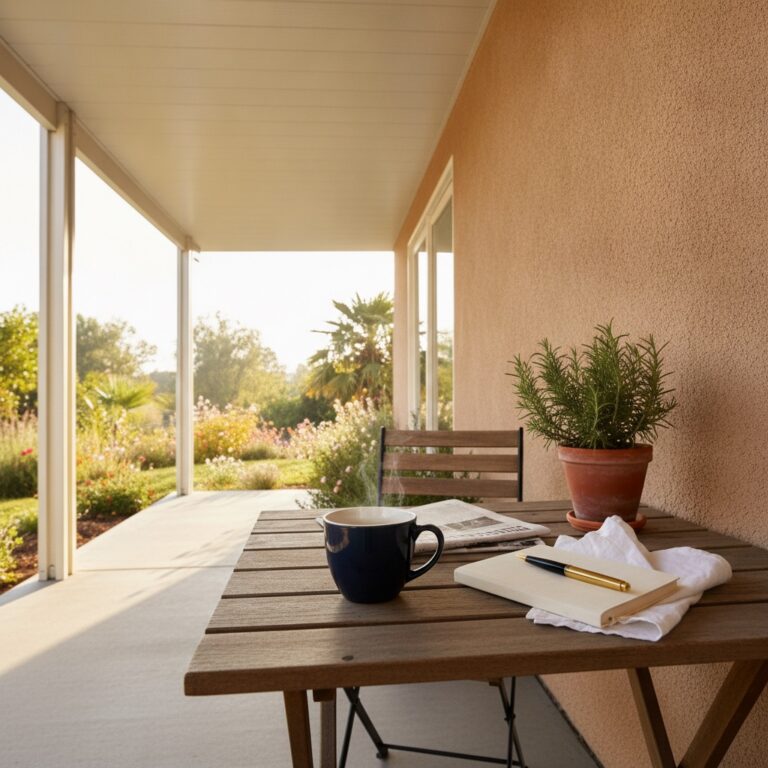

The heat advisory that sat on Southern California through Monday, July 27 pushed Riverside and Corona past 100 degrees, and overnight lows in the LA Basin barely slipped under 70. Forecasters now give the region a 60 to 80 percent chance of above-normal heat through early August. That is BBQ season in the Inland Empire. The question is not whether you grill this weekend. It is whether anyone can stand within ten feet of the grill at 5pm.
Picture a family of five in Corona with a west-facing slab, a five-year-old gas grill, and a standing Saturday cookout. The cook works in full sun while everyone else eats inside with the AC running. The food is outdoor food. The party is an indoor party. The fix is not a better grill. It is a covered patio laid out for cooking, eating, and staying put after dark.
Start With the Grill Zone, Not the Table
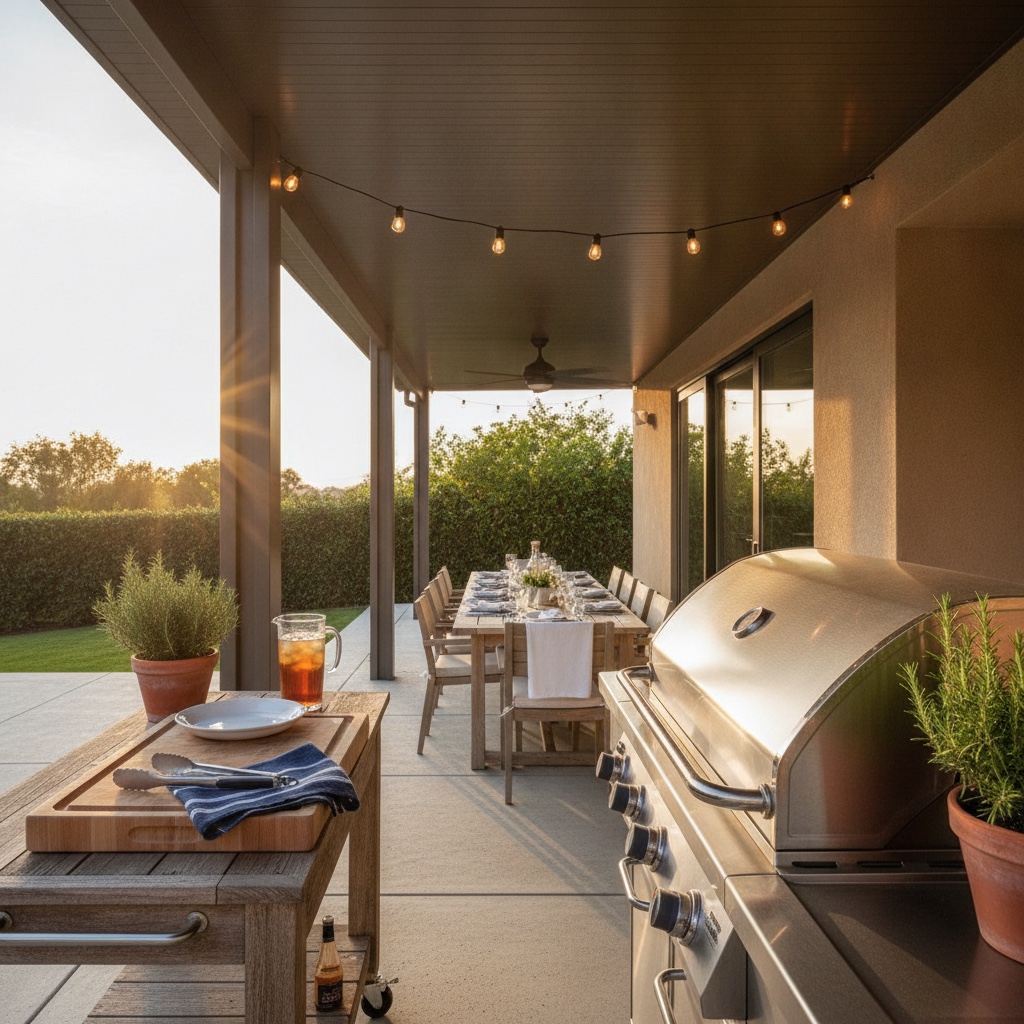
Most homeowners plan the dining table first and shove the grill wherever it fits. Do it backwards. The grill zone decides whether the cook stays in the party or stands alone on hot concrete. Put the grill at the open edge of the cover, hood past the drip line, with its back to the western sun. Smoke and heat roll out instead of pooling under the roof.
An aluminum cover changes the safety math too. Wood pergolas and grills argue with each other. An embossed aluminum roof is noncombustible, so an edge-placed grill with 36 inches of side clearance and the hood past the drip line is a comfortable setup, not a compromise. Keep the burners at the perimeter, never dead center under the roof, and give the hood a clear 7 feet to the panel above the open edge.
Give the cook real counter space. A 24-inch prep cart on the left of the grill handles raw food going on. A second landing table, set six feet away, takes finished food coming off. That separation keeps raw and cooked traffic apart and pulls guests toward the platters instead of the fire. Design writers covering 2026 outdoor kitchens keep hitting the same theme: the grill stops being loose furniture and becomes part of the structure.
A Three-Zone Layout Under One 12 by 24 Roof
Houzz’s 2026 outdoor report says 83 percent of renovating homeowners build a lounge zone, 55 percent a dining zone, and 48 percent an outdoor cooking zone. You can fit all three under one solid aluminum roof if the spans cooperate. A 12 by 24 insulated cover with 3-inch roof panels can run posts on 12-foot centers, which means no center post lands in the middle of your table.
Zone the slab like rooms. The dining zone wants a 42-by-84-inch table, which seats eight and needs a 10-by-12-foot clear box so chairs slide without scraping a post. The lounge zone takes an outdoor loveseat, two chairs, and a coffee table on an 8-by-10 footprint at the far end from the grill. Leave a 4-foot walkway between zones. Crowded patios feel hotter than they are.
Yardzen’s 2026 trend report calls this the party patio year, with clients asking for spaces that host a crowd instead of displaying furniture. The practical read for a SoCal family: buy the table for the eight people you actually feed on Saturdays, not the twelve you feed twice a year, and spend the difference on the fan and the insulated panels you will feel every single week.
Beating 100 Degrees With Shade, Panels, and a Fan
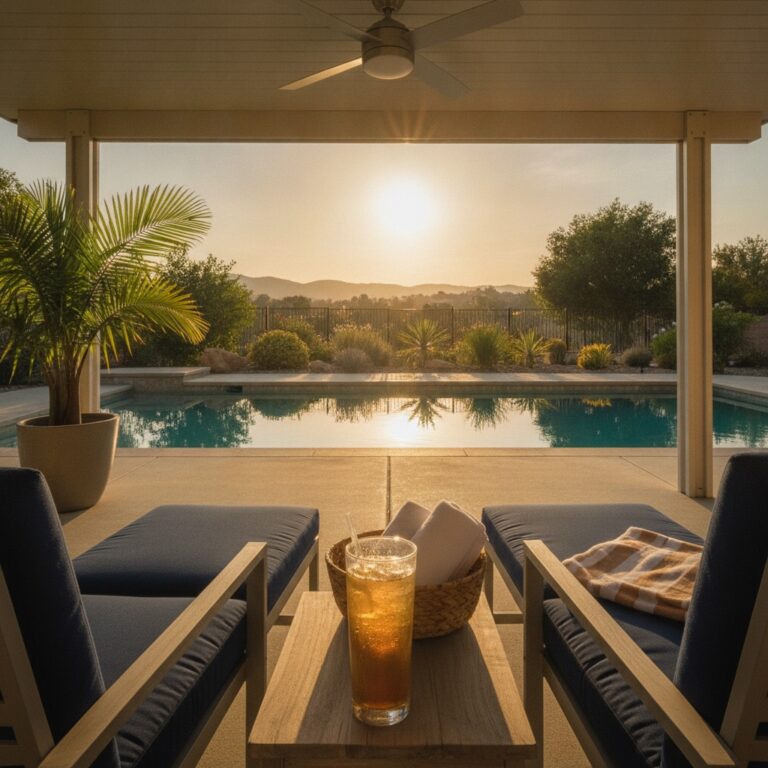
A solid roof drops the surface temperature underneath by 20 to 30 degrees, and San Diego shade guides estimate a covered slab picks up roughly 1,500 usable hours a year that an open one loses to sun. In Corona or Riverside, that is the difference between a patio you use in July and a patio you look at from the kitchen window.
Insulated panels earn their upgrade in the Inland Empire. A single-skin aluminum roof radiates afternoon heat down at you. A 3-inch foam-core panel keeps the underside close to shade temperature and quiets the roof too. Add one 52-inch damp-rated ceiling fan centered over the dining zone, blades at least 8 feet off the slab. On a 24-foot cover, hang a second fan over the lounge. Moving air at 3 mph reads about 5 degrees cooler on skin.
The west edge still lets in low sun from about 5 to 7pm in late July. A roll-down solar screen on the western bay blocks that last slice without killing the breeze. Misting lines at the open edge are a cheaper move, and high-pressure systems can knock another 20 degrees off the entry air without wetting the furniture. Neither touches the roof structure, so both can come later if the budget says wait.
The Evening Shift Is the Payoff
Those 70-degree overnight lows that made sleeping miserable last week are exactly what makes a covered patio work after sunset. The slab under a solid roof never soaked up direct sun, so it does not radiate heat back at your guests at 8pm the way open concrete does. Dinner at 6:30 rolls into the lounge zone by 8 and nobody checks the thermostat.
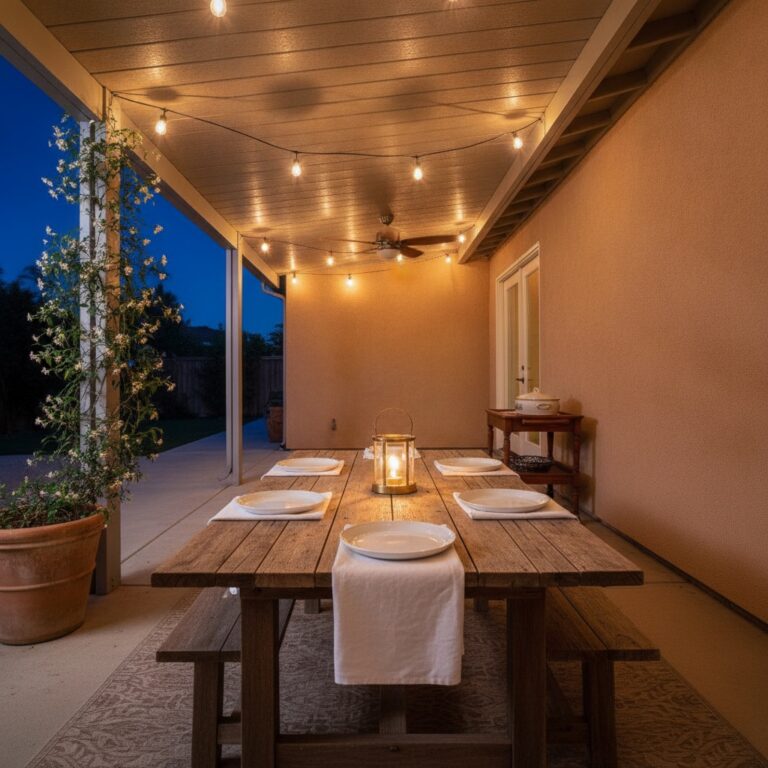
Light it low and warm. Dimmable string lights at 2700K, hung from brass cup hooks along the beams, carry the whole space. A single shaded pendant over the table works on a solid roof if you ran the circuit during install, so ask for the junction box up front. For planting, set potted Meyer lemons at the posts, star jasmine along the west edge for evening scent, and a rosemary within tong’s reach of the grill.
Run the Saturday. The cook starts tri-tip at 4:30 in full shade with a fan overhead. Platters land on the table at 6:30. By 9 the string lights are down to half and the last guests are still in the lounge chairs. Nobody went inside except for ice. That is what the layout buys you, every week from May to October.
Getting the zones right on your actual slab takes a tape measure and a look at where your sun comes from. We do that in person. JNL Aluminum offers a free in-home design walkthrough anywhere in Orange County, the Inland Empire, and San Diego County. We will chalk out the grill zone, the table box, and the fan placement on your own concrete, then hand you a written quote before BBQ season slips away.
Morning-context sources used: https://www.thecooldown.com/outdoors/southern-california-hottest-heat-wave-2026/ | https://www.smdp.com/dangerous-heat-wave-grips-southern-california-through-monday-with-inland-areas-facing-triple-digit-highs/ | https://www.forbes.com/sites/terriwilliams/2026/07/08/soft-yards-party-patios-yardzens-2026-outdoor-living-trend-report/ | https://pro.houzz.com/pro-learn/blog/2026-houzz-outdoor-trends-report | https://www.homedit.com/outdoor-bbq-kitchen-ideas-for-2026-that-make-standard-grills-look-like-temporary-furniture/ | https://www.installitdirect.com/learn/patio-shade-ideas/