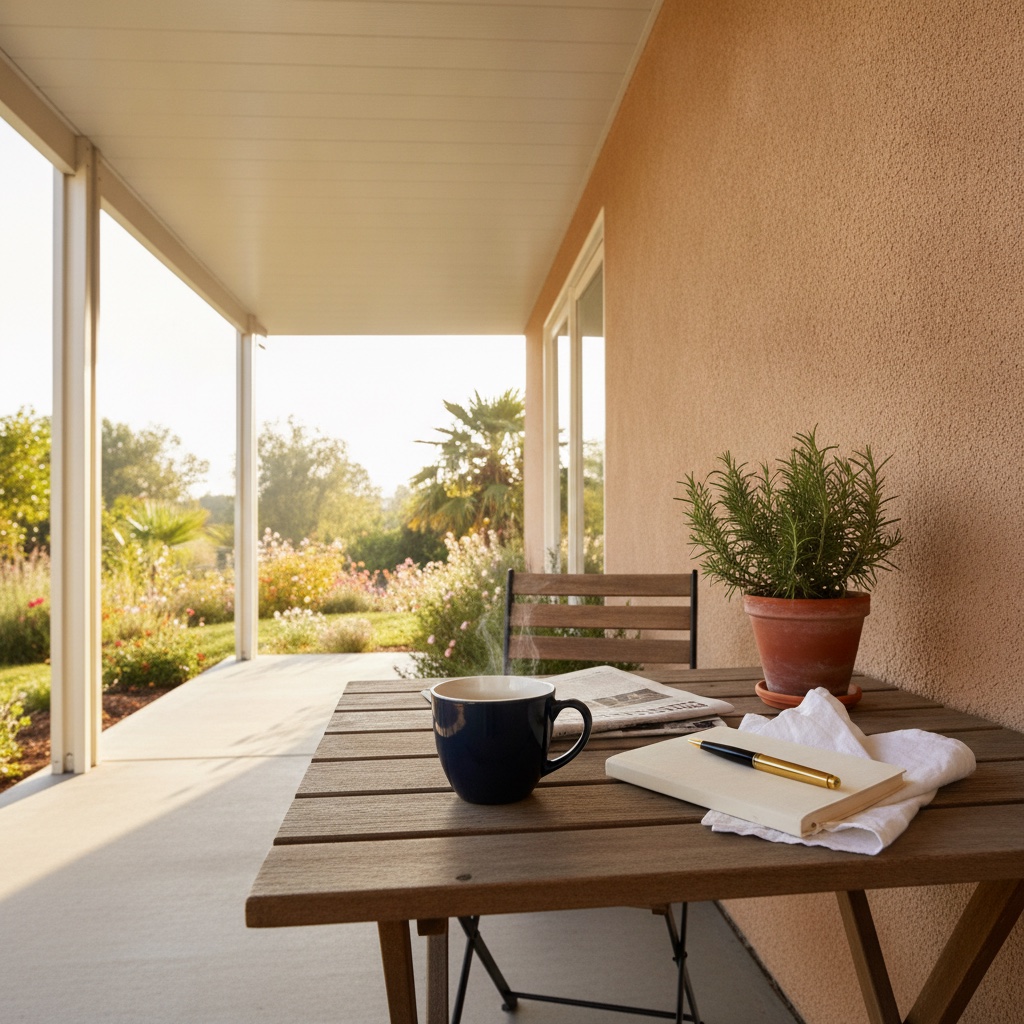

At 8:40 on a weekday morning in Tustin, the kitchen counter is already lost. One laptop, one school lunch in progress, one coffee going cold next to the sink. The homeowner works hybrid, three days at home, and the quietest seat in the house is ten feet away through the slider: a bare concrete slab that catches full sun by 9:30 and stays unusable until dinner. That slab is the best office the house will ever have. It just needs a roof.
This is the most requested patio project we see from work-from-home households in Orange County right now, and the trend data backs it up. The 2026 Houzz Outdoor Trends Study found that 53 percent of renovating homeowners now build a quiet retreat or reading area into their outdoor plans, and 83 percent include a lounge or seating zone. People are not building patios for parties first anymore. They are building them for Tuesday morning.
Why the Morning Hours Decide Everything
An east-facing or south-facing slab in Tustin, Orange, or Anaheim Hills gets direct sun within an hour or two of the marine layer burning off. By 10 a.m. in August the surface temperature of bare concrete can pass 110 degrees even when the air reads 82. No one takes a video call on that slab. The usable window is 7 to 9 a.m., and that window is exactly when a remote workday starts.
A solid-roof aluminum cover flips that math. Shade arrives at sunrise and never leaves. With a 3-inch insulated roof panel, the deal gets better: the foam core keeps the underside of the roof cool to the touch, so the cover is not radiating stored heat down onto the table at 2 p.m. the way a single-skin panel or a wood roof does. The slab becomes a morning room first, and then it quietly stays a room all day.
Homeowners feel the difference in minutes, not degrees. Coffee outside becomes the default instead of the exception. The 8:30 stand-up happens at a real table with the door open behind you. In our experience the covered breakfast nook gets more annual hours of use than any other patio configuration we install, because it works 300-plus mornings a year in SoCal, not just on hosting weekends.
Sizing a Breakfast Nook That Doubles as an Office
You do not need a big cover for this. The sweet spot we quote most often is an attached insulated cover at 10 feet of projection by 14 feet of width, tucked over the slider closest to the kitchen. That is 140 square feet, which holds a 30-by-48-inch cafe table with two chairs, a single lounge chair in the corner, and a slim console against the house wall for a printer or a plant. Nothing feels crowded, and the walkway to the yard stays open.
Projection matters more than width here. Ten feet keeps the table fully shaded through the seasons and puts the drip edge well past the chairs during a winter rain. With insulated panels, that 14-foot width typically clears without a mid-span post, so you get two corner posts and clean sight lines to the yard. Post spacing and beam sizing come off the engineering tables for your wind zone, and your installer should show you those numbers in the quote, not hand-wave them.
Spec the finish for the long haul. An AAMA 2604 powder coat holds color through inland Orange County sun for decades, and the aluminum itself carries a limited lifetime warranty from the major manufacturers. Ask separately about the labor warranty. Ten years is the answer you want to hear. One year is the answer that tells you to keep shopping.
Power, Light, and a Fan: The Three Upgrades That Matter
A breakfast nook becomes an office the day it gets electricity. Run a GFCI outlet up one post during the install, and the laptop, the string of task lighting, and the phone charger all live outside with you. Most cities in Orange County treat this as a minor electrical addition on the same permit, and it is dramatically cheaper to do during construction than after.
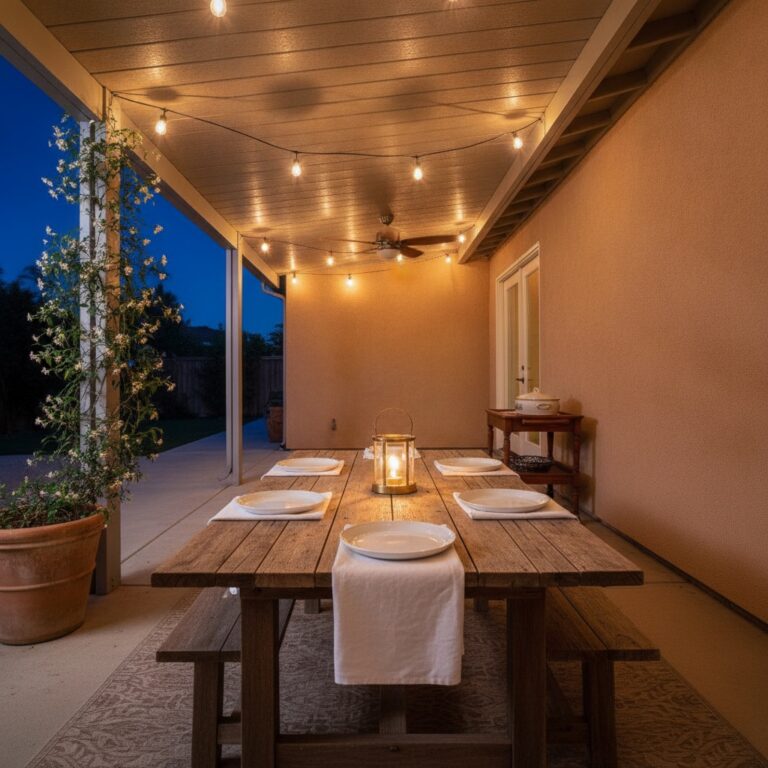
Light the underside with recessed LEDs set into the insulated panels, two fixtures for a 10-by-14 cover, on a dimmer by the slider. That is what keeps the room working when a 6 a.m. call lands in December, and it is what turns the same table into the dinner spot at 7 p.m. The Houzz study found 66 percent of outdoor lounge areas now include built-in lighting, and that number climbs every year for a reason.
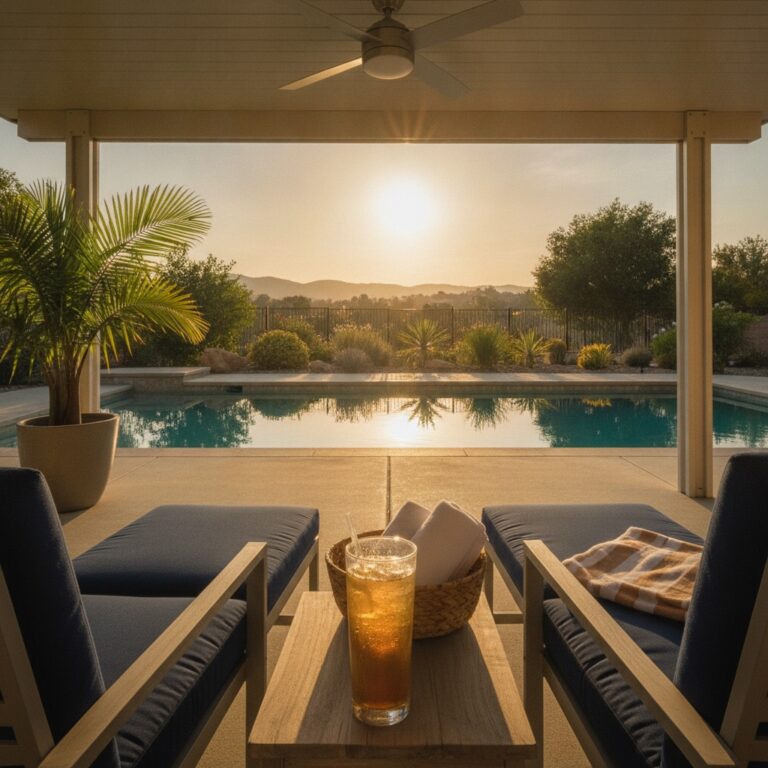
The third upgrade is a 52-inch damp-rated ceiling fan hung from a fan beam at the center bay. August afternoons in Tustin run 88 to 92 degrees, and moving air under an insulated roof reads 8 to 10 degrees cooler on skin. The fan is also the difference between a still, buggy dusk and a comfortable one. Order the fan beam with the cover. Retrofitting one later means opening up a finished roof.
One practical note the trend pieces keep repeating: check your Wi-Fi before install day. A cover 10 feet off the back wall almost always sits inside router range, but a cheap mesh node plugged in by the slider costs less than one month of a coworking desk and removes the last excuse for staying at the counter.
What the 2026 Numbers Say About Rooms Like This
The shift is measurable. Houzz reports that homeowners renovating outdoor space to make daily life work better rose to 25 percent this year, while those renovating for resale value fell to 15 percent. Outlets from Forbes to The Street have spent the summer covering the same idea from different angles: distinct outdoor zones, furnished like interior rooms, used on ordinary weekdays. The covered work nook is the purest version of that idea.
Professional installation is trending the same direction, with 71 percent of outdoor renovators hiring at least one pro in 2026, up from 65 percent two years ago. For an attached cover that is the right call, because the attachment detail at the house wall, the footings, and the electrical run are where DIY projects go sideways. A permitted, engineered cover also shows up cleanly in an appraisal and in escrow paperwork when you eventually sell.
Budget-wise, an insulated 10-by-14 attached cover in Orange County typically lands between $6,000 and $9,000 installed, before electrical. Spread across a 20-plus-year service life and 300 usable mornings a year, it is some of the cheapest square footage you will ever add to the house, and the only square footage that comes with a breeze.
If your slab is sitting empty at 8 a.m. while you take calls at the kitchen counter, we can help you fix that before the fall schedule hits. JNL Aluminum offers a free in-home design walkthrough: we measure the slab, check sun angles and the attachment line, and leave you an itemized quote with the panel spec, the engineering, and the warranty terms in writing. The coffee stays hot. The call quality improves. The counter goes back to being a kitchen.
Morning-context sources used: 2026 U.S. Houzz Outdoor Trends Study via Stacker (KVIA, Aug 6, 2026, kvia.com/stacker-home-garden/2026/08/06/investing-in-outdoor-living-5-of-the-biggest-backyard-trends-of-2026/); same study syndication (KION Central Coast, Aug 5, 2026, kioncentralcoast.com/stacker-home-garden/2026/08/05/investing-in-outdoor-living-5-of-the-biggest-backyard-trends-of-2026/); 2026 U.S. Houzz Outdoor Trends Study (Houzz, July 2026, houzz.com/magazine/2026-u-s-houzz-outdoor-trends-study-stsetivw-vs~185306879); Yardzen outdoor trends coverage (The Street, June 3, 2026, thestreet.com/shopping/yardzen-outdoor-home-trends-2026); outdoor entertaining trends (Forbes, June 3, 2026, forbes.com/sites/terriwilliams/2026/06/03/incorporate-these-outdoor-entertaining-trends-in-your-backyard-design/).