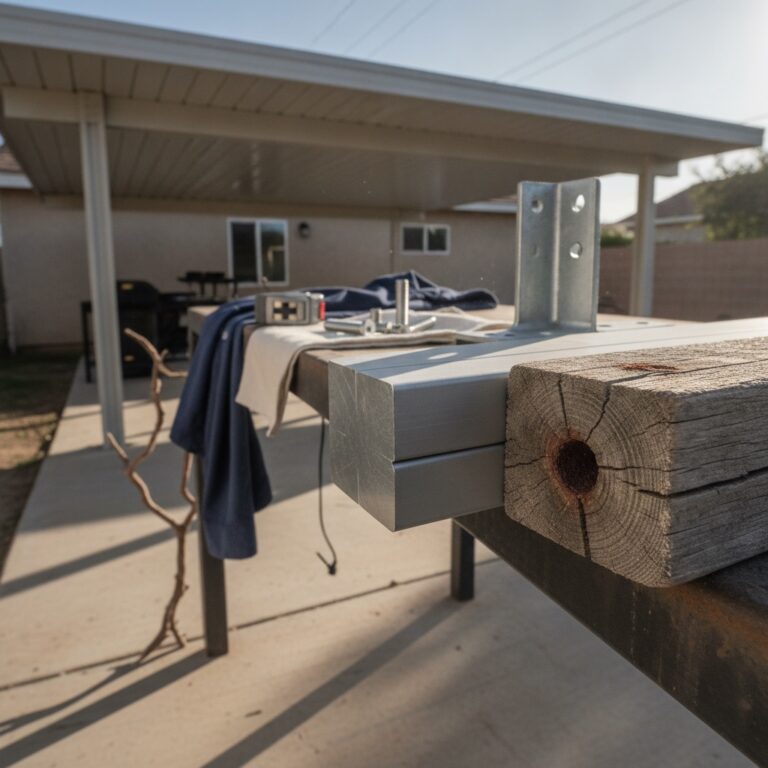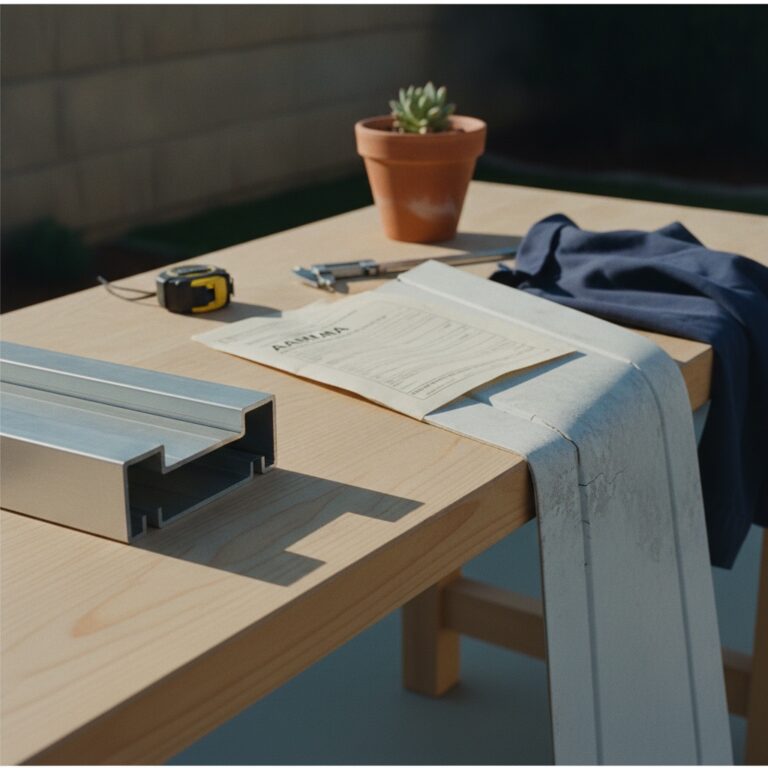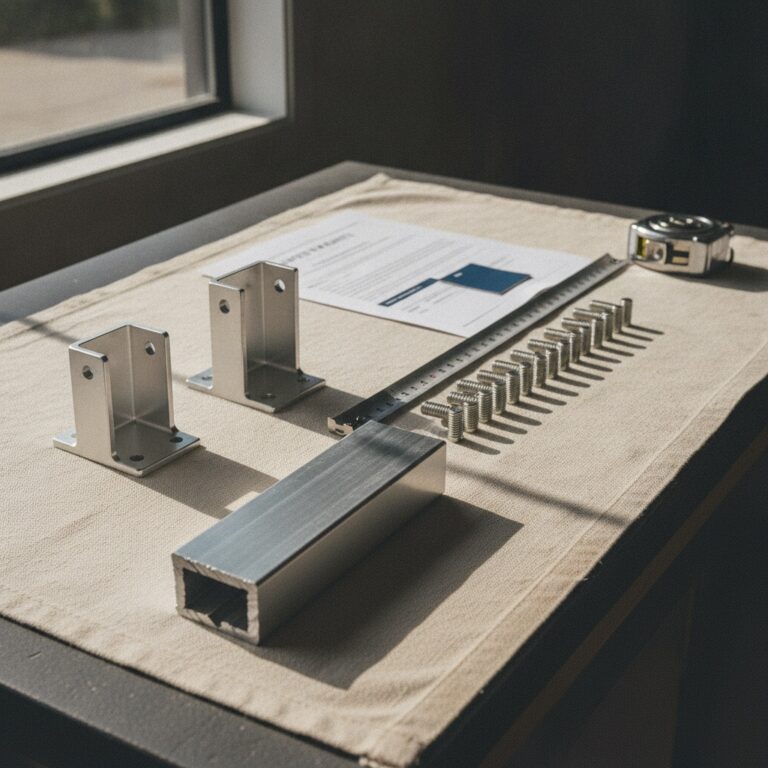
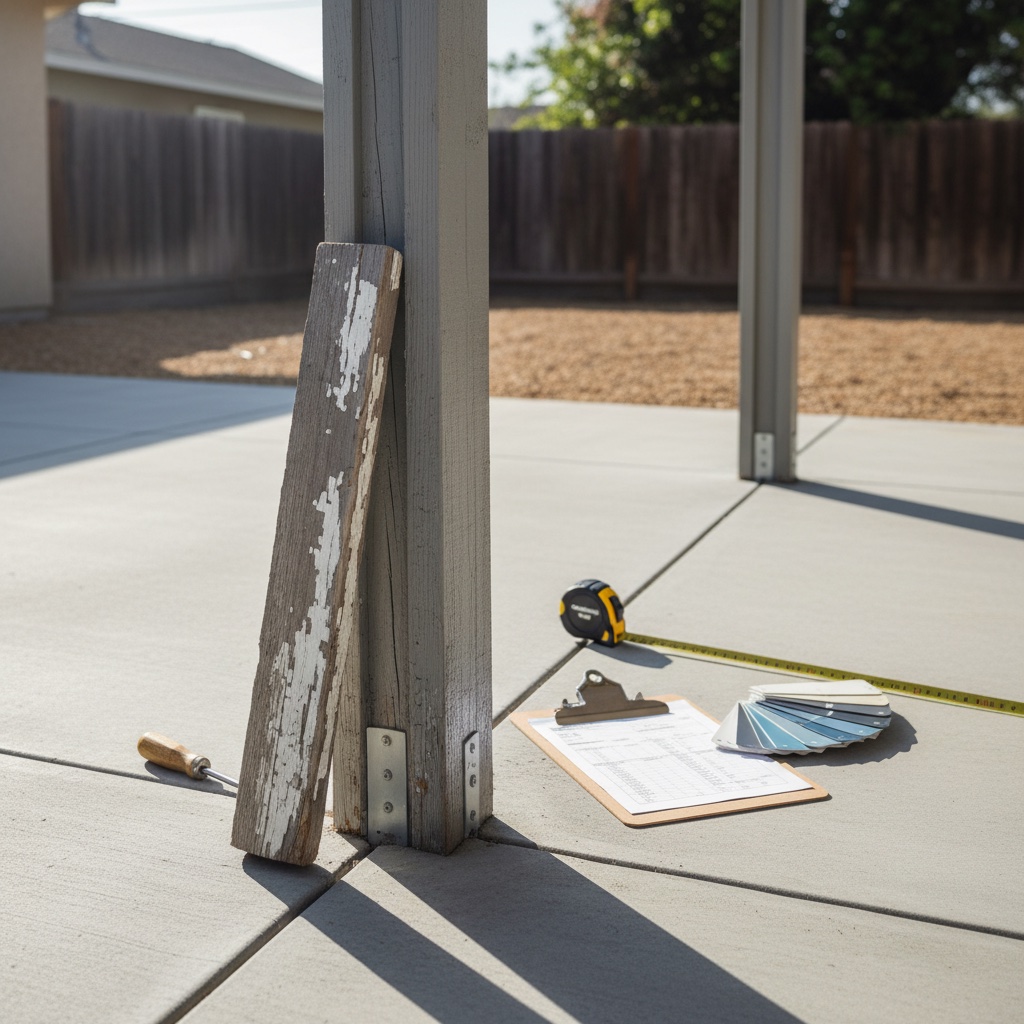

A wood patio cover in Riverside looks fine in February. The light is low, the glare is soft, and the posts still hold their paint. Then May arrives. The sun climbs higher, the afternoons stretch long, and the same cover starts telling a different story. Cracked beams show their grain. Paint flakes near the house. A post wobbles when you lean on it. Spring is the honest season for a wood cover, because the long light exposes every year the structure has quietly absorbed.
The spring inspection an aging wood cover actually needs
Start at the ledger board, the piece that bolts the cover to your house. Press a screwdriver into the wood near the fasteners. If the tip sinks in with light pressure, you have rot, and rot at the ledger is the failure that drops a cover onto a patio table. Move to the posts next. Check the bottom six inches where each post meets the slab, because wood wicks moisture up from concrete and softens there first. A post that gives when you push on it has lost its footing. Then look up at the rafters for splits longer than your hand.
Sight down each beam the way a carpenter checks a board. A 12-foot wood beam that has bowed half an inch will keep bowing, since a loaded beam does not recover on its own. Check every lag screw and fastener after a Santa Ana season, because repeated wind loading walks hardware loose over the months. Last, read the paint. Flaking near the seams, the posts, and the ledger is the wood telling you its seal has failed and water is getting in underneath. One soft spot is a repair. Three or four soft spots are a pattern.
Write down what you find. A cover with two soft posts and a sagging beam is not a lost cause this week, but it is on a clock. The repairs add up fast once the structure starts moving, and a patch on rotted wood rarely holds for long. Knowing where the cover actually stands lets you plan a replacement on your own schedule, instead of reacting to a beam that finally lets go on a hot afternoon in August.
What ten years of SoCal sun does to wood
Southern California sun is not gentle, and 2026 is shaping up hotter than usual. Forecasters expect above-normal temperatures across the region this summer, and a marine heat wave has already pushed coastal water temperatures roughly seven degrees above average. That heat, and the ultraviolet light behind it, does slow and steady damage. UV breaks down the surface fibers of wood along with whatever sealant sits on top. Each summer an exposed wood cover loses a little more of its protection, and the graying and checking you see is only the visible part of a deeper change.
Sealing every two to three years slows the loss, and a disciplined homeowner can keep a wood cover honest for a long time. Most people in Corona or Hemet skip a cycle, though, and the wood pays the bill. By year ten the pattern is familiar. A wood cover in the Inland Empire has usually been repainted twice, had a rafter or two swapped, and still reads tired by the third summer after each refresh. None of that is a knock on the original builder. It is simply what an organic material does under a UV index that hits 10 and 11 from June into September.
The aluminum spec that ends the upkeep cycle
Aluminum changes the math because it does not rot, does not feed termites, and does not wick water up from the slab. The structure is extruded aluminum, with beams and posts that hold their line for decades rather than seasons. When you compare quotes, ask two spec questions. First, the warranty. A quality cover carries structural coverage in the limited-lifetime range, with 10 years on the finish and one year on labor as the typical floor. A one-year structural warranty is a warning sign worth asking hard questions about.
Second, ask about the finish itself, because it does more work than the color choice. Find out whether the powder coat meets AAMA 2604 or AAMA 2605. AAMA 2604 holds its color and gloss through five-plus years of South Florida exposure testing, the industry’s stand-in for punishing UV. AAMA 2605 is the higher tier, rated for ten-plus years, and it is the one to specify for inland heat in Riverside or full coastal exposure in Huntington Beach. The price gap between the two tiers is small next to the years of color hold you get back.
The cost lands in a predictable range. A 12-by-20 aluminum cover runs roughly $20 to $45 per square foot installed across SoCal, depending on roof style, post count, and add-ons like fans or lighting. After install, maintenance is a hose-down twice a year. No sanding, no sealant, no repaint cycle, no soft posts. The money you would have spent on stain and labor over a decade simply stays in your pocket, which is the line item a wood cover never prints on its quote.
Where wood still genuinely wins
Wood deserves an honest hearing. A cedar or redwood cover blends into a craftsman or ranch-style home in a way aluminum’s cleaner lines do not always match, and the warmth of real grain is hard to fake. Wood is also cheaper on day one. A modest stand-alone wood cover can land in the $2,500 to $4,000 range, below a comparable aluminum build of the same footprint. For a homeowner who loves that look and will genuinely seal it on schedule, wood is a real and reasonable choice.
The honest tradeoff is what the next ten years cost you in time and attention. Wood asks for both, season after season, and SoCal sun never eases off. Aluminum asks once, at install, and then mostly leaves you to enjoy the patio. If your spring walk turned up soft posts, a bowed beam, or flaking paint at the ledger, the cover is closer to its end than its middle. We itemize every JNL quote in plain terms, so you can see beam sizing, post dimensions, the AAMA finish tier, and the exact warranty years. Request a free in-home quote and walk your patio with us this spring.
Morning-context sources used: CNN, California marine heat wave (April 22, 2026); AccuWeather, Summer forecast 2026; Angi, Patio Cover Installation Cost (2026 data); Aegis Industrial Finishing, Decoding AAMA 2603, 2604, and 2605; J&W Lumber, Aluminum or Wood Patio Covers.