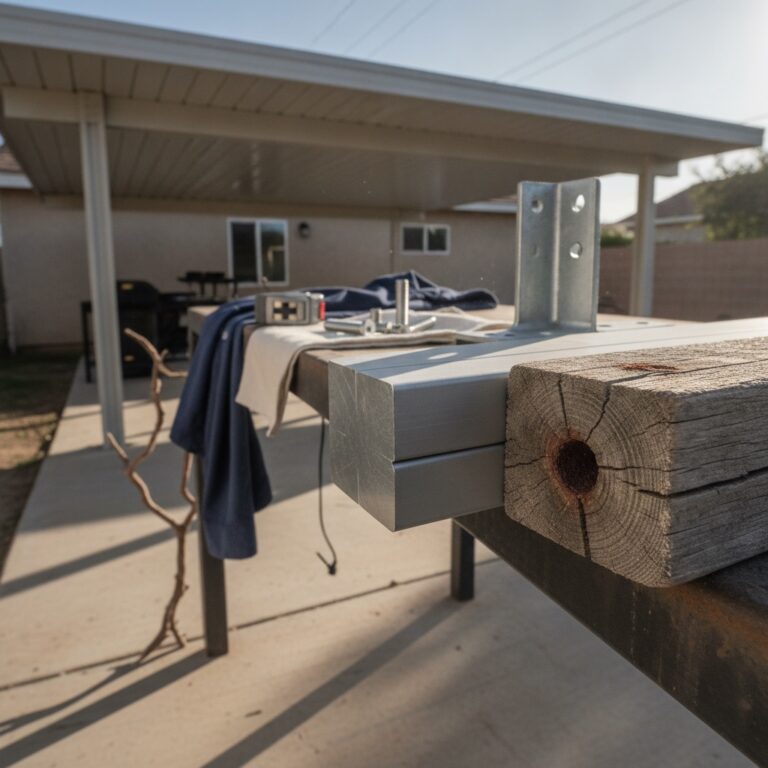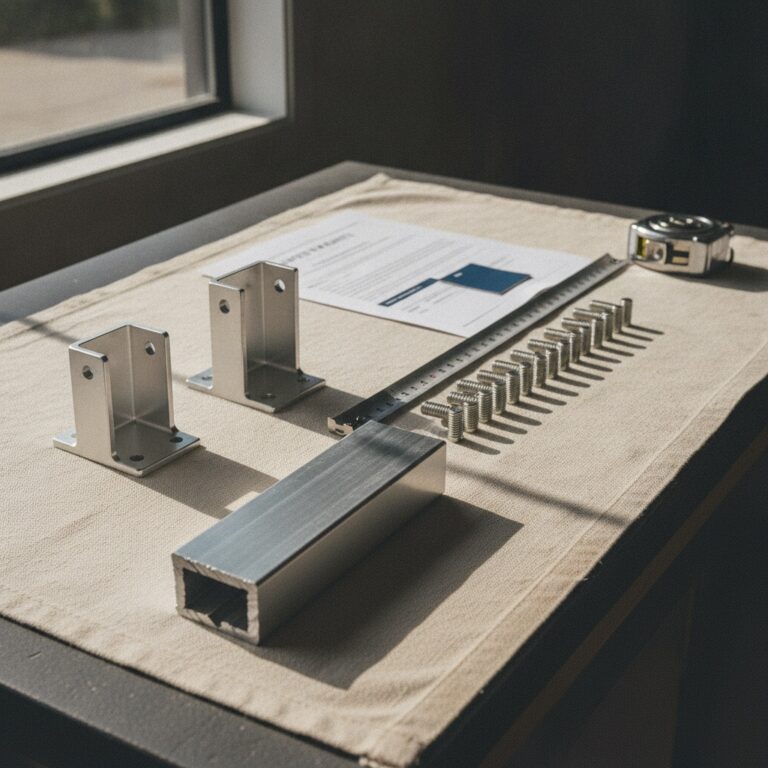
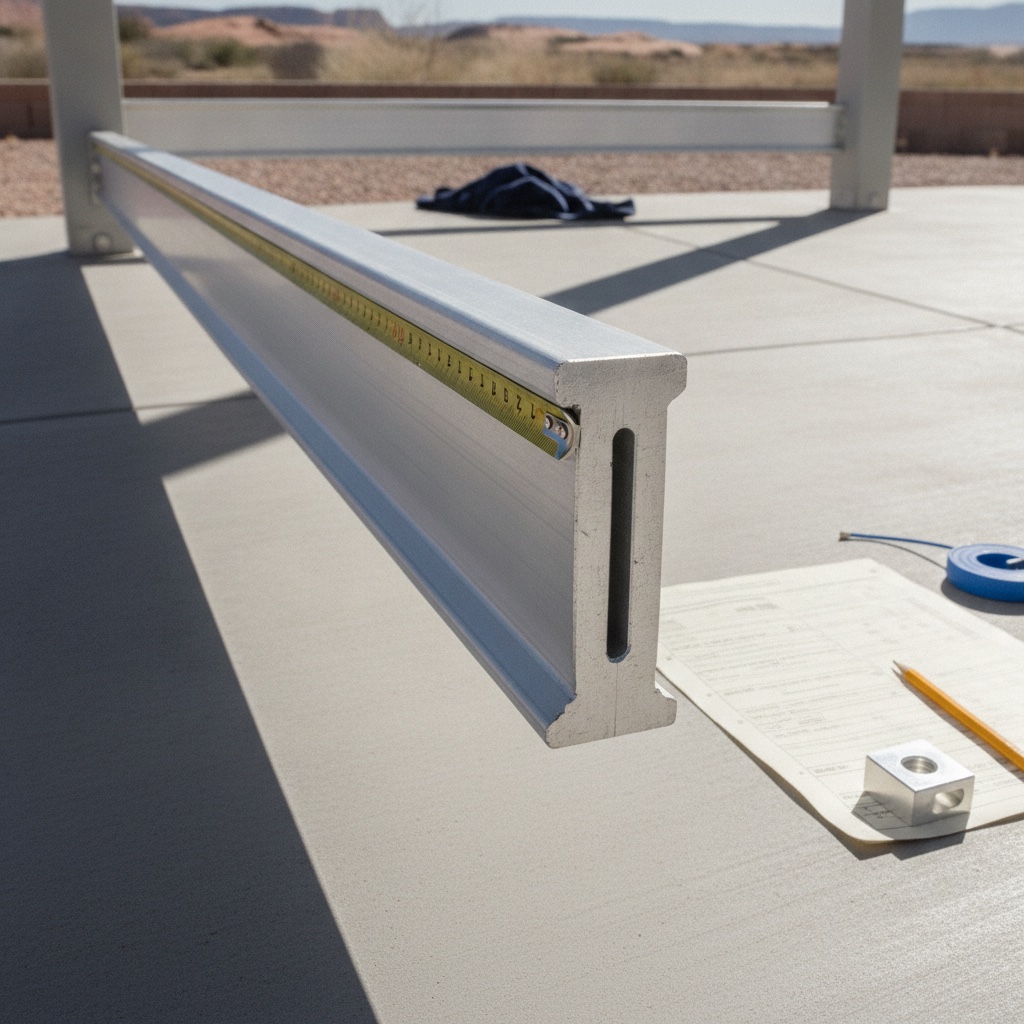

Picture a 20-foot-wide concrete slab behind a Rancho Cucamonga tract home. The homeowner wants one clean covered space for a dining table on one end and a lounge zone on the other. The catch is the center post. A single pole planted in the middle of that slab splits the patio in two, and it lands right where the dinner table wants to go. Whether that post can disappear comes down to one number: how far a beam can span between supports.
That question matters more this month than most. This June a high-pressure ridge parked over the region and pushed the Inland Empire into the 90s and low triple digits, while the coast sat under June gloom in the 60s. A covered patio is the difference between a usable slab and a 105-degree no-go zone in Fontana or Riverside. So when a homeowner finally builds the cover, the layout needs to earn its keep, and a stray center post is the kind of thing people regret for fifteen years.
This is where the wood-versus-aluminum question stops being about looks and becomes about engineering. A patio cover is a small roof. The front beam carries the rafters, the rafters carry the panels, and the whole load funnels down to the posts. Span the beam too far for the material and it sags. Add posts to stop the sag and you clutter the slab. Aluminum and wood answer that tradeoff in very different ways.
What a wood beam actually spans
Dimensional lumber is strong, and a properly sized wood beam carries a real load. A solid 4×10 or a doubled 2×10 Douglas fir beam spans somewhere around 10 to 12 feet under a typical patio-cover load, depending on grade and the wind numbers your city plugs into the calc. Step down to a 4×6 beam and you drop to roughly 6 to 8 feet between posts. Those are honest working numbers for a light SoCal cover, and a good carpenter can hit them.
The problem is not day-one strength. The problem is time. Wood under constant load creeps, which means it slowly deflects and keeps a sag even after you take the load off. Add the SoCal swing from a 98-degree Chino afternoon to a damp marine-layer morning, and the beam expands, contracts, checks, and cups along the way. Ten years on, that 12-foot wood span often shows a visible dip at midspan. The usual fix is a post nobody wanted, planted right back in the middle of the patio.
Why an aluminum beam holds the line
Aluminum patio beams are extruded hollow profiles, and the good ones use 6061-T6 or 6063-T6 architectural alloy, not thin roll-formed sheet. Better systems slide a steel C-channel inside the beam at the longer spans for extra stiffness. That combination lets an engineered aluminum beam carry a clean 14 to 20 foot span on a standard cover, and heavy-duty profiles push wider still. A 4×10 aluminum beam commonly spans up to 12 feet on its own, and the steel-reinforced versions clear well past it with no midspan post at all.
Two things make that span hold over the long haul. Aluminum does not creep under sustained load the way wood does, so the beam that looks straight on install day still reads straight in 2041. It also ignores the moisture cycle that warps and checks lumber, because it does not absorb water and cannot rot. For the Rancho Cucamonga homeowner, that is the whole ballgame: a 20-foot opening held by posts at the corners only, instead of a patio chopped in half by a pole.
The finish matters as much as the metal. A quality cover carries an AAMA 2604 powder coat, an architectural-grade finish rated to resist chalk, fade, and cracking through years of direct UV. Homeowners on the coast in Huntington Beach or Carlsbad should ask about the higher AAMA 2605 tier, which holds color longer against salt air. The finish does not change the span, but it decides whether the beam still looks engineered a decade later or looks like a sun-bleached fence rail. Color hold and span are two different specs, and a real quote names both.
The honest case for wood
Aluminum does not win every line on the sheet. A heavy timber or glulam beam can out-span almost anything if you size it big enough, and a 6×12 rough-sawn beam carries a warmth and a shadow line that powder-coated aluminum does not copy. For a homeowner who wants a craftsman pergola as a design statement, and who is willing to seal and inspect it on a schedule, real wood earns its place in the yard. Upfront cost on a small wood cover can also run a little lower than an engineered aluminum system of the same footprint.
The tradeoff is maintenance and the long arc. Wood asks for a stain or seal coat every two to three years, a check for dry rot at the post bases, and a tolerance for the sag and checking that SoCal sun and damp hand out over time. Aluminum asks for a hose-down twice a year and not much else. Both are valid choices. The real question is which chore the homeowner actually wants to still be doing in 2035, on a ladder, in the heat.
Spec the span before you sign
Post spacing is where a quote tells the truth. Before signing anything, ask the contractor to put five things in writing: the beam alloy, the wall gauge, whether a steel insert is used, the rated clear span between posts, and the powder-coat tier. A vague “heavy-duty aluminum” line on a proposal is not a spec. A real one reads like “6063-T6 beam, steel-reinforced, 16-foot clear span, AAMA 2604 finish, posts at the corners only.” If a salesperson cannot state those numbers at the kitchen table, the span has not actually been engineered yet.
That same level of detail is what separates a 1-year labor warranty from a limited-lifetime structural warranty, and it is worth knowing which one is on the page before you commit. We work the span math on every JNL in-home visit and mark the exact post locations on your slab before anything is ordered, so you can stand on the patio and see whether that center post disappears. Request a free in-home quote and we will spec the beam, the finish, and the clear span for your specific yard, in writing, before you decide.
Morning-context sources used: CBS Los Angeles, Inland heat advisory (June 2026); FOX 11 Los Angeles, SoCal heat wave timeline (June 2026); Royal Covers, aluminum patio cover load and span; Texas Patio Covers, optimal post spacing guide; 4K Aluminum, 6061-T6 extruded vs roll-formed and AAMA 2604; Colourific Coatings, AAMA standards and powder warranties.