
Picture a 16-by-12 concrete slab on the west side of a Tustin backyard. At noon it is fine. By 3 p.m. in August the sun drops low enough to fire straight under any roofline, and the slab turns into a griddle. The homeowner wants a cover, but the real question is not pergola or patio cover in the abstract. It is how much shade lands on that slab at 3 p.m., when the family actually wants to sit out there. That single hour decides which style is worth the money.
What a Pergola Actually Blocks at 3 P.M.
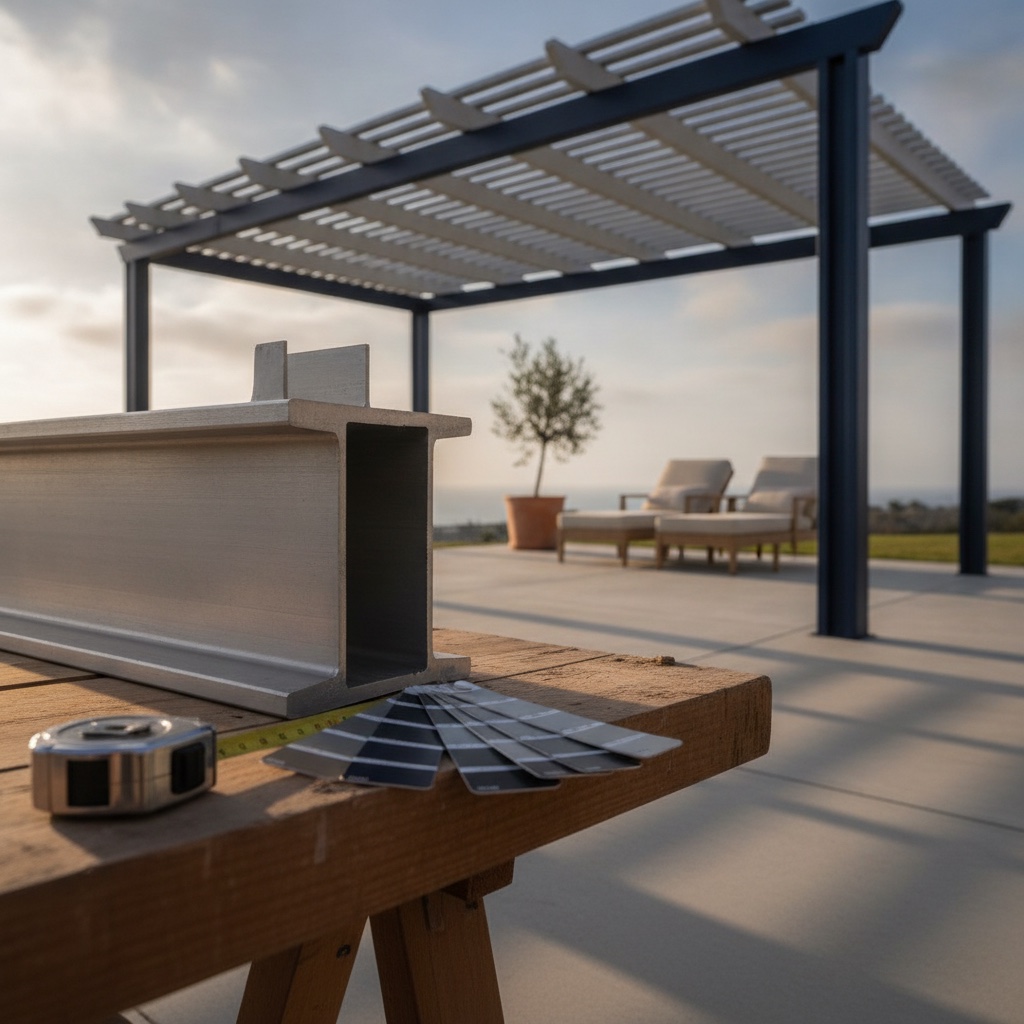
A true pergola has open rafters with gaps between them. The slats throw stripes of shade, and the rest is open sky. On a SoCal afternoon that open design filters somewhere between 40 and 60 percent of direct sun, depending on slat spacing and rafter depth. It feels great at 10 a.m. when the sun is high and the rafters cast wide bands of shade across the slab.
The problem is the angle. At 3 p.m. the sun comes in sideways, not from overhead. Those open gaps that gave you shade at midday now let the low light pass straight through to the seating area. A standard pergola over that Tustin slab leaves half the surface in hot sun exactly when the family wants to use it. Pergolas win on look and airflow. They lose on late-afternoon west exposure, which is the toughest hour in most Orange County and Inland Empire yards.
What a Solid Cover Blocks at 3 P.M.
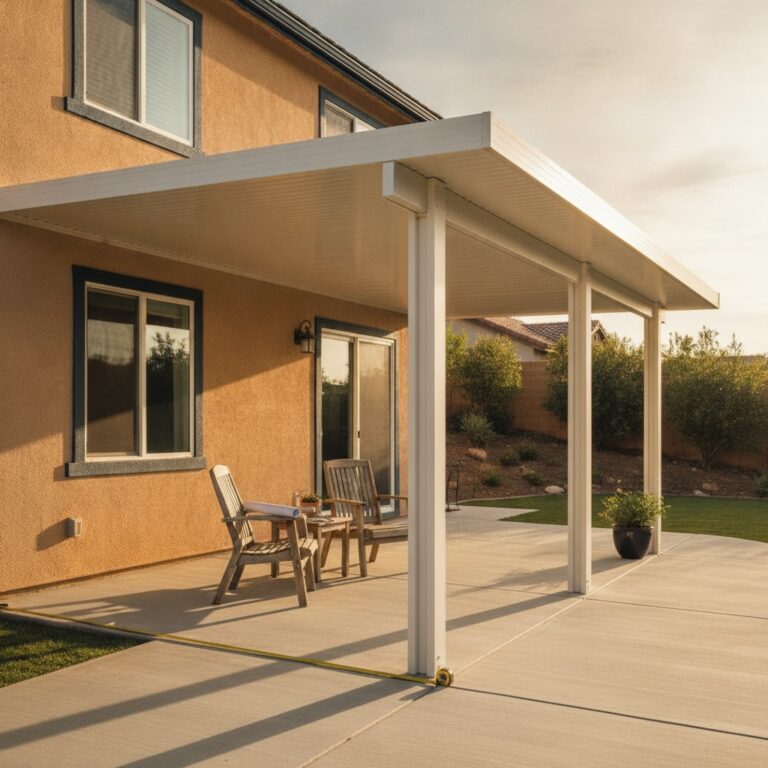
A solid aluminum cover is a continuous roof. No gaps, no stripes, full shade across the whole slab from sunrise to sunset. At 3 p.m. that matters more than any other spec. The slab stays shaded, the furniture stays cool, and the adjacent room behind the slider runs measurably cooler because you killed the radiant load before it hit the glass.
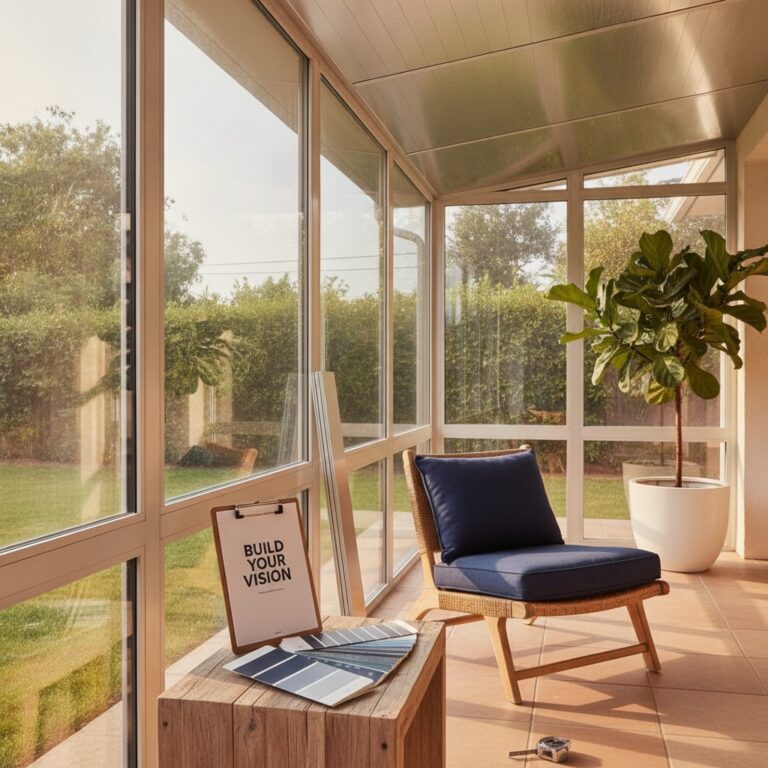
An insulated solid panel goes further. The foam core inside the pan sits around an R-4 value, which knocks the under-cover temperature down by 10 to 15 degrees compared to bare sun on the same slab. For a west-facing patio in Riverside or Corona, that is the difference between a usable evening and an empty yard. The tradeoff is light and air. A solid roof darkens the room behind it and stops the breeze, so homeowners who love an open sky feel boxed in. The fix is adding a row of polycarbonate skylight panels, which most installers can drop into a solid run for a modest upcharge.
The Louvered Middle Ground
Louvered aluminum covers are the style that actually answers the 3 p.m. question on demand. The roof is built from rotating slats on a motorized axis. Open them flat and you get a pergola with full airflow. Angle them and you block the low west sun while still venting hot air upward. Close them and you have a solid, waterproof roof that channels rain into the posts.
The angle trick is what makes them work in SoCal. By tilting the louvers against the afternoon sun, you keep 100 percent shade on the slab while hot air rises and escapes through the open backside of each blade. Installers call it the chimney effect, and on a hot Anaheim Hills afternoon it can pull the under-cover temperature down by as much as 18 degrees. The catch is cost. A professionally installed louvered system in California usually runs between 6,000 and 25,000 dollars depending on size, motor, and brand, which is two to four times what a fixed cover of the same footprint costs.
Rain and upkeep separate the styles too, even in a dry climate. A solid cover and a closed louvered roof both shed winter rain through built-in gutters and downspouts routed inside the posts, so a January storm in Mission Viejo runs off clean instead of dripping on the furniture. An open pergola does none of that. It also gathers leaves and jacaranda drop in the slat gaps, which means a ladder and a blower a few times a year. Aluminum in any of these styles will not rot, warp, or need repainting, so the maintenance gap is really about debris and drainage, not the metal itself.
Matching the Style to Your Slab and Budget
Start with the slab size, because span drives the framing. A 12-foot projection off the house is the comfortable limit for a single 6-inch structural beam without a center post. Push to 16 or 18 feet and you either step up to an 8-inch beam or drop a post mid-run, which most homeowners would rather avoid on a small patio. Posts on a typical cover sit 10 to 12 feet apart, so a 24-foot-wide cover needs three posts along the open edge.
Material gauge matters too. Ask for the extrusion thickness in writing. A quality SoCal cover uses heavier-wall aluminum at the beams, not the thin roll-form you see at the big-box stores, and it carries a powder-coat finish warranty measured in decades rather than a one-year wood stain that fades by the next summer. On cost, a fixed lattice runs roughly 20 to 35 dollars per square foot installed, a solid insulated cover lands around 30 to 50 dollars per square foot, and louvered systems sit well above both.
Here is the plain read for that west-facing slab. If budget is tight and the yard is mostly a morning space, a lattice or open pergola is fine. If 3 p.m. is the hour that matters and you want the room behind the slider cooler, a solid insulated cover is the value pick. If you want both the open sky of a pergola and the full shade of a solid roof on the same structure, the louvered system is the one that does it, at a price to match.
The honest way to choose is to stand on your slab at 3 p.m. and watch where the sun lands. We map exactly that during a free in-home visit, measure your span and post points, and quote the style that fits your yard and your budget without the showroom markup. Booking the visit costs nothing and takes about an hour.
Morning-context sources used: Elite L.A. Patios, Patio Cover Ideas 2026; Elite L.A. Patios, Louvered Pergola Guide 2026; Pergola Cave, Patio Cover Options and 2026 Costs; Azenco Outdoor, Pergola vs Patio Cover 2026; Install-It-Direct, San Diego Cover Comparison 2026; Pacific Pavers, Adjustable Louvered Pergola Kits 2026.