
The Yorba Linda house had a 16-by-32 in-ground pool that nobody swam in after lunch. The slab around it baked from 11am to 5pm in July. The kids would sprint from the door to the water, then climb out and stand on burning concrete until they retreated indoors. The patio table sat under a market umbrella that flipped in any wind over 12 mph. By August, the pool had become a thing the family looked at, not used.
That is the story behind a lot of pool decks across SoCal in 2026. The pool was the dream purchase. The shade was the afterthought. A covered patio along the long edge of the deck is what closes the loop. It is the difference between a yard that gets used at 2pm and a yard that does not.
The 2pm pool problem most SoCal yards have
UV index in coastal Orange County hits 10 to 11 from late May through September. Inland Empire afternoons run 100 to 108 degrees on heat-dome weeks. Pool decks made of concrete, stone, or porcelain pavers absorb that heat and radiate it back. Surface temperatures of 130 degrees on bare slab are common by 2pm. Kids stop using the pool because the walk to the water hurts. Adults stop hosting because the chairs are unusable until 5pm.
Shade sails and market umbrellas help, but only partially. Sails sag, fade, and need annual restringing. A 9-foot market umbrella covers one chair and one table. Neither solution gives a household a real place to sit between swims, which is where the day actually happens. That gap is what a fixed aluminum cover fills.
What a covered patio along the deck actually changes
A 14-by-20 solid-roof aluminum cover, set along the long edge of the pool deck, gives a family three things they did not have before. First, a shaded staging area for towels, drinks, and a real dining table that does not need to be rolled in by 4pm. Second, a 130-square-foot zone of slab that stays 15 to 20 degrees cooler than the exposed pool deck. Third, a wall of mounted shade that protects the sliding-glass door from the worst western sun.
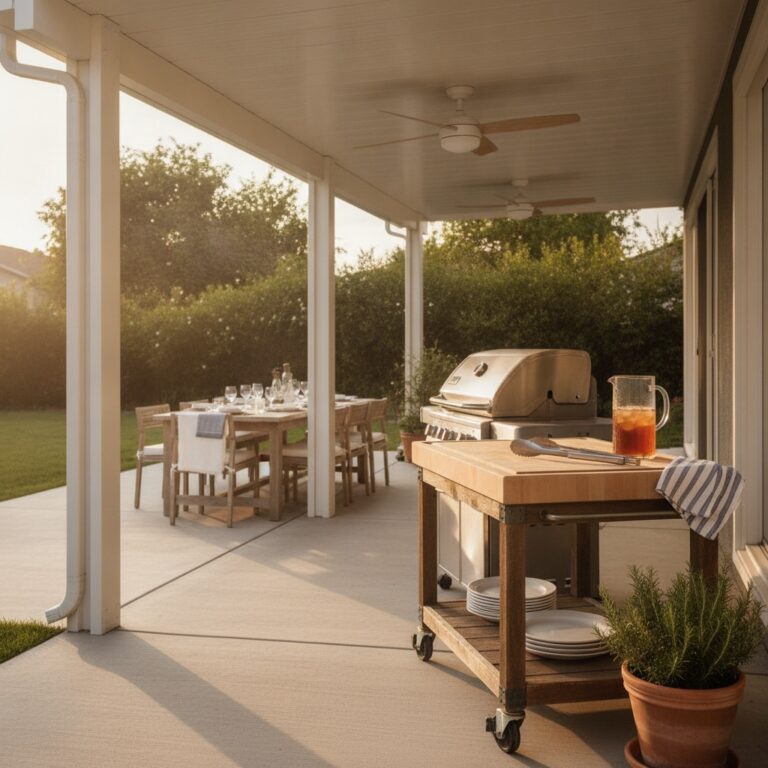
The Yorba Linda family swapped their flipping market umbrella for a covered patio with a 56-inch damp-rated ceiling fan and two recessed downlights. The pool deck went from a place the kids exited fast to a place the family stayed all afternoon. Sunday became hot dogs on the grill, kids in and out of the water, an adult or two reading in the shade. The pool stopped being a museum piece.
The layout that puts shade where it matters
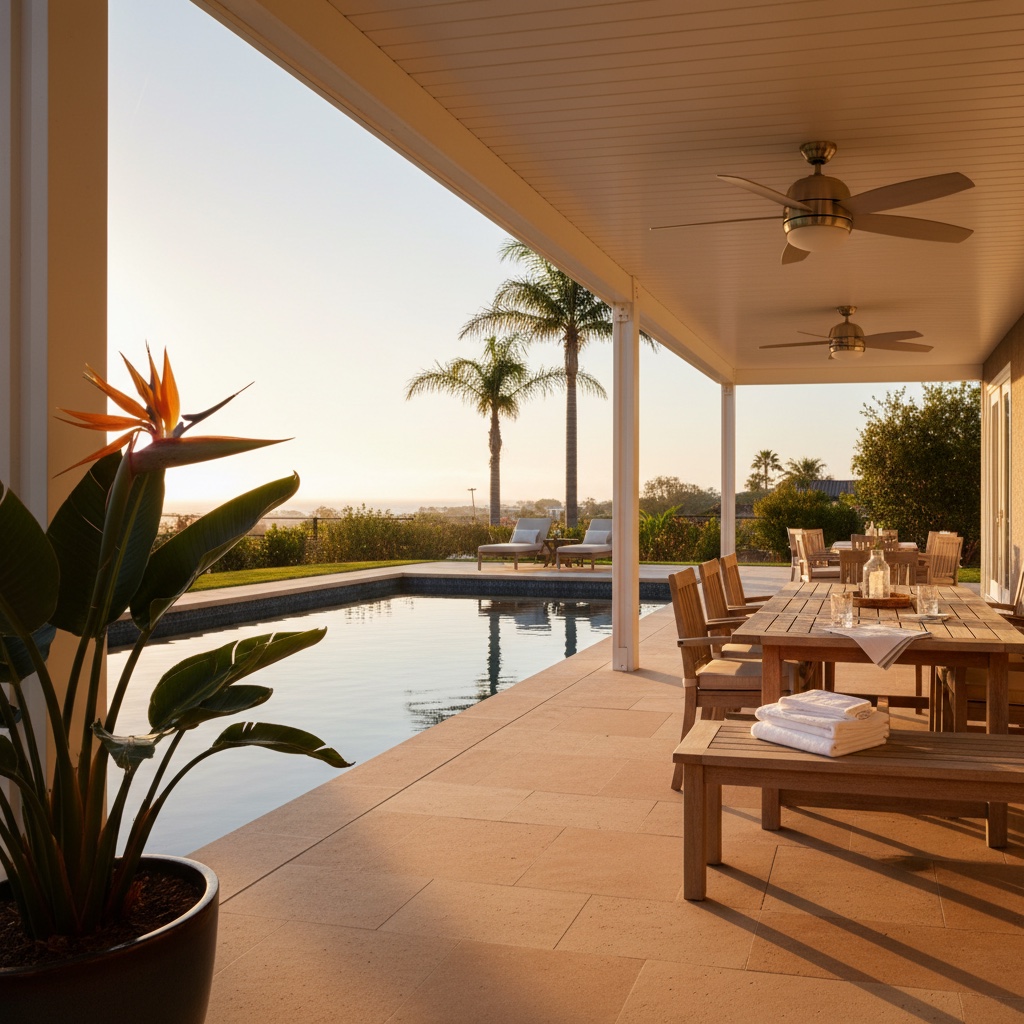
Pool-adjacent covers work best when they shadow three zones at once: the swim-exit landing, a seating cluster, and the route from the back door to the water. The Yorba Linda design ran a freestanding 14-by-20 cover along the west edge of the pool, parallel to the long axis of the water. The cover footprint sat one foot back from the coping, which kept it out of the splash zone but close enough that a wet kid stepping out landed in shade by the second step.
That same layout will not be right for every yard. A Mission Viejo backyard with a kidney-shaped pool tucked against a slope often needs an attached cover that ties into the house at the rear sliding door. A Rancho Cucamonga yard with a long rectangular pool and a pool house on the far side might want a freestanding cover at the far end, oriented to throw afternoon shade across the lounge chairs. The household routine should drive the cover footprint, not the other way around.
Beam span matters here. A 6063-T5 aluminum primary beam can carry a 20-foot clear span without a center post. That keeps the deck open and the sight line clean across the water. Wood at the same span needs a 6-by-12 beam plus a mid-span post, which clutters the deck and breaks the view.
The materials that handle wet feet, chlorine, and SoCal sun
Pool decks are a particular kind of brutal on materials. The slab and everything above it lives with daily splash, chlorinated mist, sunscreen residue, and full afternoon sun on the topside. Wood pergolas over pools graying out at year three is not a fluke, it is the chemistry. Aluminum is the right call for that environment for three concrete reasons that show up in the finish, the structural span, and the fastener spec. Each one carries through to how the cover looks five years later.
The powder-coat finish is what most homeowners ask about. An AAMA 2604 powder coat carries a 10-year manufacturer color-hold warranty on coastal and inland installs. AAMA 2605, the higher tier, is rated for harsher coastal exposure with a 20-year color hold. A Newport Beach pool deck within a half mile of the ocean should usually spec 2605. A Rancho Cucamonga inland pool can sit comfortably at 2604 and save a few hundred dollars per project without losing finish performance.
The structural side is simpler. 6063-T5 extruded aluminum carries the load without rot, termite risk, or seasonal swelling. A wood pergola over a pool ages on a schedule of 12 to 18 months between refinishes. Pool chemicals migrate up as vapor, and the wood absorbs them. Aluminum does not absorb anything. A rinse with a garden hose twice a year keeps the cover looking installed. JNL Aluminum backs the structure with a limited lifetime warranty, which matters because a cover sitting four feet above chlorinated water is a stress test of finish chemistry.
Fastener choice is the small detail that wrecks a cheap install. Anything ferrous within 20 feet of a pool eventually weeps rust streaks down the post. Stainless steel hardware is the standard for pool-side covers. The cost difference per project is small. The aesthetic difference five years in is large.
From an underused pool to a daily routine
The Yorba Linda family did not buy more pool. They bought more time at the pool. The covered patio added 130 square feet of shaded slab, a usable dining footprint for six, a fan-cooled seating zone for the adults, and a real reason to walk outside at 1pm instead of 6pm. The pool itself did not change. The way the household used it changed completely.
Covered outdoor rooms are the headline backyard trend of 2026 for a reason. Industry trend reports note that homeowners are no longer satisfied with bare concrete slabs and want sophisticated extensions of indoor living space that function year-round, with solid roof structures, integrated lighting, and ceiling fans. Multi-zone outdoor spaces are showing up across SoCal yards: a tucked-away reading corner, a small dining nook, a pair of lounge chairs angled toward a view. A pool deck cover is the single piece that lets all of that happen in summer.
If the pool in the backyard stopped getting used somewhere around mid-July last year, the slab is probably not the problem. The shade is. A free in-home design walkthrough with JNL Aluminum gets a tape measure on the deck, a sun-path read on the house, and a sketched footprint for a cover that fits the way the household actually wants to use the pool. The pool was supposed to be a daily thing. The cover is what makes that possible.
Morning-context sources used: Trex 2026 Outdoor Living Trends (https://www.trex.com/deck-ideas/outdoor-living-trends-2026/); SERHANT California Home Design Trends for Entertaining 2026 (https://serhant.com/blog/the-california-art-of-hosting); Decorilla Patio Trends 2026 (https://www.decorilla.com/online-decorating/patio-trends-2026/); Elite L.A. Patios Stunning Patio Cover Ideas for SoCal 2026 (https://elitelapatios.com/stunning-patio-cover-ideas-for-los-angeles-southern-california-homes-2026/); StruXure Central Coast Covered Patio Ideas for the Pool (https://www.struxurecentralcoast.com/covered-patio-ideas-for-the-pool); Arka Energy 21 Best Pool Canopy Ideas 2026 (https://www.arkaenergy.com/learn/pool-canopy-ideas); Homedit Backyard Shade Ideas 2026 (https://www.homedit.com/backyard-shade-ideas-for-2026/).