
The first 75-degree May evening of 2026 in Orange County was Saturday the 16th. By 6:45 p.m. the slab under the cover at our June 2025 Yorba Linda install was holding 71 degrees. The family ate outside for the first time since October. That is what a covered patio actually does for a household. Not in a brochure way. In a calendar way.
This Tuesday lifestyle piece is for the SoCal homeowner picturing what a cover changes for the next six months of evenings. Specifically the run from late May into October, when the patio stops being decorative and starts being the dining room three nights a week.
What Late May Actually Looks Like Outdoors
Coastal Orange County evenings in late May run 64 to 71 degrees at 7 p.m. Inland the same hours sit 70 to 78. The sun drops below the rooftops around 7:35 in Costa Mesa, later inland. That window from 6:30 to 9:00 is the moment a covered patio earns its money.
Without a cover, the open slab radiates the day’s heat back upward through dinner. With a lattice cover, the radiation drops by 18 to 24 degrees and air keeps moving. With a solid roof, the slab sits in shade from 4 p.m. onward and is at ambient by 6 p.m.
The family does not have to plan around either of these conditions. They walk outside, sit down, and eat. That is the entire pitch.
A Dinner Layout That Actually Works for Six
The covered patios that get used the most have one thing in common: the dining setup is permanent.
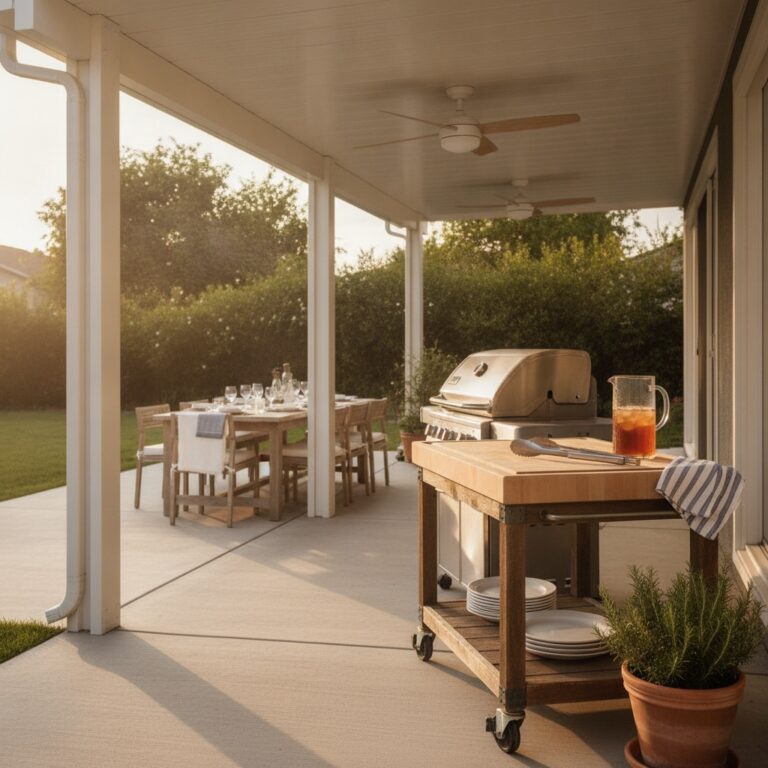
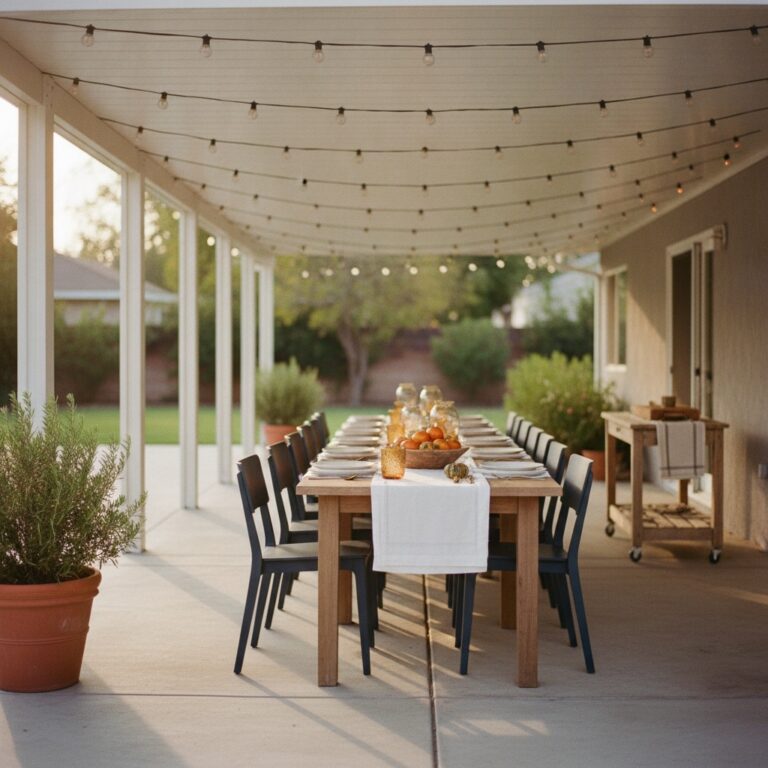
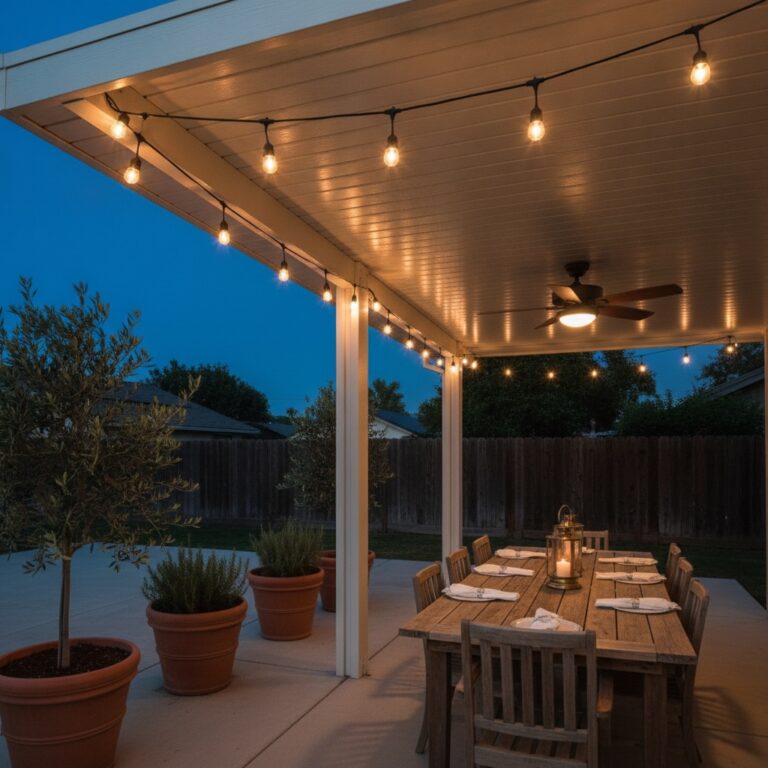
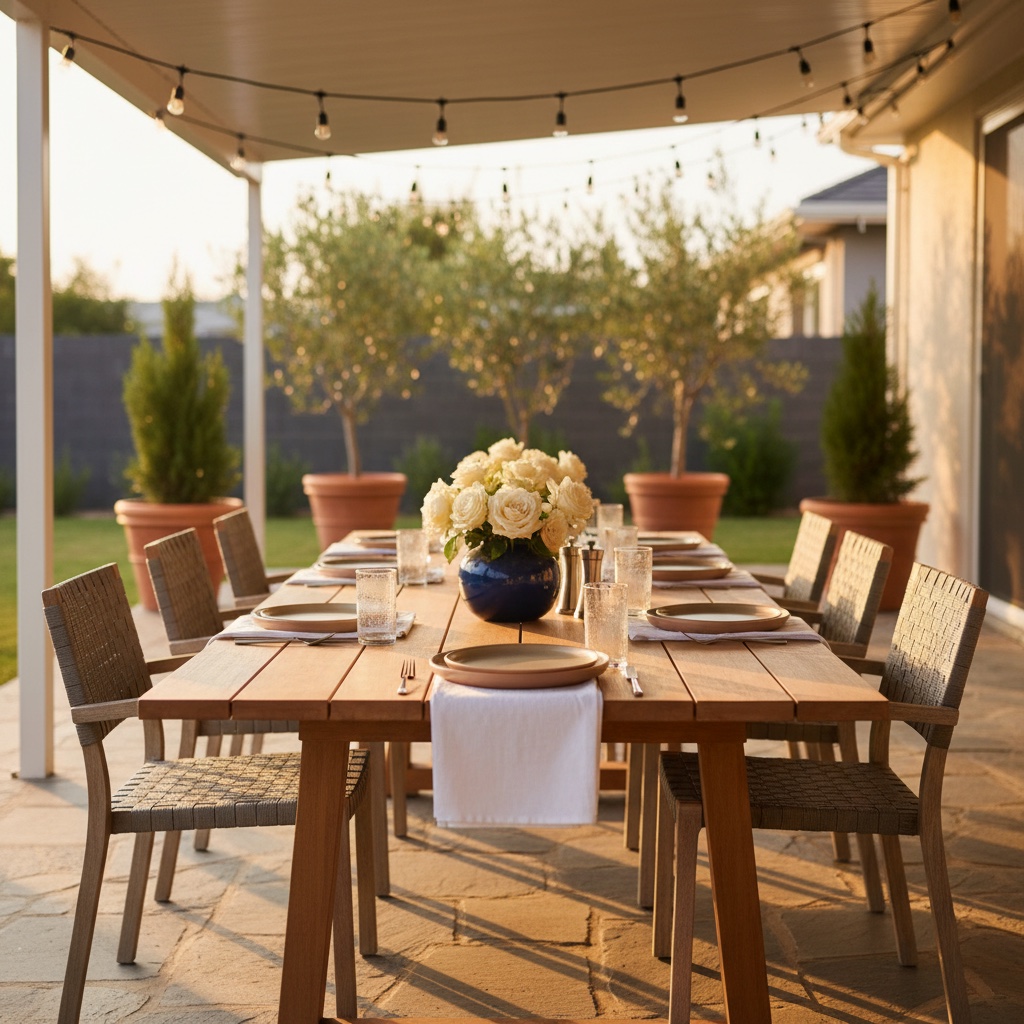
A rectangle dining table that seats six, set at one end of the cover. A weather-rated dining chair stacked at each setting, never moved into the garage between meals. A small side table at the host’s end for serving and plates. A string of warm-white bulbs strung along the underside of the cover at 11 feet, controlled by a remote dimmer inside the kitchen. A ceiling fan mounted over the dining table itself, not centered geometrically. Two heaters in stand form at the corners for the cool May and October nights.
The permanence is the trick. A patio that requires twenty minutes of setup before each dinner gets used twice a month. A patio that is already set, with the table wiped down and the lights pre-set, gets used four nights a week.
Plant choice matters too. A row of olive trees in 24-inch pots along the back edge softens the air and the visual line. Two upright rosemary plants near the side table do double duty: they smell like the right thing, and a sprig comes off the plant onto the grill three times a summer. Skip ferns, skip anything that drops leaves on the table.
The Family Schedule That Builds the Habit
The covered patios that get the most life have a weekly rhythm. The owner does not pick “tonight we eat outside” each evening. The household decides on a baseline. Sunday dinner. Thursday family pizza night. Saturday breakfast. Three nights or meals a week, repeated, never optional.
That habit is what makes the investment land. The cover does not magically pull the family outside. The schedule does. The cover removes the friction.
Couples without kids often default to Friday evenings outside with two glasses of wine and a music speaker. Empty-nest households default to a 4 p.m. coffee on Sundays. The pattern that works is a recurring slot the family already protects in the calendar, moved outside.
After three weeks of recurring outdoor dinners, the kitchen feels different on the off nights. The kids ask “are we outside tonight?” before they ask “what’s for dinner.” The cover stops being a backyard feature and starts being a room.
What to Plan for in the Quote
The lifestyle conversation drives the quote conversation in three specific ways.
Ask for the fan provision pre-wired during install, even if the fan is not chosen yet. Adding a fan after the cover is up means cutting into a finished panel and routing a new electrical run. Adding it during install adds maybe 200 dollars to the line item.
Ask for two duplex outlets per side of the cover, ceiling-mounted, on the same circuit. They feed a heater on one end, a slow cooker on the prep table on the other, and a fairy-light string above the rear seating zone. Outdoor-rated GFCI required by code. Three outlets total tends to be the right number; we have done four on covers larger than 16 feet on the long axis.
Ask for the cover’s gutter to tie into the home’s existing downspout system. A new cover that discharges water into the bare lawn five feet from the back door becomes a mud problem after the first October atmospheric river. A 90-dollar tie-in at install prevents a 400-dollar landscaping fix two years later.
One more spec the lifestyle question changes: post placement on the dining edge. The default install puts a post at each corner of the cover. The dining table almost always sits at one end of the cover, and a corner post at the host’s seat can crowd elbow room or block a serving lane. Ask the contractor to step the dining-end posts inboard by six to ten inches or to specify a longer beam span that pulls the post outside the dining footprint. The cost difference is usually 200 to 400 dollars in extra beam, and the dinner-table experience for the next ten years justifies it. We size the dining footprint at the quote walk-through specifically so the post layout serves the table, not the other way around.
That is the lifestyle pillar boiled down. A patio cover does not change a household. It removes the friction that already prevented the household from doing what it wanted to do anyway. The first warm-evening dinner of the season is the proof, and late May is when the proof shows up.
If the family schedule has an outdoor dinner waiting to land, request a free in-home quote and we will spec the cover around the dinner, not the other way around.