
It is 1pm on the Fourth of July in Yorba Linda. The slab off the back of the house faces due west, and the sun has been hammering it since late morning. Bare concrete in that spot reads close to 120 degrees by 2pm. Without shade, the family drifts back inside within the hour and the backyard sits empty until dusk. Put a 20 by 14 foot solid-roof aluminum cover over that same slab and the math changes. The shade pocket holds. The grandkids stay out. The food stays out. The party never has to retreat indoors.
This is the quiet difference a covered patio makes on a holiday built around being outside. Orange County highs on July 4 tend to land in the low 80s near the coast, but an exposed west-facing slab runs far hotter because the concrete soaks up and re-radiates the afternoon sun. A solid roof breaks that cycle. What follows is how one Yorba Linda household runs the whole day under cover, and the spec choices that make it work.
A west-facing slab needs more than an umbrella
Most homeowners start with a patio umbrella or a pop-up canopy. Both fall short on a day like the Fourth. A 10 foot market umbrella shades a single round table and chases the sun all afternoon, so someone keeps cranking it. A pop-up canopy sags, catches the 3pm breeze off the hills, and looks tired by the time guests arrive. Neither one cools the slab itself, which is the actual heat source under your feet.
A fixed solid-roof cover solves the geometry once. A 20 by 14 foot footprint throws roughly 280 square feet of continuous shade that does not move as the sun drops toward the west. That is enough room for an eight-foot dining table, a separate drink station, and a clear walking lane to the grill. The concrete underneath never gets the direct hit, so it stays 15 to 20 degrees cooler than the open yard. Guests feel the drop the moment they step under.
The day, from noon prep to fireworks
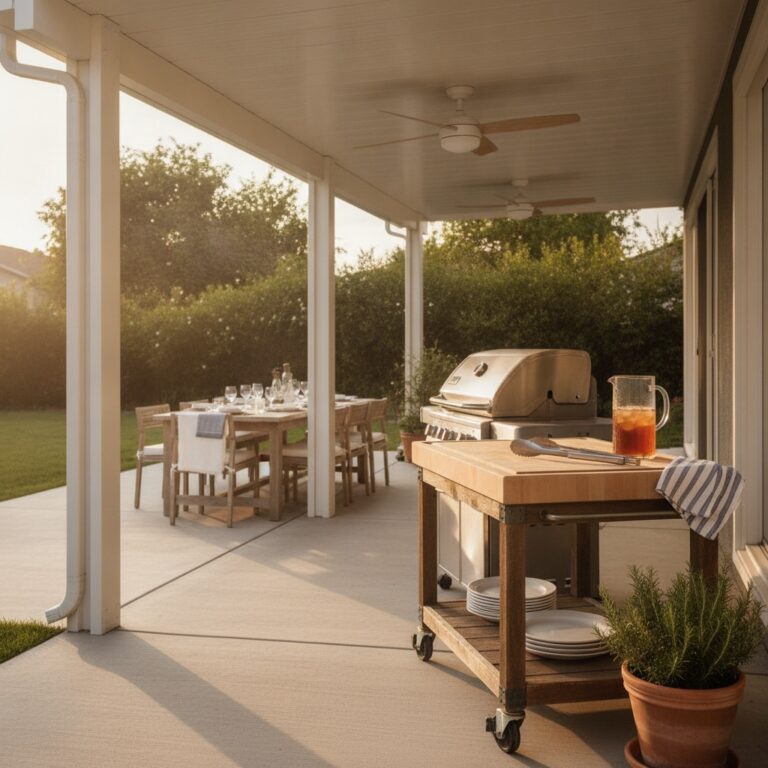
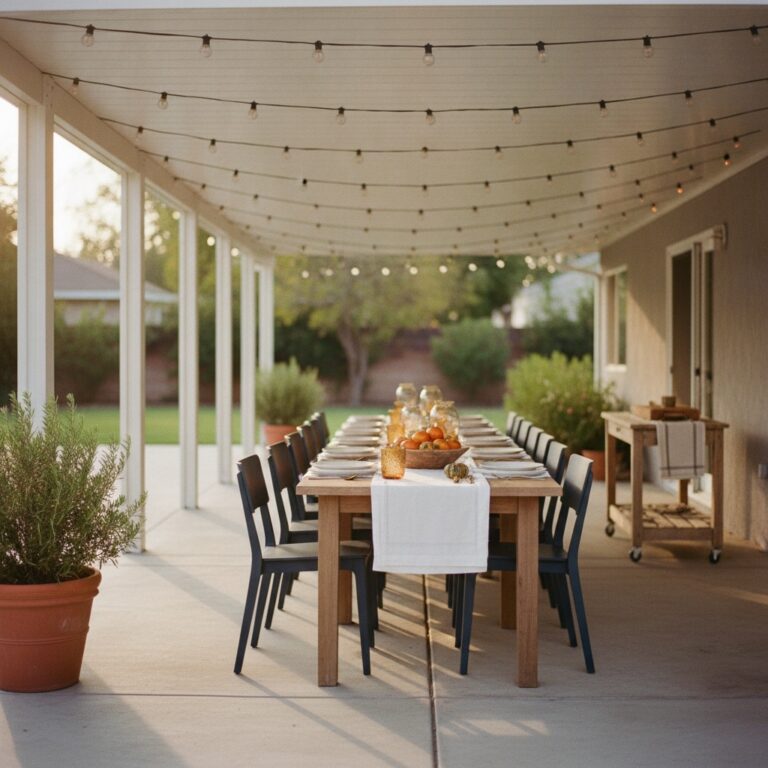
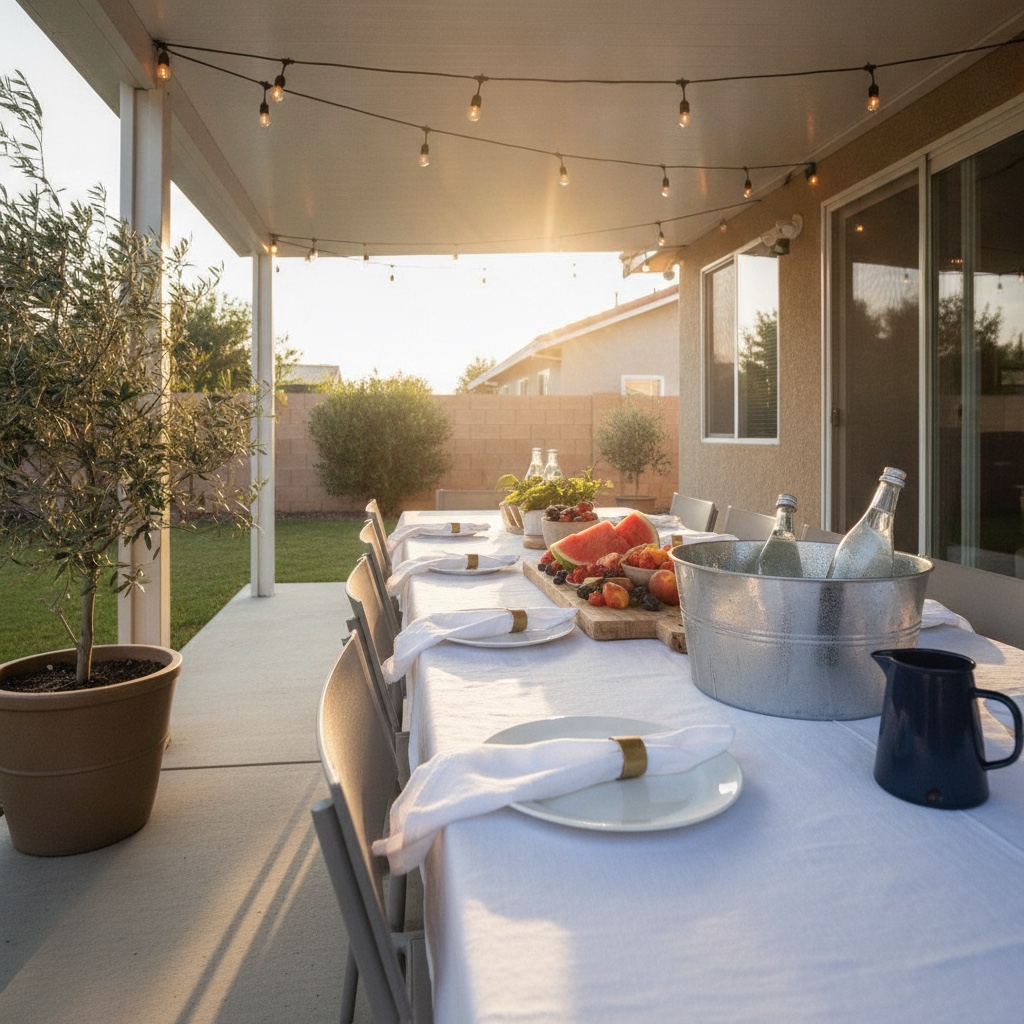
The Fourth under a solid cover runs in zones. By late morning, the host sets the eight-foot table for ten and stages a drink cart against the house wall, where it stays in deep shade all day. The grill sits just past the cover edge on a heat-safe pad, so smoke clears the roofline instead of pooling underneath. Red, white, and blue table linens and a string of bulbs across the rafters go up before guests arrive, while the slab is still cool enough to work on.
From noon to 4pm, the cover earns its keep. Kids run between the yard and the shade without anyone melting. A 52 inch ceiling fan mounted to the cover’s center beam pushes air down over the table, which makes 83 degrees feel like the high 70s. Cold drinks stay cold in a tub under the table rather than going warm on an open counter. The food spread holds in the shade instead of wilting in direct sun.
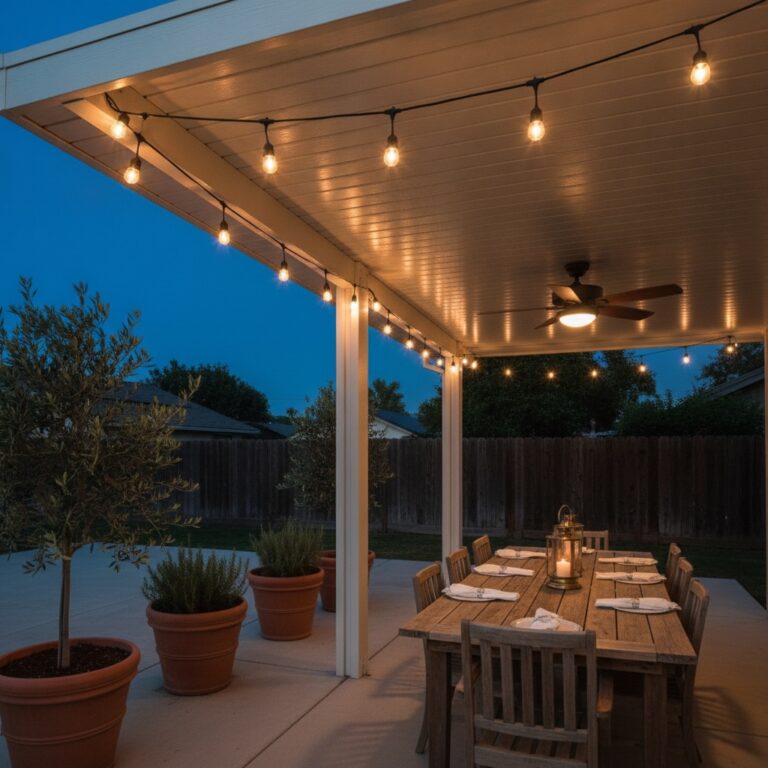
As the light goes gold around 7pm, the same space shifts to evening mode. The string lights take over, the fan keeps the air moving, and the table clears for dessert and card games. When the city fireworks start after dark, everyone walks to the front yard or the driveway for the view, then drifts back under the cover for the wind-down. One structure carries the entire arc of the day, from prep to the last slice of pie.
Furniture, fans, and lights that earn their footprint
The trick to a hosting patio is matching the furniture to the slab, not cramming it. Under a 280 square foot cover, an eight-foot rectangular dining table seats ten and still leaves a three-foot walking lane on the long side. A pair of lounge chairs and a small side table fit in the far corner for guests who want to step out of the dining zone. That two-zone layout, dining plus lounge under one roof, is one of the bigger outdoor-living patterns heading into summer 2026, and a single fixed cover is what makes it hold together.
Lighting and air movement matter as much as seating. A 52 inch damp-rated ceiling fan on the center beam does the heavy lifting in the afternoon. Two runs of commercial-grade string lights across the rafters give the evening its glow without harsh overhead glare. For greenery, potted olive trees and a few lavender pots along the perimeter soften the edges and take SoCal heat without constant babying. None of it works on an open slab, because there is nothing overhead to mount a fan or anchor a light run.
The spec behind a Fourth that actually works
The performance comes down to the cover itself. A solid-roof aluminum system with insulated three-inch foam-core roof panels is what keeps the slab cool and quiet. The foam core blocks radiant heat that a single-skin pan roof would pass straight through, and it deadens the drum of an afternoon sprinkler or the rare summer shower. Beams in this size carry a 20 foot span with a single pair of posts, so the slab stays open and uncluttered.
Two spec numbers are worth asking about by name. Powder coat finished to the AAMA 2604 tier holds its color through years of west-facing SoCal sun, where cheaper finishes chalk and fade. And a quality aluminum cover carries a limited lifetime structural warranty on the frame, which matters when the whole point is a structure you set up once and never rebuild. Installed cost in Orange County runs roughly 20 to 30 dollars per square foot for an insulated solid roof, so a 280 square foot cover like this one lands in the ballpark of 5,600 to 8,400 dollars depending on finish, fan, and electrical.
If your slab faces west and your family keeps moving the Fourth of July indoors by 2pm, the fix is shade you do not have to manage. We walk your yard, measure the slab, check the sun line, and show you exactly where the posts land and how the shade falls across the afternoon. Book a free in-home design walkthrough and we will map a cover sized to the way your household actually hosts, well before next summer’s calendar fills up.
Morning-context sources used: Living Spaces, 14 Big Outdoor Living Trends for 2026; Decorilla, Patio Trends 2026; Homes and Gardens, 2026 Outdoor Furniture Trends; Starfire Direct, July 4th Backyard Party Ideas; Climate-Data.org, Orange County July Climate; TheStreet, 2026 Yardzen Outdoor Trends.