
A heat advisory landed across Los Angeles County this week, running Tuesday morning through Thursday night, with desert highs near 99 degrees. Out in Rancho Cucamonga, the valley pushed past 88 by noon and the back slab turned into a griddle. The Reyes family has a 20 by 24 foot concrete pad off the kitchen, and for three summers it sat empty from June through September. The west wall threw sun straight across it after 3pm. Nobody wanted to sit out there until the light finally dropped behind the San Gabriels.
That slab is now two rooms. One end is a dining table for eight. The other is a lounge with a real sofa. Both sit under a single aluminum cover, and the family uses the space from morning coffee through the last glass of wine. This is what a two-zone patio actually does for a household, and how the layout comes together on a normal SoCal slab.
The Inland Empire backyard that needed two rooms, not one
Most homeowners ask for “a patio cover” and picture one big shaded box. The better question is what happens under it. A family of five does not do one thing on the slab. They eat dinner, then somebody wants to stretch out while somebody else wants the table for homework. A single open zone forces those uses to fight for the same square footage.
The Reyes slab measures 20 feet wide and 24 feet deep. We covered the full footprint with an attached solid-roof aluminum cover, insulated roof pan, 3 inch thickness, in a warm sandstone powder coat to match the stucco. The roof ties into the fascia on the west wall and drains to a single downspout at the south post. AAMA 2604 powder coat holds its color under Inland Empire UV for well past a decade, which matters when the desert sun runs this hard every summer.
A solid-roof aluminum cover in this part of SoCal runs roughly 20 to 35 dollars per square foot installed, depending on insulation and finish tier. At 480 square feet, the Reyes cover landed in the low-to-mid teens. Splitting that footprint into two zones costs nothing extra. The cover does not change. The furniture and the lighting draw the line between the rooms.
Drawing the line between dining and lounge
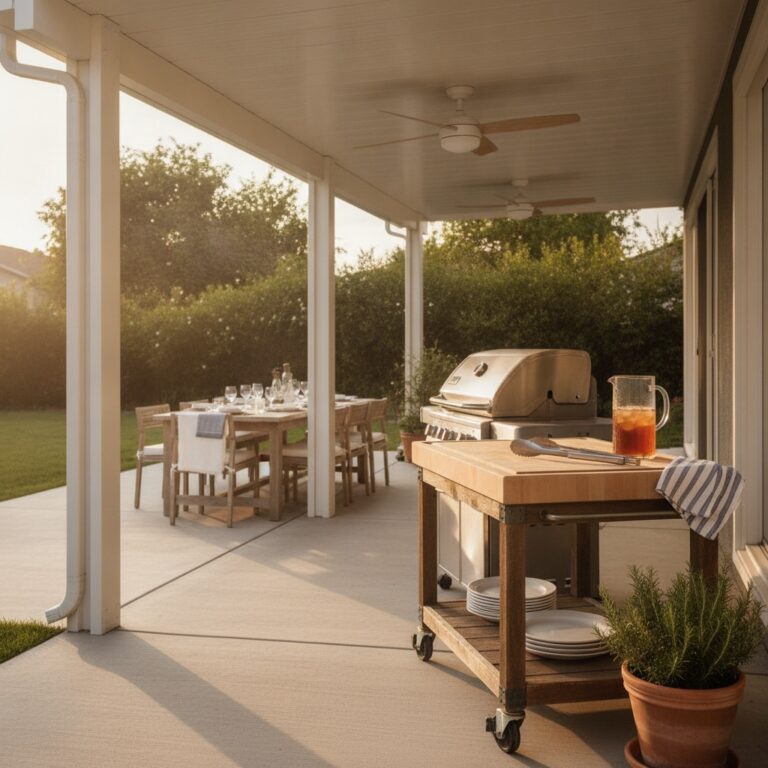
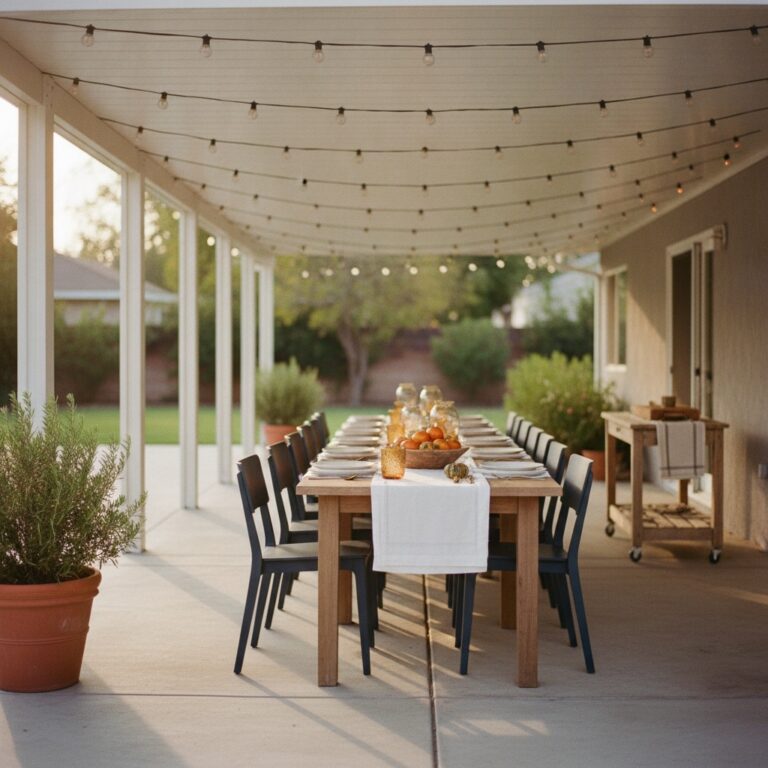
The dining zone holds a 42 by 96 inch table that seats eight. With the chairs pulled out, that table needs about 12 by 14 feet of clear floor. We set it closest to the kitchen slider, so carrying plates out is a few steps and not a trek across the yard. A 52 inch outdoor-rated ceiling fan sits dead center over the table, mounted to a fan-rated brace built into the roof pan.
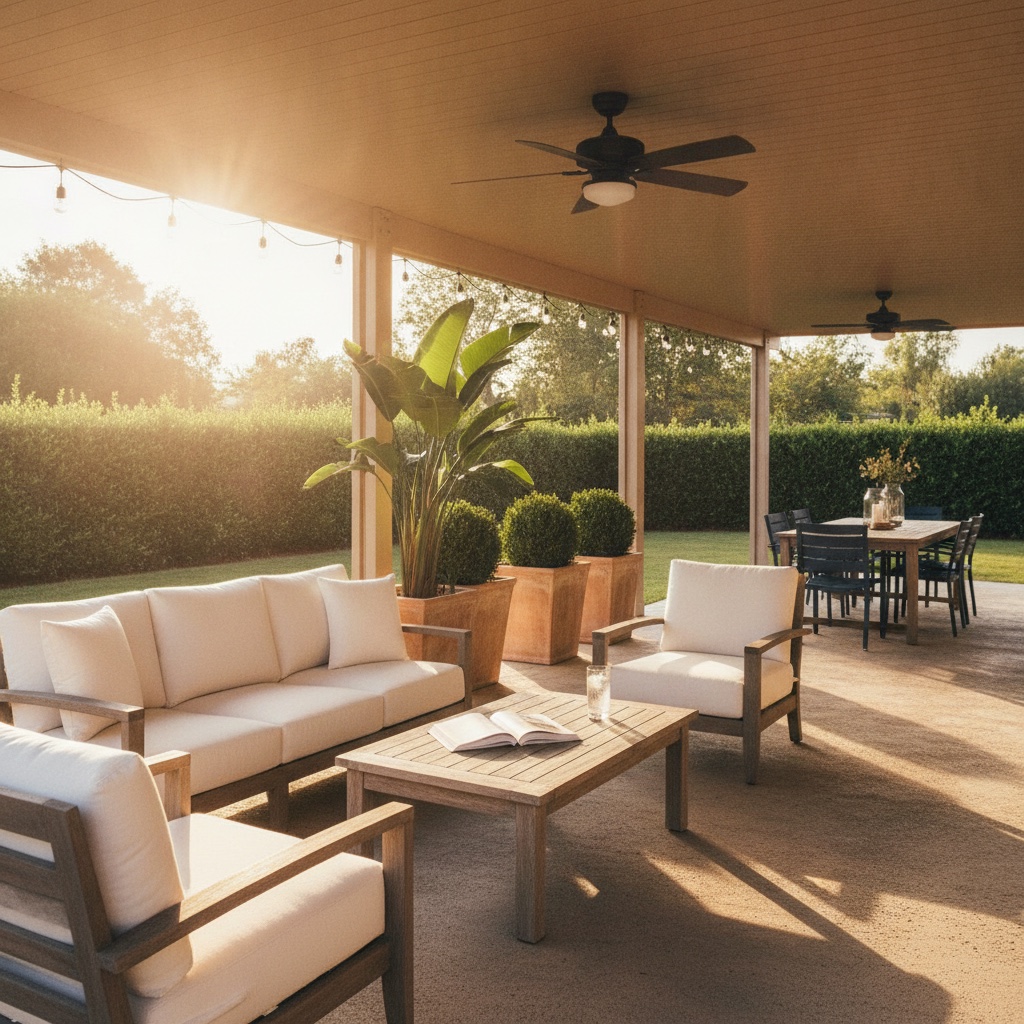
The lounge zone sits at the far end, away from the door traffic. An 84 inch outdoor sofa faces two club chairs across a 48 inch coffee table. That grouping fills about 10 by 12 feet and still leaves a clear walking lane along the open edge. A second 52 inch fan hangs over the sofa. Two zones get two fans, because one fan stranded in the middle cools neither spot well on a 99 degree evening.
The visual break between the rooms comes from a low planter run. Three 24 inch square planters of clipped boxwood sit in a line where the dining floor ends and the lounge begins. They read as a soft wall without blocking the view or cutting the breeze. A homeowner walking the slab feels two distinct rooms, not one long tunnel of furniture.
This works on smaller slabs too. A 14 by 20 pad can still carry a six-seat table at one end and a loveseat with two chairs at the other. The zones shrink, but the principle holds. Give each function its own footprint and the slab stops feeling crowded the moment more than four people step onto it.
A real Tuesday evening under the cover
Picture this week, with the heat advisory still running. At 7am the slab sits in full shade, because the solid roof blocks the low east sun before it can reach the seating. Coffee happens at the lounge end, feet up, before the valley heats. The kids eat cereal at the big table a few feet away.
By 1pm the outside air reads 88 degrees. Under the insulated roof the slab stays noticeably cooler, and both fans move enough air that the lounge is usable for a book and a cold drink. The west wall is taking the full sun, but the solid pan keeps that direct load off the seating. This early-afternoon window is exactly what an uncovered Inland Empire slab loses for the whole of June, July, and August.
Dinner lands at 6:30. Eight people at the table, fan on low, plates coming straight out of the kitchen. After the plates clear, the adults drift ten feet to the sofa while the kids reclaim the table for a board game. Nobody is fighting for the same chairs. String lights come up as the sky goes orange behind the mountains. The slab is still in use at 9pm, which it never was before the cover went on.
Lighting, fans, and the plants that hold the rooms together
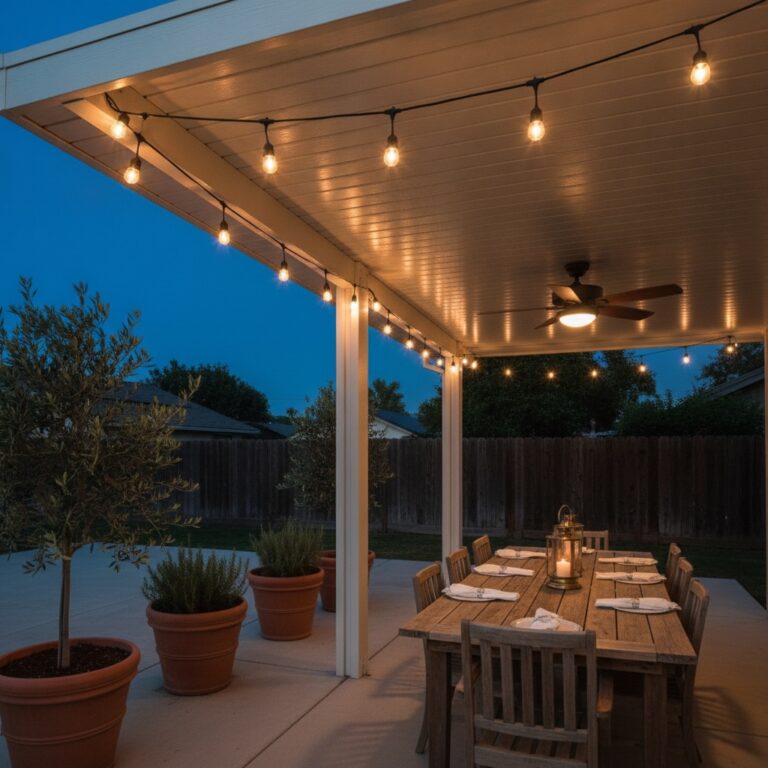
Lighting does the heavy work after sunset. We set four dimmable LED downlights into the roof pan, two per zone, on separate switches. The dining side runs brighter for the table. The lounge runs dim and warm. Along the open south edge, a single run of weatherproof cafe lights gives the whole slab that warm evening glow without washing out the sky behind it.
Fan placement matters more than the box count on the receipt. Each 52 inch fan centers over the furniture it serves, hung at least 8 feet off the slab and a foot below the roof pan so the blades pull clean air. On a 99 degree desert evening, that direct overhead movement is the difference between staying outside and giving up and going back in.
Plants finish the rooms. Potted bird of paradise at the two open posts softens the aluminum lines. The boxwood planter run splits the zones. A pair of olive trees in 20 inch pots anchors the lounge corners. Everything lives in containers, so nothing roots into the slab or the footings, and the family can rearrange the look each season without touching the structure.
A two-zone patio is mostly a planning exercise. The cover is the easy part. Where the table sits, where the sofa faces, where the fans hang, and where the light falls are the choices that turn a bare slab into two real rooms. If your concrete empties out every June, we will walk the yard with you, measure the afternoon sun line, and sketch the two zones right on your slab. Book a free in-home design walkthrough and we will show you exactly where the dining room ends and the lounge begins.
Morning-context sources used: ABC7 Los Angeles, SoCal heat advisory and June temperatures; AccuWeather 2026 summer forecast; Trex 2026 outdoor living trends; Decorilla 2026 patio trends; Homedit summer 2026 outdoor living ideas; Signature Patio summer 2026 design trends.