
A work-from-home homeowner in Brea sets a laptop on the kitchen island every morning and watches the same thing happen by 10 a.m. The east-facing slab off the dining room turns into a sheet of glare and radiant heat, unusable until the sun finally swings west in the afternoon. The patio sits empty during the exact hours the inside of the house feels most boxed in. A covered patio rewrites that schedule. It turns a bright, hot concrete pad into the first room the household actually uses each day, often before the air conditioning has kicked on once.
That shift matters more in 2026 than it did a few years ago. Searches for working outside the house are up 22 percent over the past twelve months, and designers now treat shade as a structural decision rather than a single patio umbrella. For a SoCal homeowner who already starts the day with coffee and a screen, the question is not whether the slab could be a morning room. The question is what it takes to make it one.
The 7 a.m. version of the patio
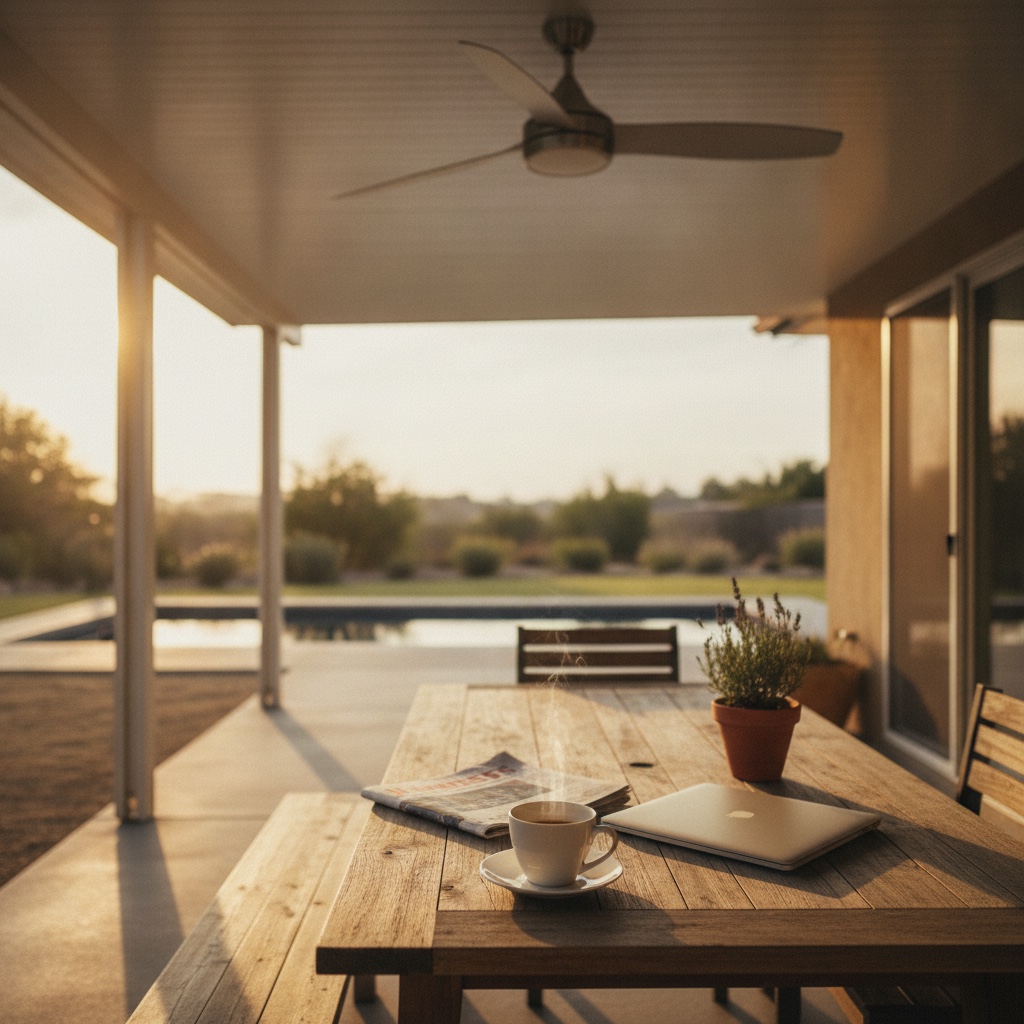
Picture the same Brea slab with a solid aluminum cover over it. At 6:45 the homeowner carries a French press and a laptop out the slider. The cover blocks the low morning sun off the east fence, so there is no squinting at the screen and no heat building on the back of the neck. A 52-inch damp-rated ceiling fan turns on low and moves the still air that usually pools against the house. The first hour of email happens at an outdoor table instead of the kitchen island, with the slider open and the dog asleep on the cool concrete.
By 9 a.m. the inland temperature is already climbing toward the triple digits that hit Woodland Hills, West Hills, and Reseda during the June heat wave this month. Under a solid insulated roof the slab stays in the low 80s well past noon. The homeowner has had two hours of usable outdoor work time that an open patio would never have given. That is the daily value of a cover, and it shows up every weekday, not just at weekend barbecues.
What actually fits on a 12-by-16 slab
Most SoCal morning patios get built on a slab somewhere between 10 by 12 and 14 by 18 feet. A 12-by-16 pad, which is common off a dining room or a converted breakfast nook, holds a working morning setup without feeling crowded. A 42-inch round bistro table with two chairs takes a 6-foot footprint and leaves room to push back and stand. Add a weatherproof console against the house wall for a laptop stand and a coffee setup, and a single lounge chair in the far corner for the mid-morning break.
The cover itself spans that slab cleanly. A 16-foot run uses an aluminum beam sized so posts land only at the two outer corners, which keeps the center open and the sightline to the yard clear. Posts get set on 10 to 12 foot spacing, anchored into the slab with through-bolted base plates. Roof pans run in the 0.019 to 0.024 inch range for a standard solid cover, and the upgrade most morning-patio homeowners actually feel is a 3-inch insulated foam-core panel, which drops the radiant heat coming off the underside on a 100-degree afternoon.
Glare, heat, and the SoCal morning problem
An east or south slab is a glare trap from sunrise on. A lattice cover looks airy, but it lets blades of low sun through the gaps and onto a screen, which defeats the whole point of working out there. For a morning workspace the solid roof wins. It gives full shade at 7 a.m. and full shade at 7 p.m., and it keeps a sudden marine-layer drizzle off the laptop on a gray June morning.
Finish matters as much as the roof. Coastal Orange County air carries salt, and inland yards in Riverside and San Bernardino counties bake under a UV index that regularly hits 10 or 11 in July. An AAMA 2604 powder coat holds its color for years under that load, and the better aluminum systems carry a limited lifetime structural warranty with a 10-year finish warranty behind the coating. That combination is why a cover bought for the morning coffee routine still looks new when the household sells the house eight years later.
From breakfast nook to 2 p.m. video call
The morning patio earns its keep because it does not stay a morning patio. The 2026 trend designers keep pointing to is the zoned, multi-use outdoor room: one space that flexes from a quiet workspace by day to a dining or lounge area at night. The same covered slab that held the 7 a.m. coffee becomes the 2 p.m. video-call spot once the sun is overhead and the inside office feels stale.
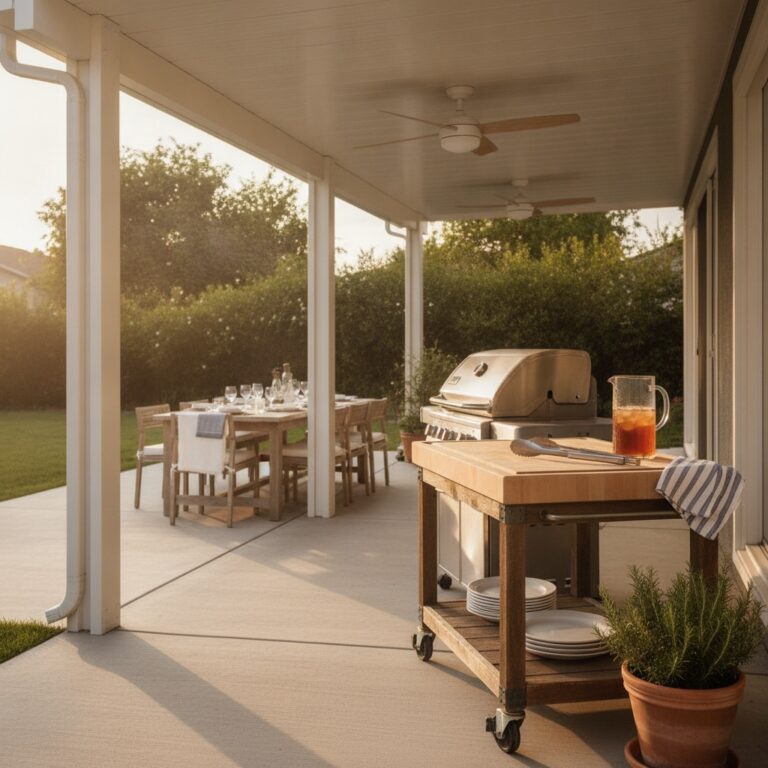
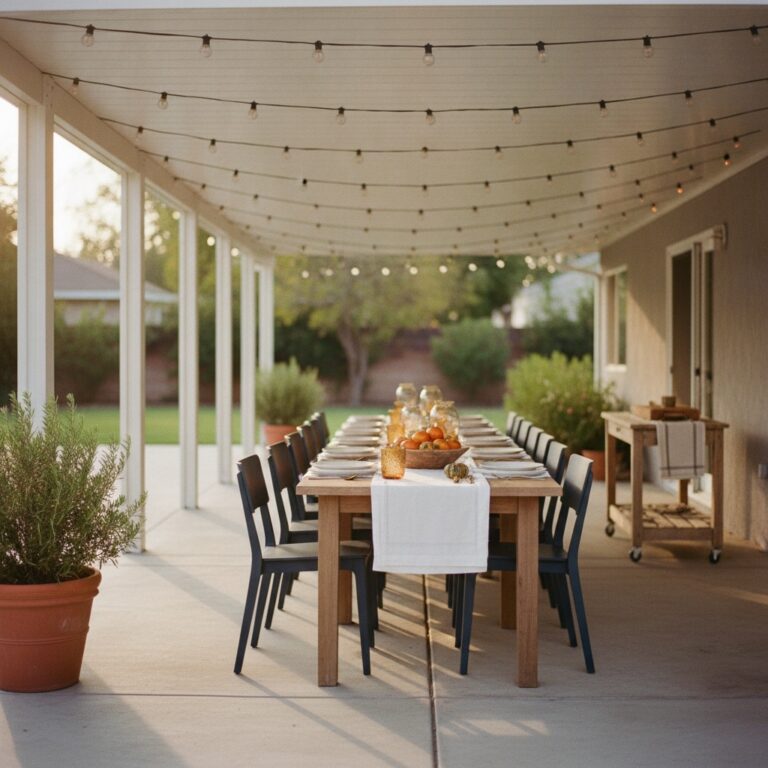
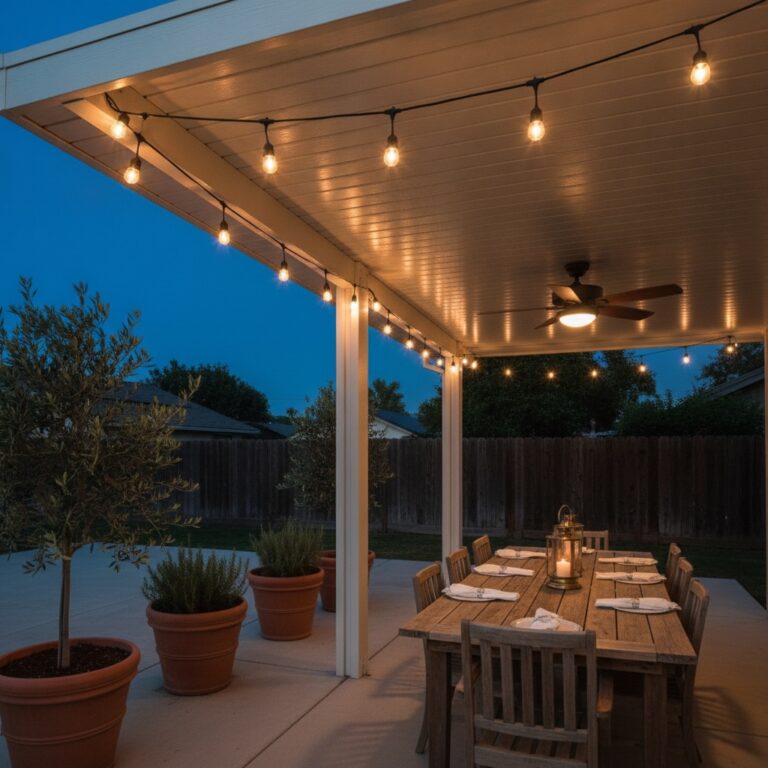
A few specifics make that flex work. Mount the ceiling fan dead center under the beam so the airflow reaches both the table and the lounge chair. Run a single circuit out to the cover for the fan, two dimmable LED downlights, and a string of warm cafe lights clipped to the front beam for evening use. Keep the planting low-water and low-mess: a potted olive in one corner, lavender and rosemary along the house wall, and a fern tucked into the shaded edge where afternoon sun never reaches. The result reads like a real room, which is exactly what the experiential-yard idea is chasing.
By evening the same slab is where the family eats. The laptop goes inside, the cafe lights come on, and the table that held spreadsheets at 9 a.m. holds dinner at 7 p.m. One cover, three uses, every single day. That is a different return than a structure that only matters on the Fourth of July.
If a slab off the kitchen or dining room is sitting empty during the best hours of the day, it is worth seeing what a cover would do with it before another SoCal summer burns past. We walk the actual slab, measure the sun angles off your fence line, and lay out the table, fan, and lighting that fit your morning routine. Book a free in-home design walkthrough and we will show you the 7 a.m. version of your own patio.
Morning-context sources used: Living Spaces, 14 Big Outdoor Living Trends for 2026; Homedit, 20 Backyard Shade Ideas for 2026; Domino, The Biggest Backyard Trend of 2026; TheStreet/Yardzen, 3 Outdoor Trends for 2026; CBS News Los Angeles, June Heat Wave Reaches Southern California; AccuWeather, Summer Forecast 2026.