
A homeowner in Whittier called last week with a simple problem and a hard deadline. Her back slab faces west, the late-June heat wave just pushed the San Gabriel Valley and inland Orange County into the 90s, and her concrete was too hot to stand on by 4 p.m. She wanted shade before the Fourth of July. The only real question left was whether the new aluminum cover should bolt to the house or stand on its own four posts.
That single choice, attached versus freestanding, shapes the cost, the permit path, the shade timing, and how the finished patio feels. Both versions are aluminum. Both shrug off SoCal sun for decades. They solve the heat in different ways, though, and the right pick depends on your slab, not on a glossy brochure.
When an attached cover wins
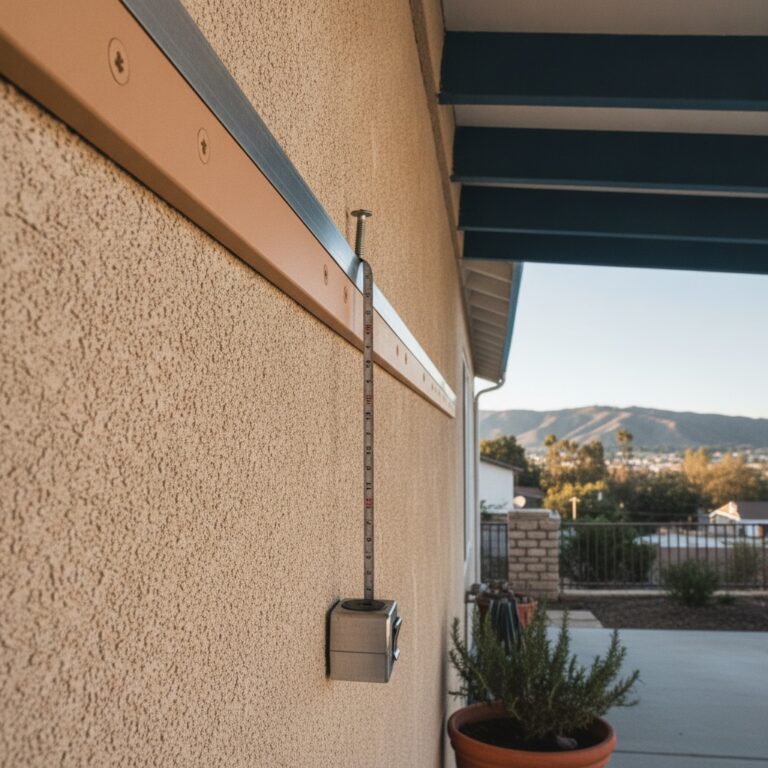
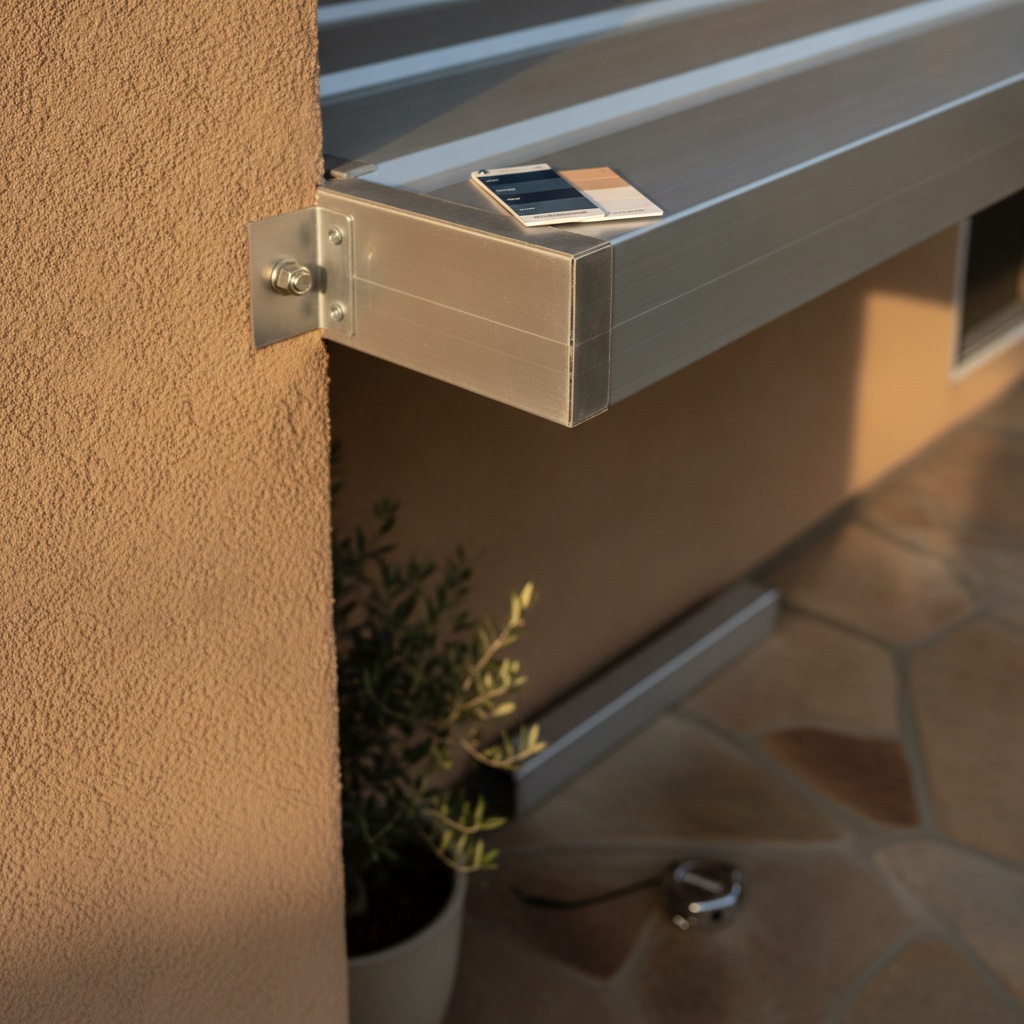
An attached cover ties one edge to the house, usually with a ledger board lag-bolted into the rim joist or a stucco-mounted ledger bar. The house then carries part of the roof load, so the structure needs fewer posts on the open side. For a typical 12 by 16 foot attached cover, you often see just two posts at the outer corners and nothing blocking the middle of your view.
The bigger advantage is shade timing. Because the cover starts at the wall and reaches out over the slab, it throws shadow exactly where the afternoon sun bakes the back of the house. On that west-facing Whittier slab, the difference is cool concrete by 3 p.m. instead of 6. Power and water already sit at the wall, so adding a ceiling fan or a downlight runs a short conduit line rather than a trench across the yard.
Attached covers also tend to cost less and read as a true home addition when an appraiser walks the property. The tradeoff lives in the connection. A ledger has to be flashed correctly into the wall, or it becomes a leak path during the January atmospheric-river storms. Done right, with proper flashing and AAMA-grade hardware, it is a 20-year detail. Done cheap, it stains the stucco within two winters and rots the rim joist behind it.
When a freestanding cover wins
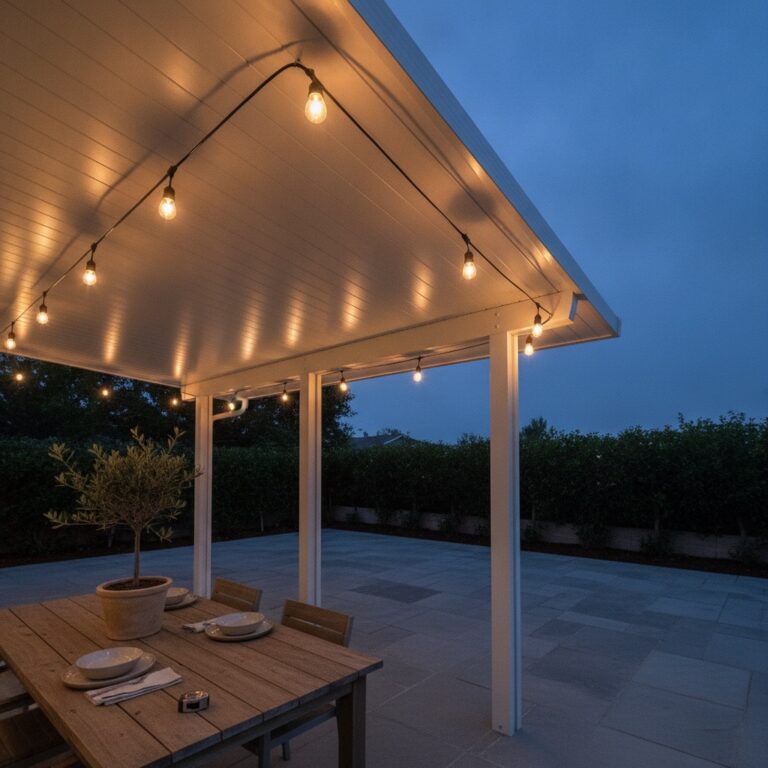
A freestanding cover stands on its own four or six posts and touches nothing on the house. That independence is the entire point. If the space you actually use sits 15 feet off the back wall, out by the pool or against the rear fence, an attached cover simply cannot reach it. A freestanding one drops shade exactly where you want to sit.
It also clears tricky walls. Two-story homes in Irvine and Ladera Ranch often have a second-floor window or a roofline that leaves no clean spot for a ledger. Instead of fighting the wall, a freestanding cover sidesteps it. The house stays untouched, which removes any leak risk and usually shortens the conversation with an HOA architectural committee, since nothing alters the home’s exterior envelope.
The cost runs higher because every pound of roof rides on its own posts and footings rather than on the house. You also give up a little shelter. Wind-driven rain can reach under an open-sided freestanding cover from angles an attached one blocks. For most SoCal yards that matters only a handful of days a year, which is why the freedom of placement usually wins for pool decks and detached lounge areas.
The specs that actually decide it
Style talk gets concrete once you look at spans. JNL builds most covers from 0.040 to 0.050 inch aluminum W-pan roofing, with extruded beams sized to the run. A working rule on the slab: a 6 by 6 inch beam comfortably spans roughly 16 to 18 feet between posts, while a lighter 3 by 8 beam wants posts closer to 10 to 12 feet apart.
That spacing is where attached and freestanding split apart. An attached 12 by 20 cover can often run post-free across the front, because the ledger carries the back edge for you. The same 12 by 20 as a freestanding unit needs either a center post or a deeper beam to carry the load its own legs now hold. If an open sightline to the yard matters, the attached version gives it up more easily.
Footings matter just as much. Freestanding posts sit on poured concrete piers, often 12 inches wide and 18 to 24 inches deep depending on soil and wind exposure. Inland valleys with Santa Ana exposure get deeper footings than a sheltered coastal yard in San Clemente. Cal/OSHA has been reminding crews to plan heat-safe work windows this summer, so a clean footing and post plan also keeps install days short and predictable during a heat wave.
Matching the choice to your slab
Walk your yard at the hour you actually use it. If the heat problem sits right against the house and you want the patio to feel like another room off the kitchen, attached almost always wins on cost and on shade timing. If the space you love is out by the pool or tucked at the back fence, freestanding earns its higher price by putting shade where no wall could ever reach.
Plenty of SoCal homes end up with one of each over a few years: an attached cover for the daily breakfast-and-dinner slab, a freestanding cover for the pool lounge. Aluminum makes that pairing easy, because both styles resist rot, termites, and the marine air that chews through a wood pergola in a few short seasons. A matched powder-coat color ties the two together so the yard still reads as one design.
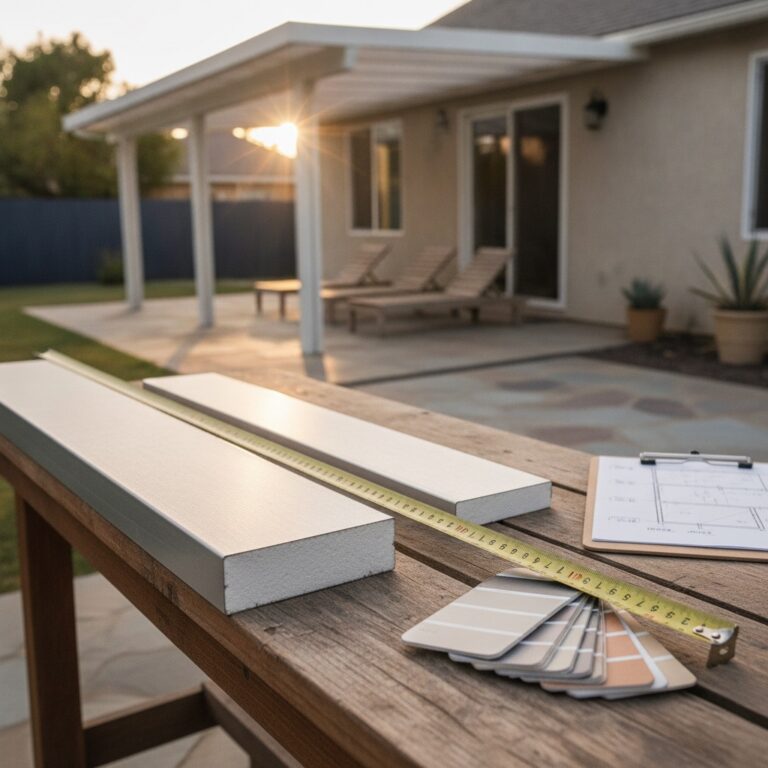
The fastest way to settle the question is to have someone stand on your slab at 4 p.m. and measure where the shadow needs to land. We bring the beam samples, the powder-coat swatches, and the span math to your yard and price both options on the spot. Request a free in-home quote, and we will tell you honestly which one your slab wants before the next heat wave rolls in.
Morning-context sources used: CBS Los Angeles, “Southern California heat advisory issued as temperatures expected to scorch parts of inland region” (https://www.cbsnews.com/losangeles/news/southern-california-heat-advisory-heat-wave-inland-communities/); California Department of Industrial Relations / Cal-OSHA, “Cal/OSHA urges employers to protect workers as California temperatures rise” (https://www.dir.ca.gov/DIRNews/2026/2026-24.html); Today’s Patio, “2026 Outdoor Living Trends” (https://todayspatio.com/blogs/the-patio-life/2026-outdoor-living-trends); Decorilla, “Patio Trends 2026: The Future of Outdoor Living” (https://www.decorilla.com/online-decorating/patio-trends-2026); ShadeWorks, “Attached vs Freestanding Patio Covers: Which Is Better?” (https://shadeworks.com/attached-vs-freestanding-patio-covers/); Sacramento Patio, “Freestanding Patio Covers vs Attached” (https://www.sacramentopatio.com/post/freestanding-patio-covers-vs-attached-the-best-option-for-your-backyard-layout).