
The Hendersons put a pool in their Chino Hills backyard in 2019. The pool gets used. The deck does not. By 1pm in July the west-facing concrete reads 140 degrees on an infrared thermometer, the lone umbrella shades a chair and a half, and every party migrates indoors before dinner. Their fix was not another umbrella. It was a 12 by 24 foot attached aluminum patio cover over the dry side of the deck, and it changed how the entire yard works.
Why the Pool Gets Used and the Deck Does Not
A pool without shade nearby is a 90 minute party. Guests swim, burn, towel off, and drift inside to the kitchen island. The deck becomes a place people cross, not a place people stay. Inland cities like Chino Hills, Corona, and Menifee make it worse. July afternoons run 95 to 105 degrees, and bare concrete stores that heat well past sunset.
Shade sails and pop-up canopies patch the problem for a season. A sail stretches and fades, a canopy walks across the yard in a 20 mph gust, and neither one carries a fan or a light. Yardzen’s 2026 outdoor living report calls this the year of the “party patio,” meaning backyards planned for regular hosting instead of two events a summer. That kind of hosting needs shade that is structural, not seasonal.
A solid-roof aluminum cover parks permanent shade exactly where the sitting happens. It holds fans, lights, and a dinner table out of the sun, three things no umbrella manages at once. It also keeps the party at the pool during a stray monsoon-season shower, which inland August likes to deliver at least once.
A Saturday Pool Party, Hour by Hour
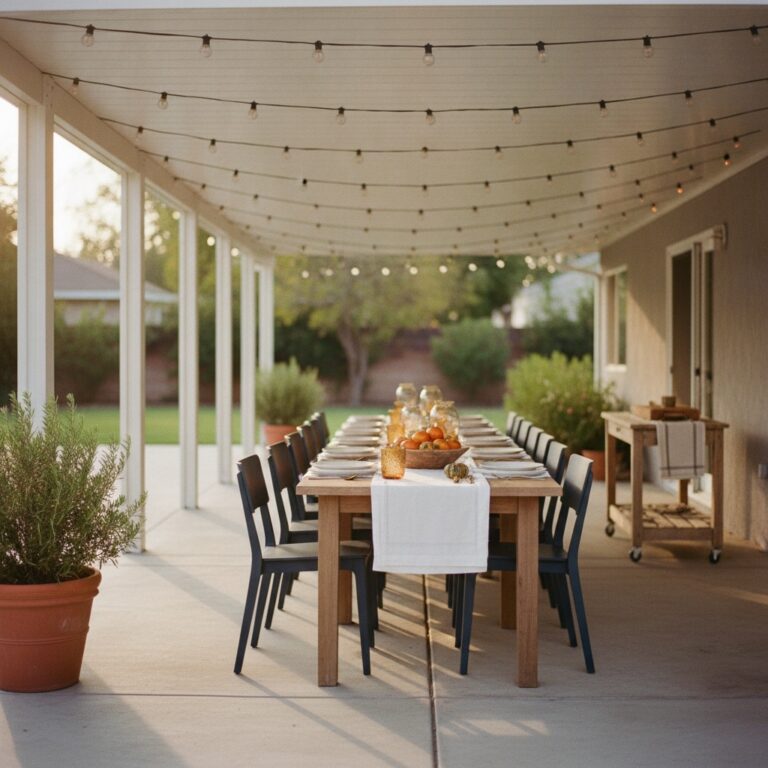
Picture the first Saturday after the install. At 10am the hosts set the table under the cover. No dragging umbrella bases, no draping sheets over a frame. The 84 inch dining table seats eight in full shade, and insulated roof panels keep the deck beneath them 15 to 20 degrees cooler than the open concrete three feet away.
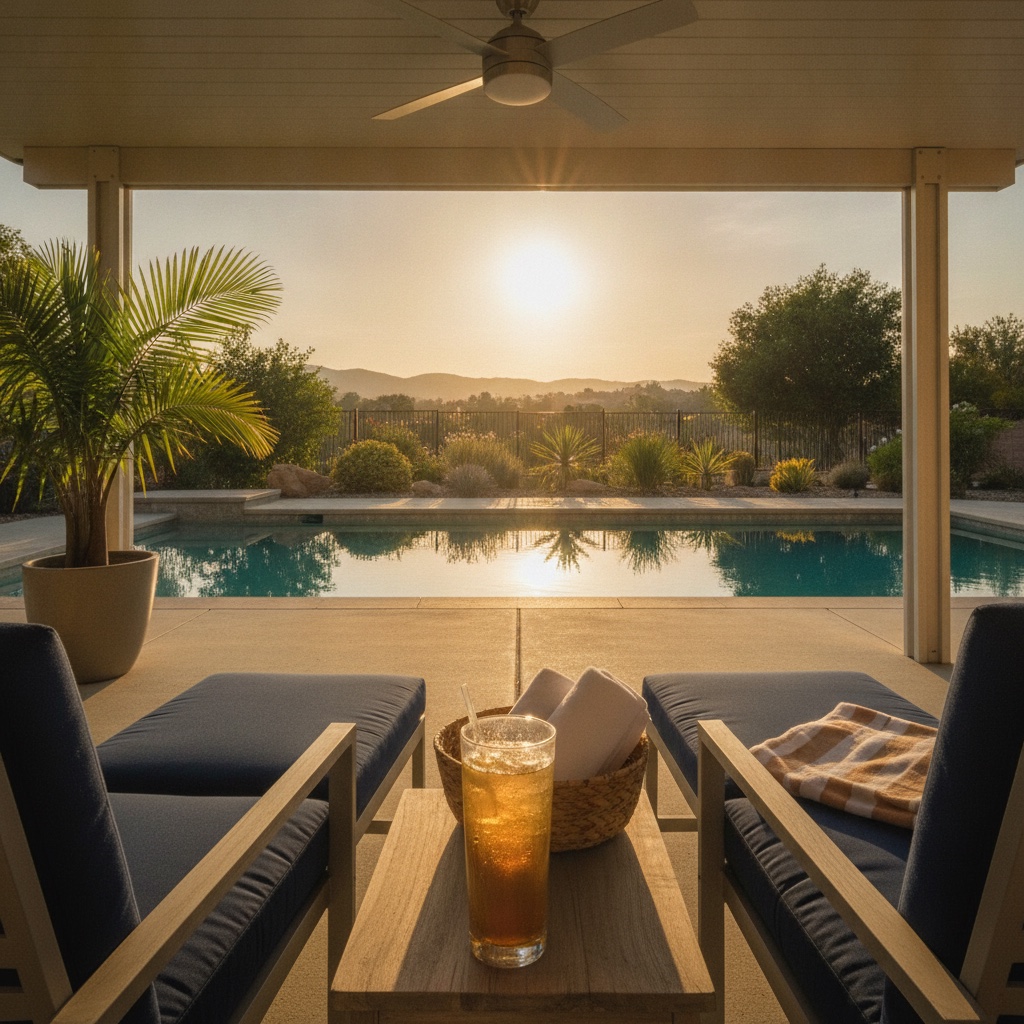
At noon the kids are in the water and the adults are not baking on the pool steps. Two lounge chairs and a low teak side table sit at the pool edge of the cover, close enough to watch the shallow end, far enough back to stay dry. A woven basket of rolled towels lives against the house wall, so nobody hunts through a wet heap on the diving board.
At 2pm, the hottest hour, the party does not stall. A 52 inch wet-rated ceiling fan hung from the center beam moves air across the seating zone at deck height. Hosting editors at Homes and Gardens point to moving air and real shade as the two things that keep guests outdoors on extreme heat days. The fan draws about as much power as a bright light bulb.
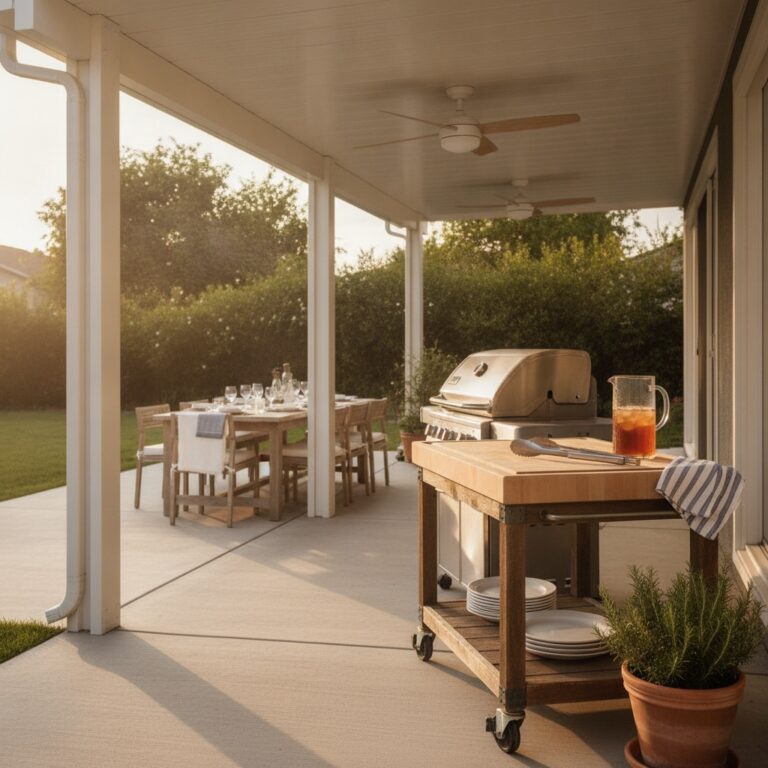
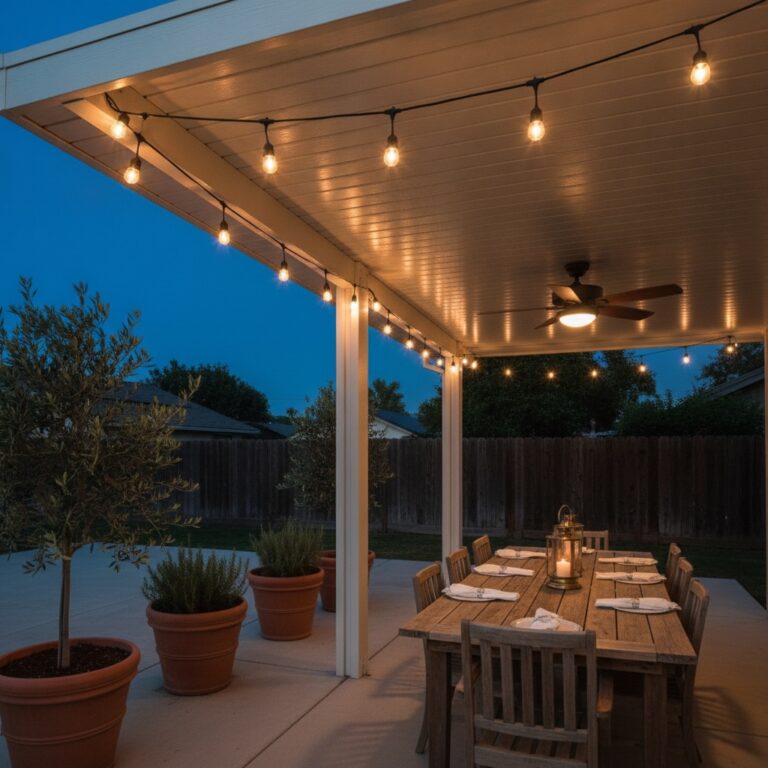
At 6pm dinner happens outside for once. Burgers come off the grill cart stationed at the open end of the cover, out from under the roof but two steps from the table. By 8pm string lights along the beams take over. The concrete already shed its heat because it spent the day shaded, so bare feet are fine. The party ends when people leave, not when the sun forces the issue.
The Layout That Makes It Work
Start with the cover itself: 12 feet deep, 24 feet wide, attached at the house and carried on three 3 by 3 inch posts along the pool side. Insulated solid roof panels earn their upgrade here, because foam-core panels block heat instead of just light. Head height runs 9 feet at the house down to 8 feet at the beam, tall enough that the fan sits above adult sightlines to the water.
Zones do the real work. The dining zone takes the house side: the 84 inch table, eight chairs, a buffet cart against the wall. The lounge zone takes the pool side: two loungers, the towel basket, a side table sized for a pitcher and four glasses. That split follows the biggest 2026 pool design trend, treating pool, patio, and seating as one planned space instead of a pool dropped into a yard.
Finish matters more near water. Chlorinated splash plus daily sun argues for an AAMA 2604 powder coat at minimum, a spec built to hold color through UV that would chalk an ordinary painted surface inside five years. A sandstone or coastal navy finish hides water spotting better than bright white. Gutters on the pool-side beam send roof runoff away from the deck, so winter rain does not sheet across the path people walk with wet feet.
Lighting and power get planned, not extension-corded. Two dimmable LED fixtures recessed in the roof panels handle dinner. String lights on the beam handle everything after. A weatherproof outlet on a post runs the blender station in July and a slow cooker for football Sundays in November. The cover keeps earning in the off-season, when a 62 degree January afternoon by the pool becomes a usable room.
What This Looks Like in Your Yard
Every pool deck has its own geometry. Some yards need a freestanding cover out by the water because the house sits too far away. Some need a 10 foot deep attached cover and nothing more. The questions stay the same: where does the afternoon sun land, where do people actually sit, and where can posts go without crowding the coping or the required deck clearances.
That is a conversation to have standing on the deck, not guessing from a brochure. We measure the slab, track the sun line for your exact exposure, and lay out zones around how your household hosts. If your pool gets used and your deck does not, request a free in-home design walkthrough and quote from JNL Aluminum. One visit turns the hottest corner of the yard into the room everyone stays in.
Morning-context sources used: Forbes, “Soft Yards, Party Patios: Yardzen’s 2026 Outdoor Living Trend Report” (July 8, 2026); Forbes, “Luxury Pool Design Trends for Backyard Entertaining” (June 30, 2026); Homes and Gardens, “How To Stay Cool When Hosting Outside This Summer”; Homedit, “20 Backyard Shade Ideas for 2026”; Island Stone, “2026 Pool and Patio Design Trends.”