
Picture a Tustin backyard at 6:15 on a July morning. The house shades a narrow strip of grass, and that strip is where the yoga mat goes, because the 12 by 24 foot slab ten feet away is already catching sun. By 10 a.m. the concrete glares. By 3 p.m. it reads over 120 degrees at the surface. So 288 square feet of paid-for patio sits empty while a daily habit squeezes onto damp grass.
A covered yoga corner fixes that in one move. Not a gym, not a remodel. One aluminum cover, one shaded corner with a mat, a fan, and a plant, and the slab turns into a room the household uses every single day. Here is how the layout works, what it costs, and the spec choices that decide whether the corner stays comfortable in a SoCal July.
Why a Bare Slab Loses 1,500 Hours a Year
An uncovered SoCal patio works in the morning and again after dinner. From roughly 11 a.m. to 4 p.m. in summer, nobody sits on it. A 2026 San Diego shade guide puts the math plainly: a shade structure drops the surface temperature beneath it by 20 to 30 degrees and adds about 1,500 usable hours to a patio over the course of a year. That is close to four extra hours a day, most of them the hours a morning routine actually needs.
Inland cities like Tustin, Orange, and Corona make the case even harder to ignore. July highs run the upper 80s to mid 90s, and bare concrete stores that heat well into the evening. An insulated aluminum roof panel with a foam core blocks up to 97 percent of radiant heat transfer, so the slab under it stays close to air temperature instead of baking. The difference between usable at 7 a.m. and usable all day is the roof.
The 10 by 12 Yoga Corner, in Real Numbers
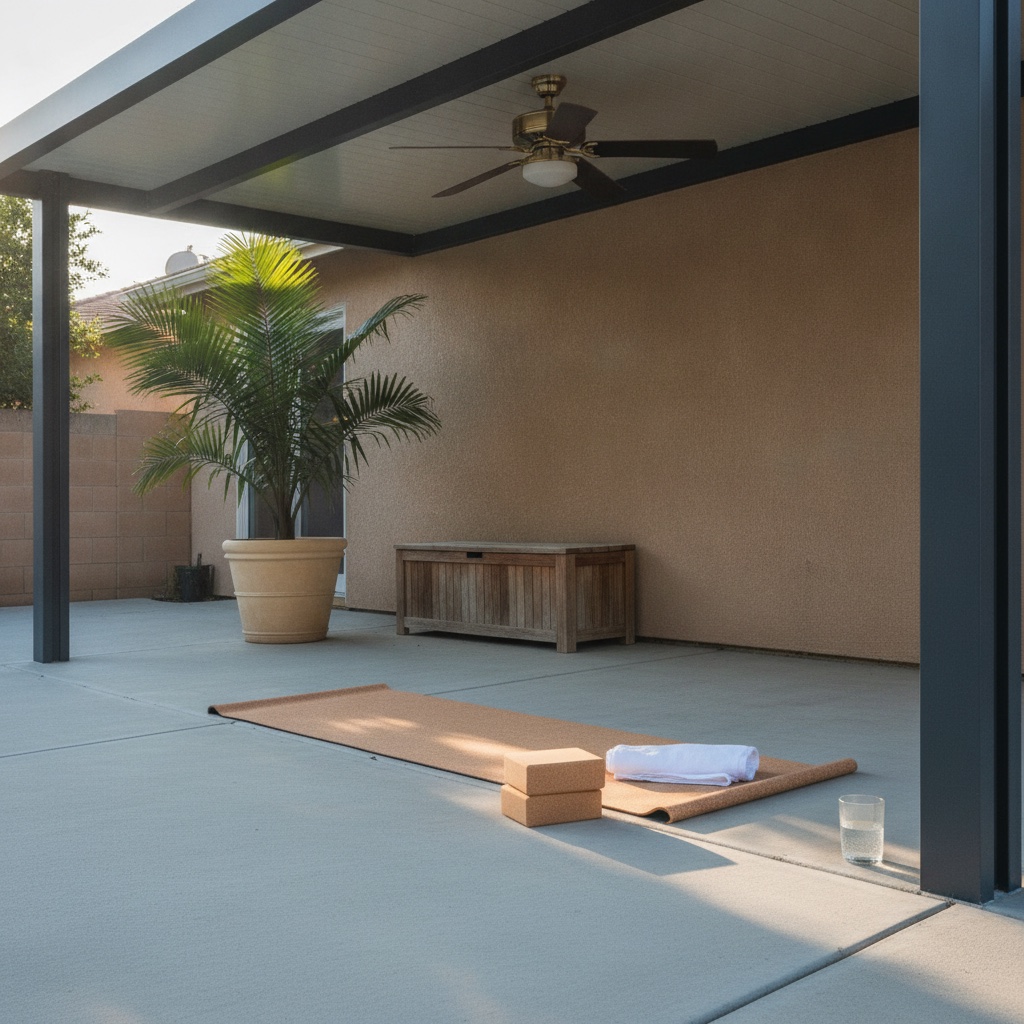
A standard yoga mat is 24 by 68 inches. Give it 18 inches of clearance on every side for extended arms and you need a practice zone of about 6 by 9 feet per person. On a 12 by 24 slab, dedicate the north 10 by 12 corner to practice and the mat never fights the dining table for space. Two mats fit side by side with room left for a 48 inch cedar storage bench holding blocks, straps, and a rolled spare mat.
Air movement matters as much as shade. Mount a 52 inch damp-rated ceiling fan on the beam nearest the practice corner, blades at least 8 feet above the slab per code. On low, it moves enough air to make 88 degrees feel like 82 without flipping a page of a magazine. Add a kentia palm in a 20 inch pot at the open corner and a 6 foot freestanding screen on the property-line side, and the corner reads private without a wall.
One Cover, Three Rooms a Day
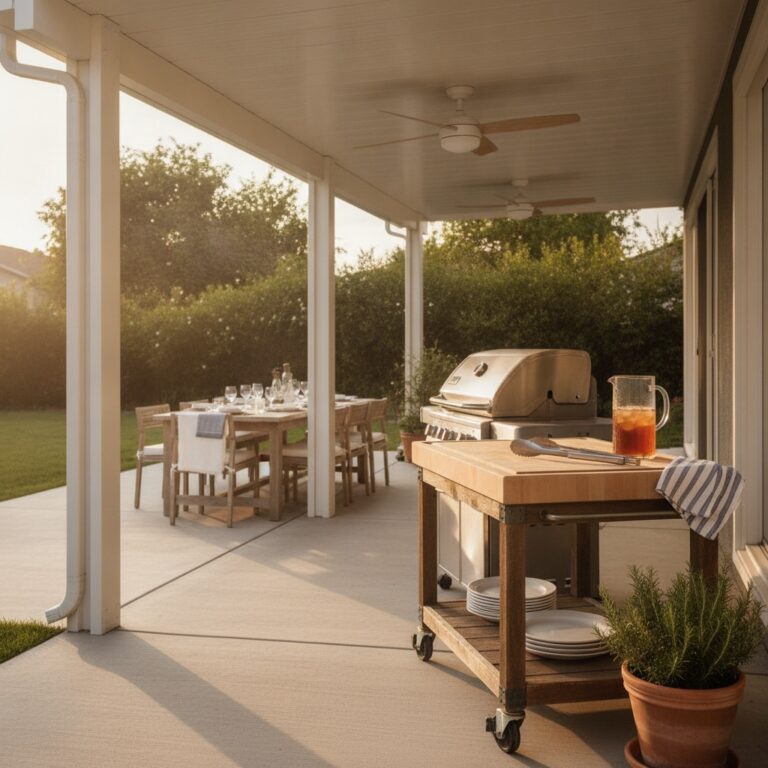
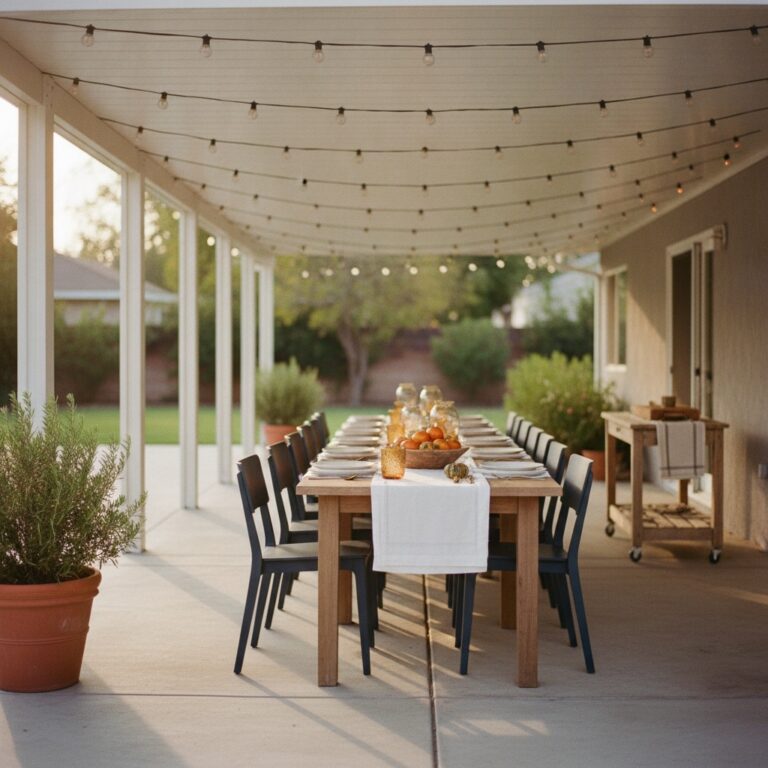
The corner earns the cover, but the rest of the slab cashes in. At 7 a.m. it is a studio. At 3 p.m. the same shade holds a lounge chair and a glass of iced tea in the only cool spot in the yard. At 7 p.m. a 72 inch dining table seats six for dinner under the solid roof while the sun drops behind the fence line. One structure, three distinct rooms, zero setup between them.
Weekends stretch the schedule but not the layout. Saturday morning the corner holds two mats and an early class streamed on a phone propped on the bench. By noon the fan is on medium and the lounge side hosts neighbors. On marine-layer mornings in May and June, the solid roof earns its keep a second way: the mat stays dry under a sky that drips until ten. A lattice cannot promise that, which matters when the routine is daily rather than occasional.
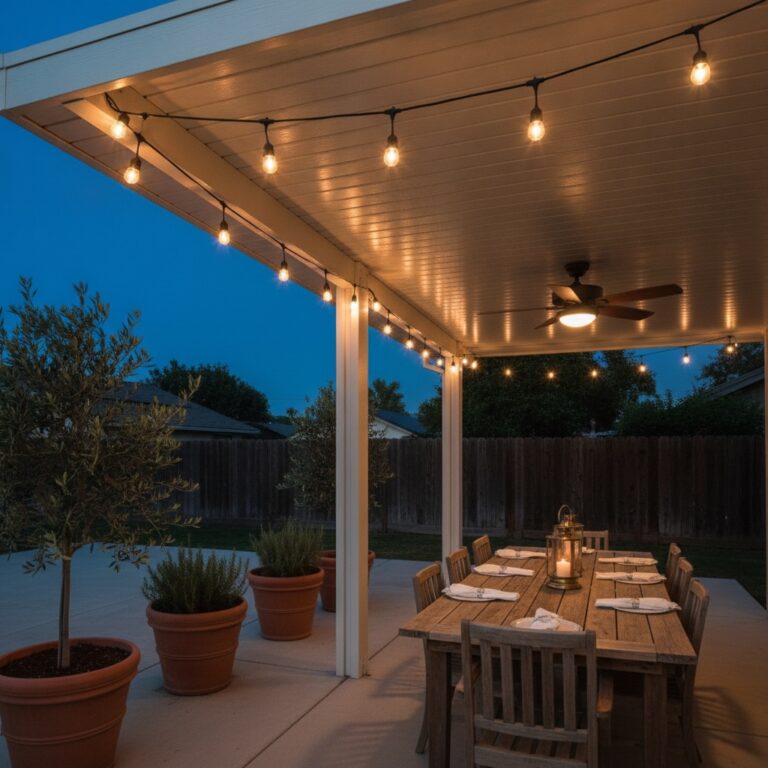
Lighting decides whether the evening shift works. Wire the fan with a dimmable 2700K light kit for the dinner hour, and run a single line of warm string lights along the outer beam for after dark. Skip anything cool-toned. A 4000K floodlight makes a patio feel like a car lot. Keep plants at the perimeter in pots, not planted, so the slab stays clear for the morning mat.
Lattice or Solid Roof Over a Morning Room
Lattice covers deliver 40 to 60 percent shade and run about $10 to $20 per square foot installed in Southern California, so a 10 by 20 lattice lands between $2,000 and $4,000. That dappled light is beautiful at 8 a.m. It is not enough at 2 p.m. on a west-facing slab, and it will not keep a June drizzle off the mat.
An insulated solid roof runs $30 to $55 per square foot installed, or roughly $6,000 to $11,000 for the same 10 by 20 footprint. For a daily-use corner that has to work at every hour, the solid panel wins. Spec it with an AAMA 2604 powder coat so the finish holds color through years of UV, and ask for an embossed wood-grain finish if the house leans warm stucco and tile.
Structure matters for the layout too. An extruded aluminum beam can clear a 12 foot projection without a center post, which keeps the practice zone completely open. Wood framing at that span usually forces a post right where the mat wants to be. Confirm post spacing on the drawing before you sign anything, and make sure the fan mount lands on a beam, not a panel.
From Empty Slab to Daily Room
The trend data says this is where backyards are headed. Yardzen’s 2026 outdoor living report, covered by Forbes in early July, calls out wellness zones and party patios as the year’s defining moves. Houzz’s 2026 outdoor report found 53 percent of renovating homeowners now plan a quiet retreat or reading area outdoors. The yoga corner is not a niche request anymore. The quiet corner has become a standard line item on new patio drawings.
The build itself is small as projects go. A 10 by 20 attached insulated cover typically installs in one to two days once permits clear, and nothing about it touches the house interior. We design these around how the household actually moves through a day, which is why the process starts with a free in-home design walkthrough. Bring the mat out to the slab, stand where the corner would go, and see what the yard has been waiting to become. Request a quote and JNL will draw the corner into the plan.
Morning-context sources used: Forbes, “Soft Yards, Party Patios: Yardzen’s 2026 Outdoor Living Trend Report” (July 8, 2026); OPE+, “2026 outdoor living trends focus on wellness, function and lasting value” (July 6, 2026); Houzz Pro, “Investing in outdoor living: 5 of the biggest backyard trends of 2026”; Install-It-Direct, “Patio Shade Options for San Diego Backyards (2026)”; Trex, “Top Outdoor Living Trends for 2026”.