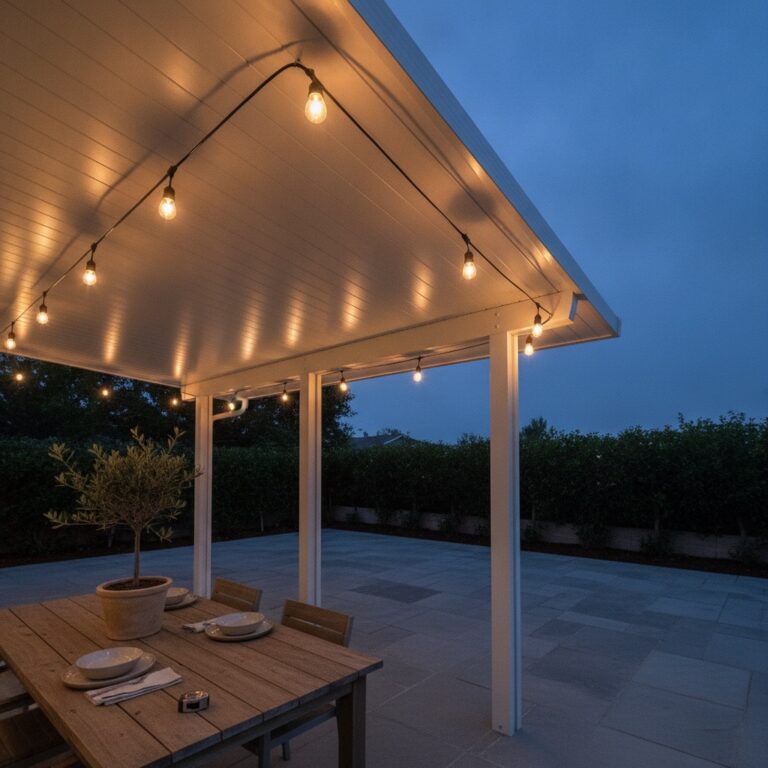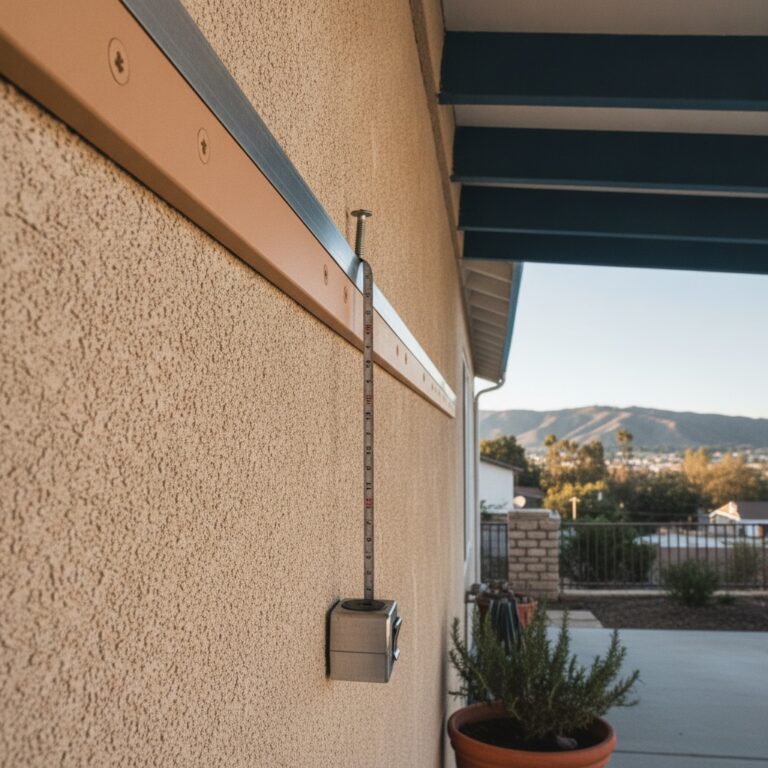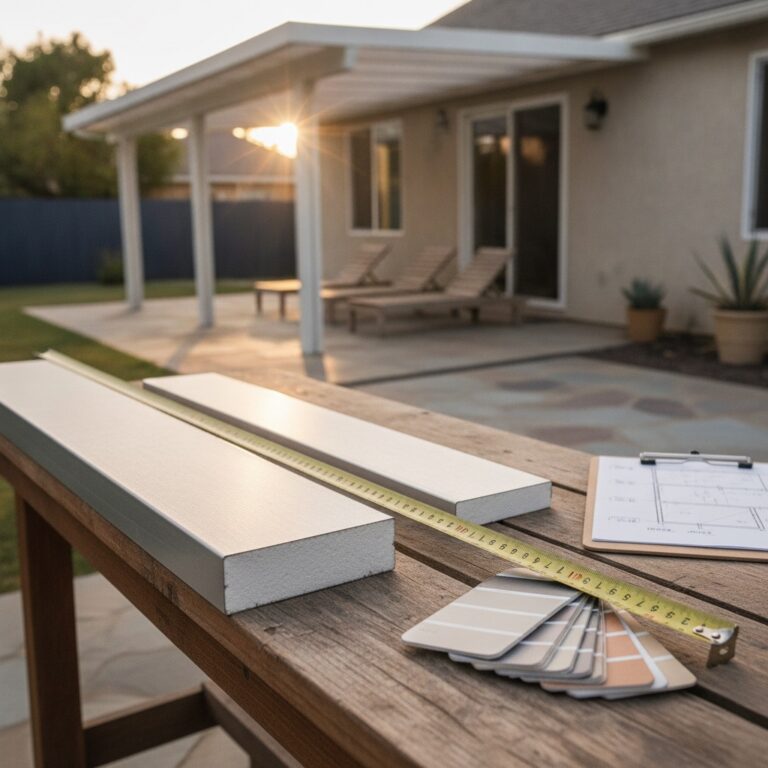

The first big heat wave of July just pushed Inland Empire valleys past 100 degrees, and forecasters expect more of the same before the month is out. Stand on a bare west-facing slab in Corona at 4 pm and you feel both halves of the problem: sun hammering down and concrete radiating heat back up. A patio cover fixes half of that. The roof panel you pick decides whether it fixes the other half.
Most aluminum covers in SoCal get quoted two ways: a single-skin flat pan roof, or insulated roof panels built around a foam core. The pan roof costs less and shades just as well on paper. The insulated panel runs 30 to 50 percent more. This post walks through what that premium actually buys, and when a homeowner should skip it without a second thought.
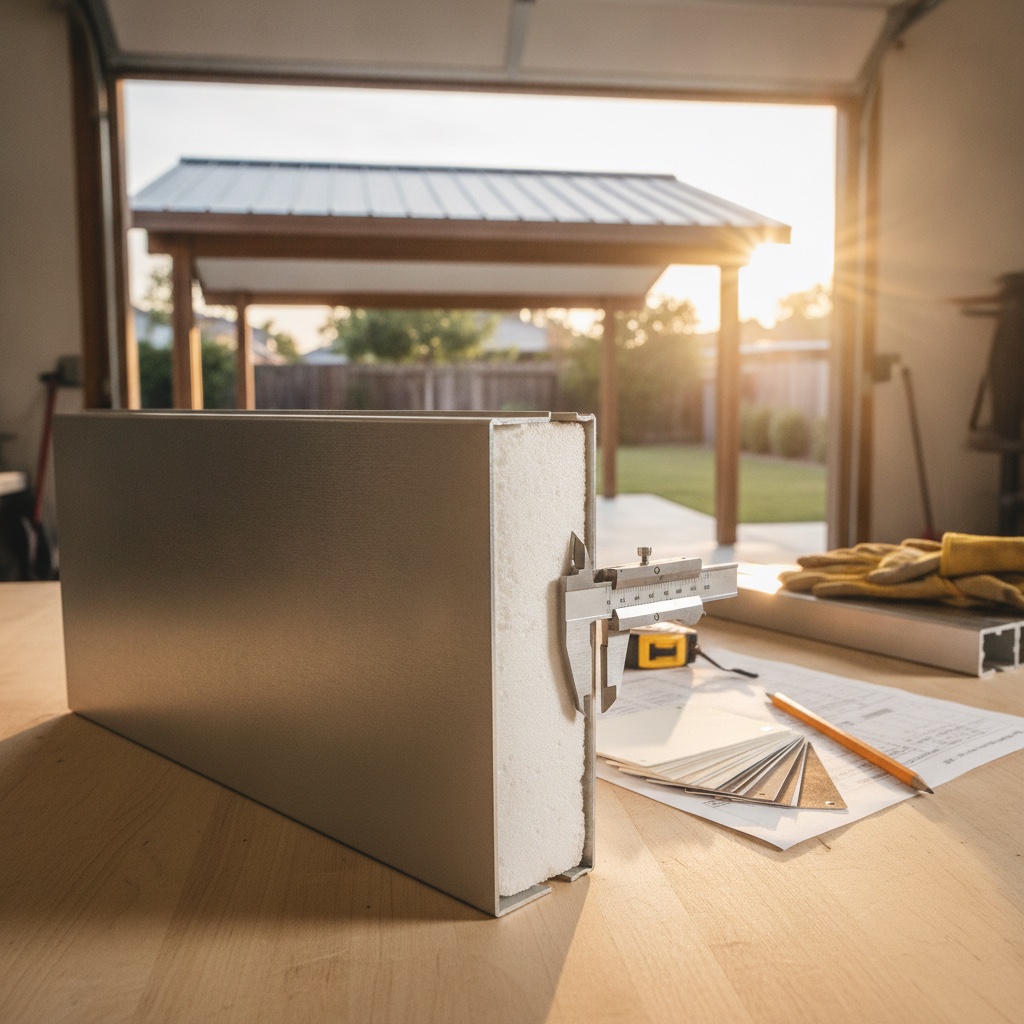
What an Insulated Roof Panel Actually Is
An insulated panel is a sandwich. Two sheets of roll-formed aluminum, typically .024 to .032 gauge, bond to a core of expanded polystyrene foam, most commonly 3 inches thick. The top skin takes the sun and the weather. The core stops the heat. The bottom skin gives you a smooth finished ceiling in white, desert sand, or a wood-grain emboss that reads like painted tongue-and-groove from a chair below.
A flat pan roof is one skin doing all three jobs. It shades the slab fine, but aluminum conducts heat fast, so a pan sitting in 100 degree sun re-radiates a real share of that heat straight down at the dinner table. On a mild coastal afternoon in Huntington Beach you may never notice. On a 105 degree Wednesday in Corona or Menifee, you will.
Quality varies inside the category, so ask questions. What gauge are the skins? Is the core EPS or a denser foam? What powder coat tier protects the top skin? An AAMA 2604 finish holds color for years inland, while coastal installs near salt air justify stepping up to AAMA 2605. A cheap insulated panel with thin skins can dent and oil-can, which is exactly how the upgrade gets a bad name.
The 10 to 20 Degree Difference
Manufacturers and installers who measure it land in the same range: the space under an insulated roof runs 10 to 20 degrees cooler than the same footprint under a single-skin pan, depending on exposure and airflow. The foam core is the reason. EPS carries real insulating value, so the heat soaking into the top skin never makes it to the ceiling side.
That difference decides whether the patio gets used at all. This month’s heat advisories put Riverside and San Bernardino valley temperatures in the low 100s, with beach cities running 15 to 30 degrees cooler than inland spots. Inland, a west-facing slab under a pan roof is still uncomfortable at 5 pm. The same slab under insulated panels, with a ceiling fan moving air, stays usable straight through a triple-digit afternoon.
One more inland note. Concrete stores heat all day and releases it into the evening. An insulated roof cannot fix a slab that already spent eight hours in direct sun, but once the cover goes in, the slab stops taking that direct hit and the double-oven effect disappears. Homeowners in Riverside and Eastvale often find the covered patio becomes the coolest spot on the property by dinner.
What the Upgrade Costs in Real Numbers
Plan on the insulated version running 30 to 50 percent above the same-size flat pan quote. For a 400 square foot cover, 20 by 20 feet, 2026 industry pricing puts a standard 3 inch insulated system in the 16,000 to 22,000 dollar range installed, against roughly 12,000 to 15,000 dollars for a value-grade pan build. A more typical 10 by 20 attached cover scales down from there, and site prep, footings, and electrical move the number in either direction.
Skip the upgrade when the cover faces north or east and the household uses the patio mostly in the morning. Skip it on a lattice-style cover, since lattice is open by design and insulation has nothing to insulate. And skip it when the budget is the difference between covering the slab this summer and not covering it at all. A pan roof still beats bare sun by a mile.
Fans, Lights, and Rain: The Quiet Benefits
The foam core stiffens the panel, which changes what the roof can carry and how far it can reach. A 3 inch panel commonly handles a 12 to 14 foot projection without a mid-span beam, and thicker cores stretch farther still. Fewer posts means a cleaner opening to the yard, and post placement is usually what makes or breaks a layout around an existing slab.
Insulated panels also take a ceiling fan or recessed lighting with a proper fan beam, which matters more than most homeowners expect in July. They change the sound of weather too. Rain on a single-skin pan pings like a drum. Rain on a foam core sounds like rain on a house. If the patio sits outside a bedroom slider, that alone can justify the premium.
There is a resale angle as well. An insulated roof reads as a permanent room, not an add-on. The flat shadow-free ceiling, hidden fasteners on newer systems, and a fascia color-matched to a stucco-and-tile home in bronze or desert sand all photograph well when the house lists. Recent industry surveys put well-built outdoor living structures at a 65 to 80 percent return at resale.
How to Decide in One Afternoon
Stand on the slab at the hottest hour you actually want to use it. If that hour falls between 3 and 7 pm and the exposure is west or south, insulated panels are usually the right call anywhere from Anaheim Hills inland. If the patio lives in coastal air, in Long Beach or Carlsbad, and afternoon highs sit in the low 80s, a pan roof with a good fan often does the job for thousands less.
The honest answer comes from the yard itself: exposure, span, slab condition, and how the cover ties into the roofline. JNL Aluminum measures all of that during a free in-home quote and prices both roofs side by side, pan and insulated, so the decision becomes a number instead of a guess. If this month’s heat has you eyeing the slab from behind the slider, that is the place to start.
Morning-context sources used: https://www.jwlumber.com/2026/07/02/are-aluminum-patio-covers-right-for-me/ (2026-07-02), https://www.foxla.com/news/southern-california-heat-advisory-triple-digits-july-2026 (July 2026), https://laist.com/news/climate-environment/la-july-heat-wave (July 2026), https://easternsunrooms.com/blog/how-much-does-a-20×20-insulated-patio-cover-cost/ (updated 2026-05-14), https://southernhomeimprovement.com/2026-patio-cover-trends-in-southeast-louisiana/ (2026), https://www.renaissancepatio.com/insulated-patio-roofing-advantages-and-drawbacks/