
A Yorba Linda homeowner called in early September with a specific complaint. Her slab is 18 by 24, west facing, and every October she strings two runs of Edison-style bulbs across it for Sunday dinners. The lights sag off the fascia, the bulbs glare straight into her guests at the table, and half the run pulls loose the first time a Santa Ana gust comes through the canyon. She did not need better bulbs. She needed a roof that gives the lights something solid to hang from and something to bounce off.
That is the part homeowners skip when they compare patio cover styles in September. Solid, lattice, pergola, and combination covers all shade a slab. They do not all treat a 2700K string light the same way after 6pm. Fall in Southern California is the season that exposes the gap, because the sun drops before dinner is served. The patio stops being a shade problem and becomes a light problem.
The Roof Decides Whether Your Lights Glow or Glare
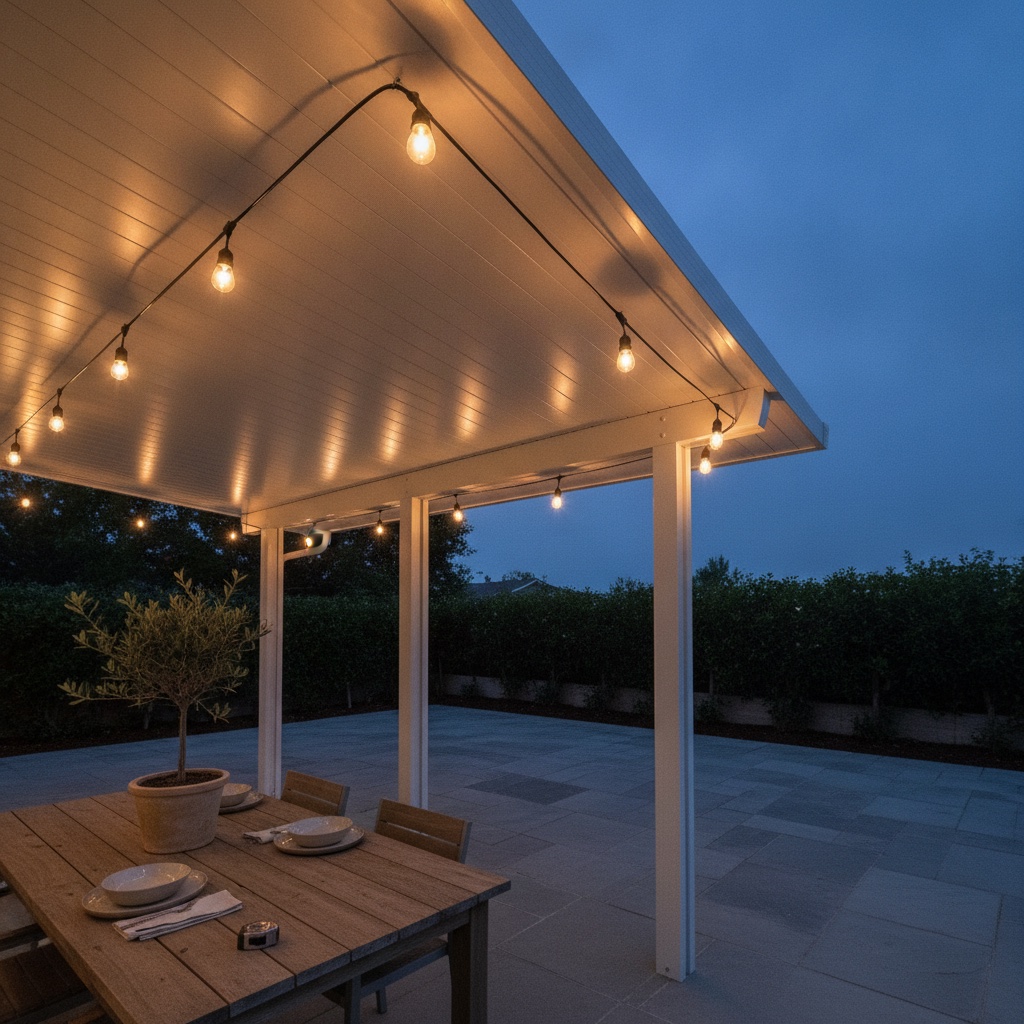
A bare string light is a point source. Look straight at it and you see a hot filament, not a lit room. Put a surface above that bulb and the light changes character. The photons that used to fly up into the sky come back down across the table, softened and spread. That single physical fact separates a covered patio that feels like a room in November from a slab with wires strung over it.
Color matters as much as the panel. An almond or white powder-coat underside reflects warm light back at roughly the same tone you hung. A dark bronze or deep navy underside absorbs a good share of it, so the same bulbs read moodier and dimmer. Homeowners in Corona and Chino Hills often pick bronze for the exterior look, then get surprised by how much wattage the ceiling eats. Two-tone finishes solve this. Bronze outside, white pans underneath.
Height is the third variable. Most attached aluminum covers land with 8 to 10 feet of clearance at the house and step down to about 7 feet 6 inches at the outer beam for drainage. Bulbs hung tight to a 7 foot 6 inch beam sit near eye level for anyone standing. Run them along the beams instead of across the middle, or drop the cover’s front edge no lower than code and comfort allow, and the glare problem disappears on its own.
Solid Roofs Hold the Warmth Where You Want It
A solid insulated panel is the strongest performer once the sun sets. The typical SoCal system uses a 3 inch foam-core panel with aluminum skins top and bottom, spanning between beams with no purlins in the way. The flat white underside acts as one large reflector. Two runs of warm string lights under an insulated panel throw noticeably more usable light on a dinner table than the same two runs under open sky.
Solid also gives you options a lattice cannot. Recessed can lights drop into a foam-core panel cleanly. Fan-rated blocking can be built into the beam line so a 52 inch fan hangs where the table actually sits rather than where a rafter happens to land. Wiring runs inside the hollow beams, out of the weather and out of sight, which means no staple guns and no orange cords taped along a post.
The tradeoff is daylight. A solid roof over a north-facing slab in Fullerton can read dark at noon in December. Skylight panels answer that. A single 2 foot by 4 foot acrylic skylight in an 18 foot run adds daytime brightness without opening the roof to rain, and it costs far less than reworking the whole style later.
Lattice and Pergolas Scatter Light Into the Yard
A lattice cover does something different after dark. The slats catch part of the light and the gaps let the rest escape upward, so the yard beyond the patio gets a soft wash instead of a hard edge. If your fall evenings involve kids on the lawn or a fire pit set off the slab, that spill is a feature rather than a loss.
Slat spacing controls the effect. A tight 2 by 2 lattice on 8 inch centers behaves almost like a low-output solid roof at night. Open it to 12 or 16 inch centers and you get stripes of light on the table with real sky between them. Neither is wrong. They are two different rooms, and a walkthrough at 6pm with a work light is the fastest way to see which one your family prefers.
Pergolas sit further along the same line. A freestanding aluminum pergola over a Rancho Cucamonga pool deck gives you structure to hang from and posts to run conduit through, which beats hooks screwed into a fence. Expect less reflected light and more of a canopy look. Structured string-light grids, the kind lighting designers are pushing this year with black cable and warm Edison LEDs, read especially well on pergola rafters because the cable disappears against the shadow lines.
Combination Covers Give You Two Rooms on One Slab
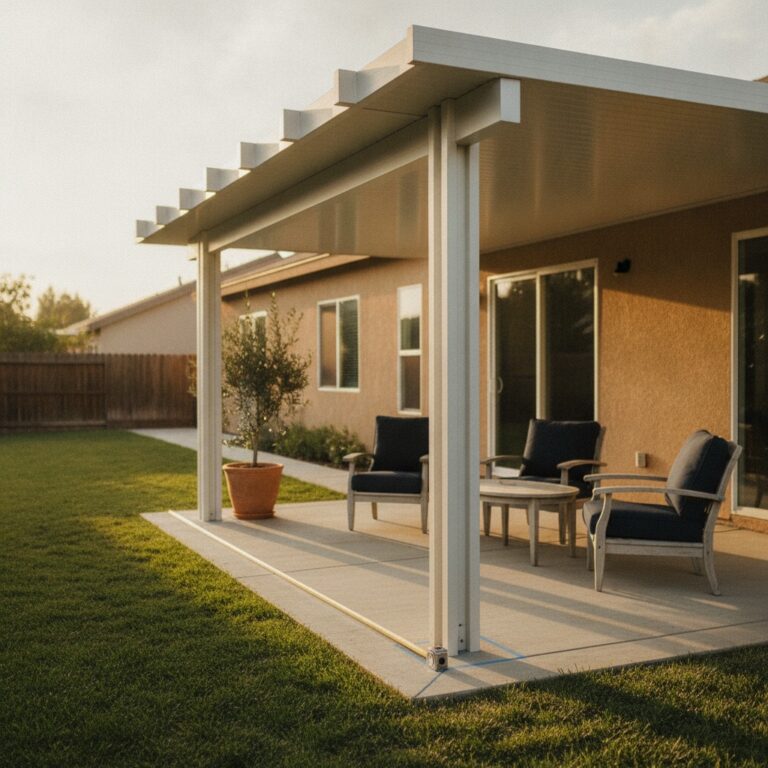
The most requested layout on 20 foot and wider slabs this fall is a split. Solid panels over the dining zone where the table and the fan go, lattice over the lounge or grill zone where a little sun and sky still feel good. One structure, one set of posts, two lighting personalities. It also solves a budget question, since lattice runs less per square foot than insulated panel and you only buy the premium roof where it earns its keep.
Plan the electrical before the panels go on. Running low-voltage or line-voltage feed inside the beams is a 20 minute job during install and an ugly retrofit afterward. Ask for a junction box at the outer beam on the lounge side and another at the house wall, plus a switched circuit for the fan. That is roughly 150 to 400 dollars of rough-in on most jobs and it is the single upgrade homeowners say they wish they had bought.
Spans, Posts, and What to Ask on the Walkthrough
Style is the visible decision. Structure is the one that keeps the cover quiet when the winds pick up in October. A few numbers worth knowing before anyone quotes you:
- Roof pans in the common SoCal systems run about 0.024 to 0.030 inch aluminum. Beams and posts are heavier, generally 0.040 to 0.050 inch wall.
- Posts typically land 10 to 12 feet apart. Clear spans past about 16 feet usually call for a deeper beam or a center post, so ask which one your plan assumes.
- Powder coat at the AAMA 2604 tier holds color and gloss far better than commodity paint. AAMA 2605 is the top tier and the one to request within a few miles of the coast, from Seal Beach down through Carlsbad.
- Fan-rated support is a build detail, not an accessory. It gets specified before fabrication or it costs real money later.
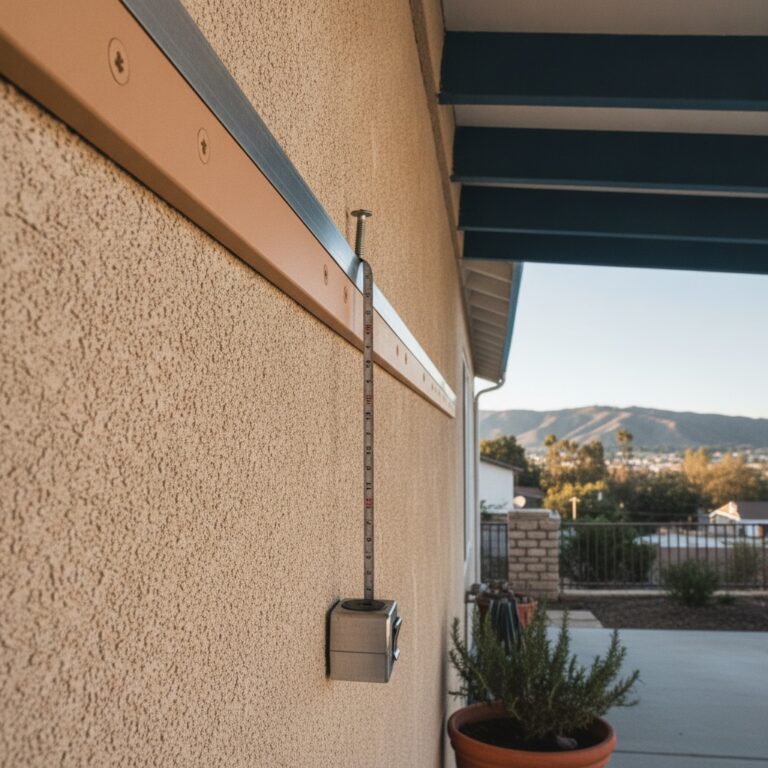
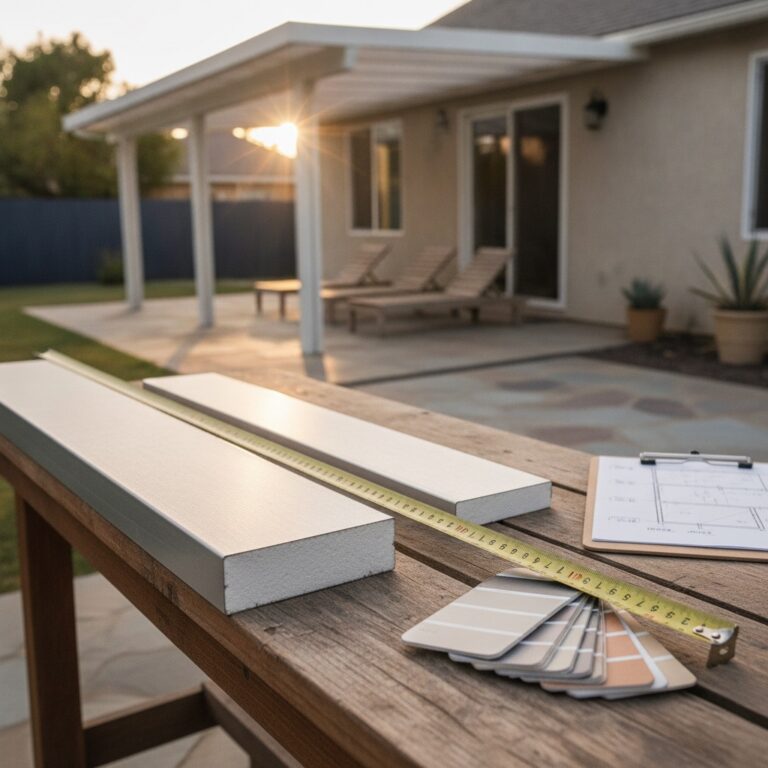
Bring the lighting question to the walkthrough. Tell the estimator where the table goes, how many bulb runs you want, and whether a fan is in the plan. Those three answers change the panel choice, the beam layout, and the electrical rough-in. JNL Aluminum measures your slab, checks the wall condition and the drainage fall, and puts real dimensions and a firm number on paper. The in-home quote is free, and an hour in your backyard this month beats another season of taped-down extension cords.
Morning-context sources used: https://duralum.com/volume-4-issue-18/ , https://superiorpatios.com/blog/solid-vs-lattice-vs-insulated-alumawood-covers/ , https://www.hevilite.com/blog/modern-backyard-lighting-ideas-for-2026-outdoor-living-spaces , https://www.decorilla.com/online-decorating/patio-trends-2026 , https://my-inspo.com/62-patio-lighting-ideas-2026-modern-outdoor-lighting-trends/ , https://gacc.nifc.gov/oscc/predictive/outlooks/myfiles/assessment.pdf